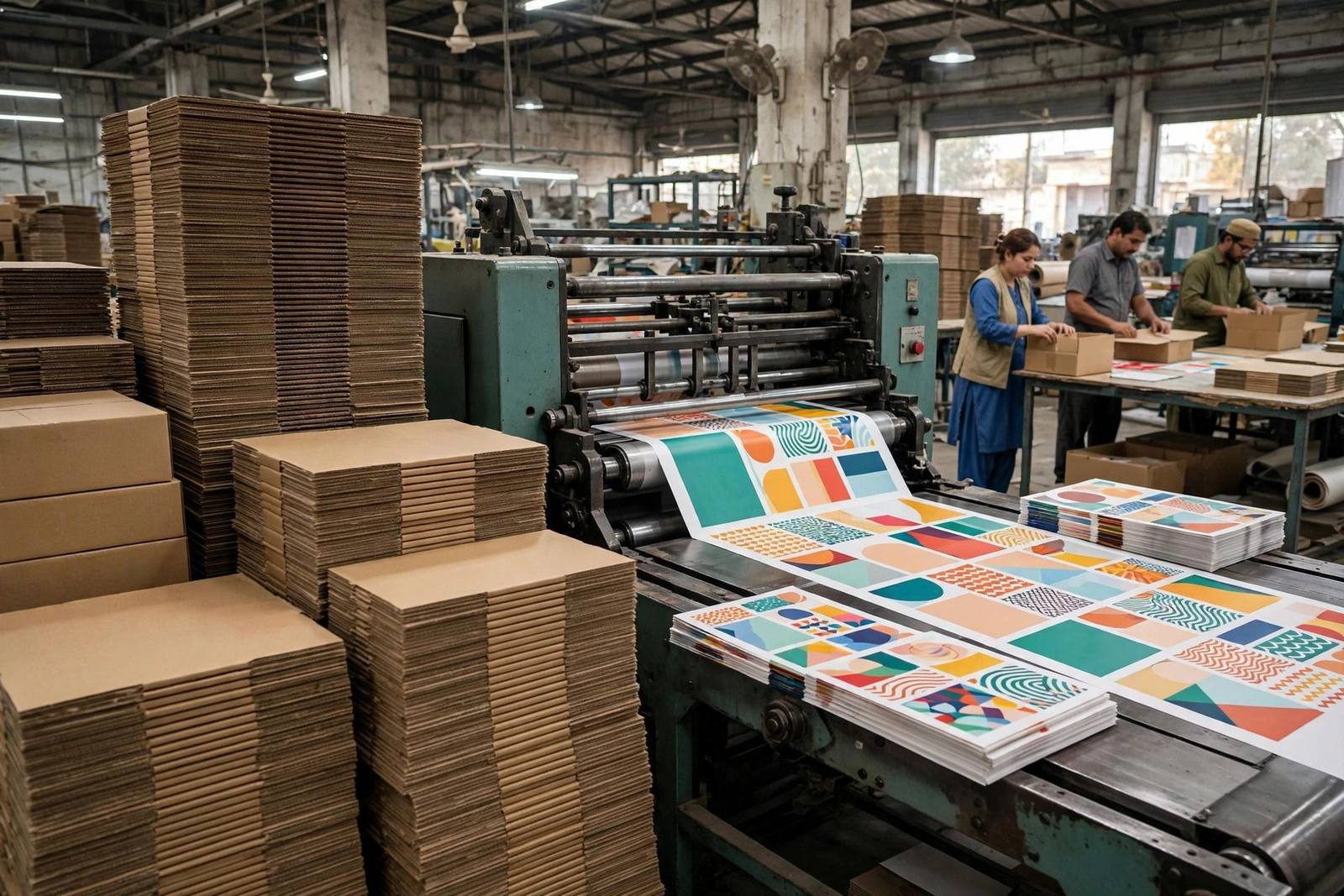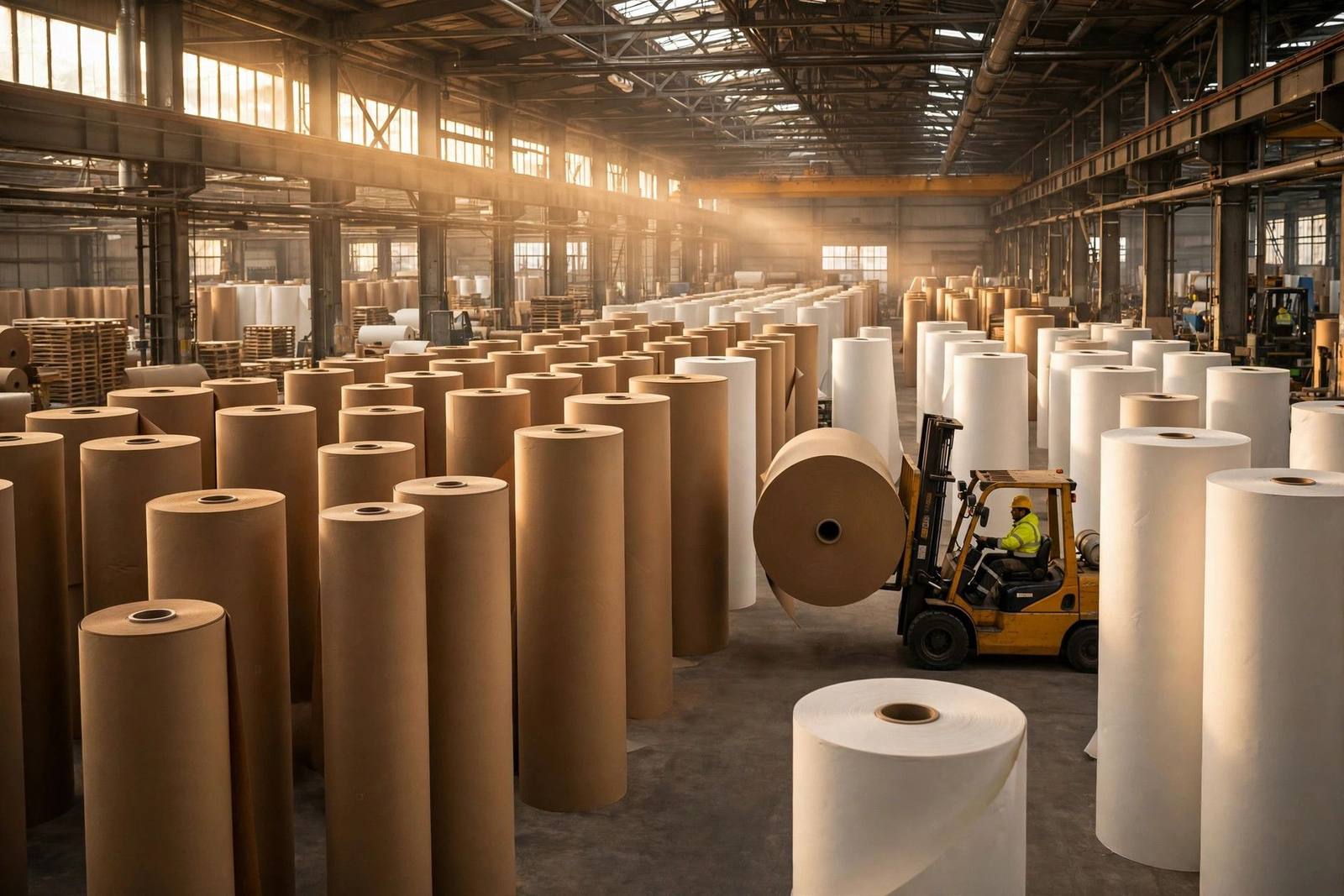
KARACHI: Before a carton of tea, a box of biscuits or a pack of cigarettes can sit on a Pakistani shelf, somebody has to make the board it is folded from. Very often, that somebody is Century Paper & Board Mills — CEPB on the Pakistan Stock Exchange — the flagship paper company of the Lakson Group and one of Pakistan's leading producers of packaging boards. Its mill, on the Lahore–Multan highway in Kasur district, turns waste paper and pulp into the coated duplex board and folding box board that the country's printing and packaging industry converts into consumer packaging, and into the corrugating papers that become the boxes those cartons are shipped in. It is a heavy, energy-hungry, unglamorous business that touches almost everything Pakistan buys. This profile traces the company from its incorporation in 1984 to its place at the centre of the Lakson empire, explains how a board mill makes money, and sets out what followers of the share watch from one results season to the next.
A Lakson flagship, incorporated in 1984
Century Paper & Board Mills was incorporated in Pakistan as a public limited company on 2 August 1984, under the Companies Ordinance of that year, and started commercial production in 1990. To understand the company you first have to understand its parent. The Lakson Group was founded in 1954 by the Lakhani family and grew into one of Pakistan's broadest conglomerates, with interests spanning consumer goods — including the local Colgate-Palmolive business — insurance, media, technology and packaging. Within that empire, Century Paper is described in the company's own summaries as a flagship: the group's industrial anchor in paper, and the supplier standing behind much of the group's — and the country's — packaging needs.
The six-year gap between incorporation and production is itself a lesson in heavy industry. A paper mill is not assembled like a trading business: it requires a large site, paper machines sourced from global engineering firms, captive power and steam, water treatment, and working capital for mountains of raw material. Century's site, at 62 kilometres on the Lahore–Multan highway in district Kasur, eventually grew to a complex of around 175 acres with its own generation and a workforce the company has put at over fifteen hundred people. The choice of Punjab's industrial heartland put the mill within reach of Lahore's printers and converters and the consumer-goods factories of the north, while its registered office stayed with the group at Lakson Square in Karachi — the classic Pakistani pattern of a Karachi boardroom and a Punjab factory floor.
Building the board business, board by board
Century established its name, in the words of its own company summaries, as a major producer of quality packaging boards, and as a preferred supplier to the printing and packaging industry. That phrase — packaging boards in particular — is the key to the company's history. Pakistan's consumer economy was formalising through the 1990s and 2000s: loose commodities gave way to branded, packaged goods, multinational and local manufacturers alike needed cartons that printed beautifully and protected the product, and imports of finished board were an expensive answer to a local question. Century expanded machine by machine into that demand.
Recent company briefings put its paper and board production capacity at around 282,000 tonnes a year, with box-making capacity on top — figures worth treating as a snapshot of a still-expanding complex rather than a fixed identity. The briefing material breaks the story down usefully: the coated packaging boards, where Century claims market leadership, are the premium end; uncoated boards, liners and corrugating mediums are the volume end. Each expansion followed the same logic as the founding — Pakistani consumption formalising, packaging intensity rising with it, and a local mill with scale, captive energy and a group name behind it taking share from imports and smaller rivals. The mill's energy mix in recent briefings — coal, gas and grid power with a growing solar contribution — tells its own story of a Punjab manufacturer adapting, fuel by fuel, to Pakistan's changing energy economics.
What Century Paper actually makes
The product range, as described in the company's reporting, falls into three working families. First, coated boards: coated duplex board and folding box board — the stiff, smooth, printable card that becomes cartons for food, pharmaceuticals, personal care, tobacco and household goods. This is the value end of the mill, where surface quality and consistency decide which supplier a multinational brand owner approves. Second, uncoated boards and papers: white-top test liners, test liners and corrugation medium — the layers of the corrugated box — plus machine-finished and machine-glazed papers for wrapping and converting. Third, corrugated boxes themselves: the company makes regular slotted cartons, speciality boxes and tobacco storage cartons, integrating one step forward from board into finished packaging. It also exports part of its output to regional markets.
Set Century beside its PSX paper-sector neighbours and the division of labour in Pakistani paper becomes clear. Security Papers makes a few thousand tonnes of some of the most valuable paper in the country; Century makes hundreds of thousands of tonnes of the board that carries the consumer economy. Roshan Packages, further down the chain, converts board and films into finished packaging for many of the same brands. And inside the Lakson family itself, the listed Century Insurance and the group's printing and packaging interests — including Merit Packaging — make CEPB part of a cluster of Lakson names that a student of Pakistan's conglomerates can follow as a group.
How a board mill makes money
A board mill is a spread business built on two commodity legs. On the input side sit waste paper — collected domestically and imported — together with imported virgin pulp for the grades that need it, chemicals and coatings, and very large quantities of energy: a paper machine runs continuously, drying vast sheets, and steam and power can decide whether a tonne of board earns or loses money. On the output side sit board prices, set by the balance between local mill capacity and imports, and by the purchasing power of the packaging converters and brand owners who buy the output. The mill's profit is the conversion spread between the two, multiplied by utilisation: paper machines are ruinously expensive to stop and start, so a mill that keeps its machines full through a demand dip, even at thinner margins, usually beats one that chases price and loses volume.
Three sensitivities follow, and followers of CEPB learn to track all of them. The first is energy: gas availability and price, coal costs and the grid tariff move the cost per tonne directly, which is why the company's captive generation and fuel mix appear in every serious briefing. The second is the imported-input leg: pulp and waste-paper prices in dollars, filtered through the rupee. The third is consumer demand itself: board is a derived product, ordered when biscuit, tea, detergent and cigarette makers expect to sell, so Century's order book is an early instrument reading of the same consumer economy tracked in our guide to PSX food and personal-care stocks. Exports to regional markets provide a partial release valve when the home market softens, at the price of exposure to freight and foreign demand.
Strengths, risks and honest complications
Century's strengths are scale, position and parentage. Scale brings procurement power for waste paper and pulp, the ability to run a broad grade range on multiple machines, and the credibility to win approval as a supplier to multinationals whose packaging standards are unforgiving. Position — a Punjab mill beside the country's converting heartland — cuts freight on a heavy, low-value-density product. Parentage brings the Lakson name, group customers and professional systems, in the pattern common to Pakistan's better-run family groups, with the usual corollary for minorities discussed in our guide to family businesses on the PSX.
The risks are the industry's, in concentrated form. Imported board and raw material expose the mill to every turn of the exchange rate and to trade-policy swings on waste-paper imports, on which Pakistan's recycled-board industry depends. Energy shocks hit faster than board prices can be renegotiated. Environmental scrutiny of water use and effluent is a rising, legitimate pressure on all paper making. And the cycle is real: packaging demand fell with Pakistan's consumer downturns and recovered with them, and a mill carrying large fixed costs and expansion debt feels both directions fully. Recent years' results, with their swings between strong and strained periods visible in the company's own briefings, are a fair illustration that even the flagship of a great group cannot repeal the arithmetic of tonnes, energy and spreads.
The name on the PSX: CEPB
CEPB's shares have been quoted since the era when Pakistan had separate Karachi and Lahore exchanges — the company's older summaries record listings on both — and today it trades on the unified PSX in the paper and board sector. It is a mid-cap industrial with an institutional following built over decades: not a permanent heavyweight of the headline index, but a familiar constituent of the wider market's industrial core, followed by investors who treat it as a listed proxy for Pakistani packaged consumption. Its dividend pattern has followed the mill's cash cycle — expansion years and energy shocks have competed with payouts for the same rupees — declared through the standard machinery explained in how PSX dividends work. The company's corporate briefing sessions, a fixture of its calendar in recent years, are unusually informative for the sector and are the natural starting point for anyone doing the work.
Century also sits, whether it advertises the fact or not, at the centre of Pakistan's recycling economy. A recycled-board mill is the largest single customer of the country's waste-paper trade — the chain of collectors, dealers and sorters who recover used cartons, office paper and newsprint from every city — and the price Century and its peers pay for waste paper effectively sets the value of that entire informal harvest. When imported waste paper is cheap and freely shipped, local collection prices sag and the chain thins; when imports are restricted or the rupee makes them dear, the local chain booms and the mills compete for its output. Layered over that is the import-substitution question that has followed the company since 1990: every tonne of coated board a Pakistani brand owner buys from Kasur rather than from an overseas mill is foreign exchange saved and local industry deepened, which is why the packaging-board industry features so regularly in trade-policy debates. And on the demand side, the steady formalisation of Pakistani retail — packaged food, branded personal care, organised tobacco and pharmaceutical distribution — keeps converting loose, unpackaged consumption into board demand at a rate that has outlasted several macroeconomic storms. The mill's job, decade after decade, is simply to be the lowest-regret supplier of that conversion: approved by the multinationals, priced against the imports, and full. It is worth adding that the board in a Pakistani carton is unusually likely to be on its second or third life — collected, pulped and reborn — which makes Century not just a manufacturer but one of the largest recyclers in the country by tonnage.
What kind of investor studies Century Paper
CEPB rewards the investor who thinks in tonnes and spreads: someone who follows waste-paper and pulp prices, gas and coal costs, capacity additions across the local industry, and the sales momentum of Pakistan's packaged-goods makers, and who is patient with a business whose machines must be fed in bad years to be ready for good ones. It is also a clean way to study how a great Pakistani family group runs an industrial flagship across four decades. This article is educational content, not financial advice, and nothing in it is a recommendation to buy or sell any security.
Key takeaway: Century Paper is the Lakson Group's board mill — in production since 1990, turning waste paper and pulp into the packaging board of Pakistan's consumer economy, and living on the spread between commodity inputs and full machines.