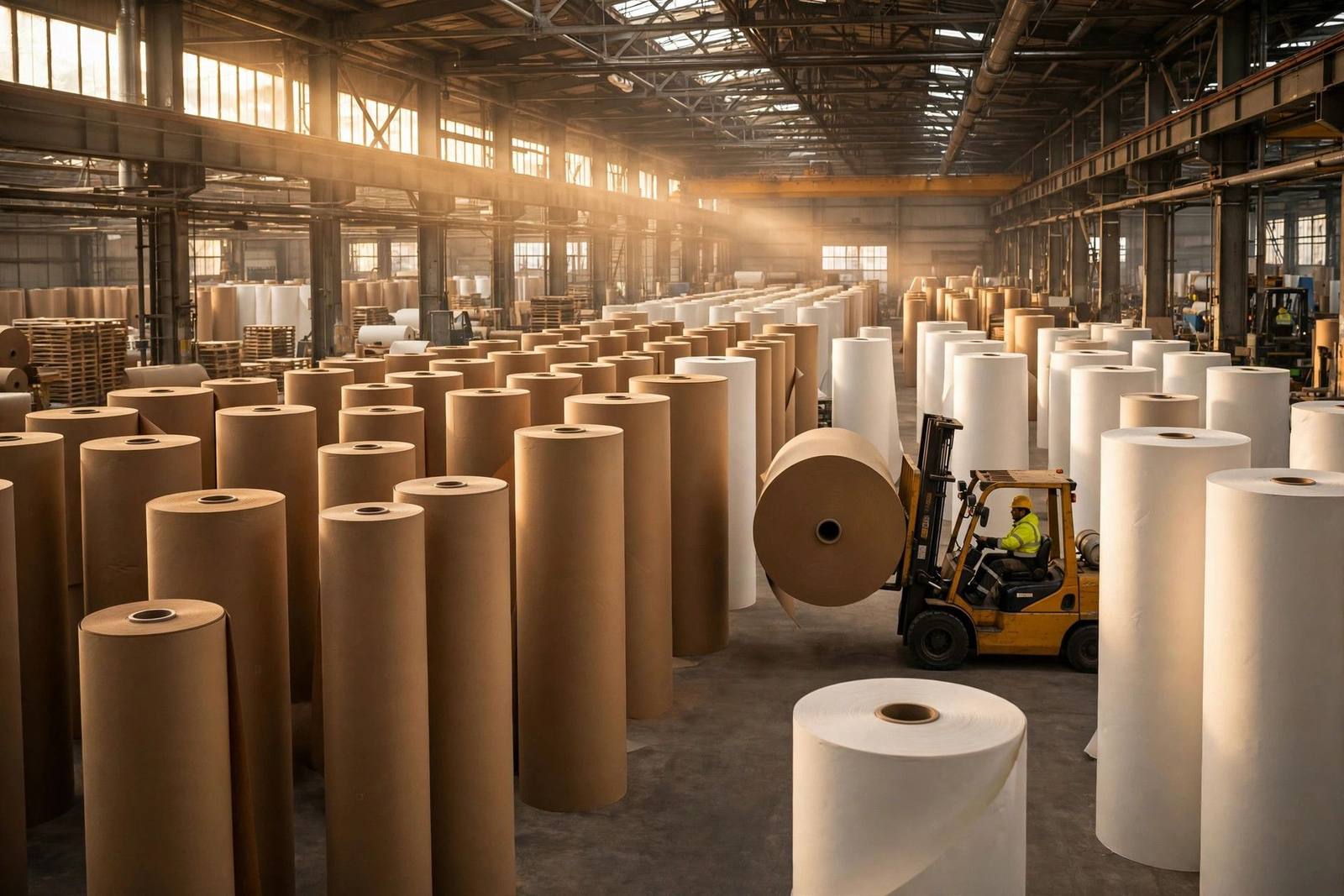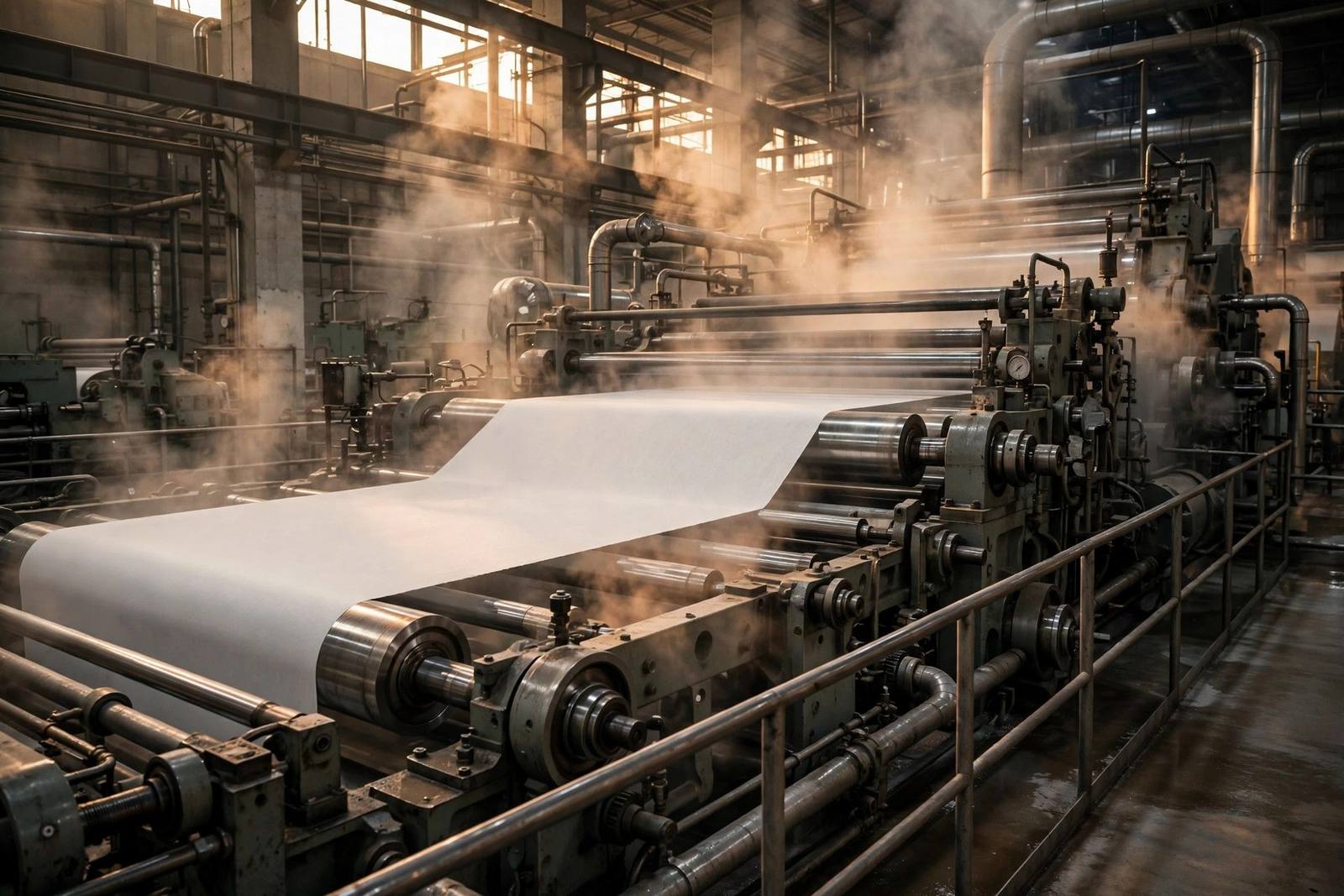
KARACHI: Every rupee note in your wallet began life as a sheet of paper, and in Pakistan that paper comes from one mill. Security Papers Limited — SEPL on the Pakistan Stock Exchange — manufactures the specialised paper used for Pakistan's banknotes and for a long list of other security documents, from passport paper and stamp papers to degree certificates and ballot papers. It is one of the most unusual companies on the PSX: a listed company with private shareholders whose main customer is effectively the state, whose factory works to security standards most manufacturers never encounter, and whose product passes through the hands of every single Pakistani, usually without being noticed. Founded in the 1960s as a three-country venture, listed in 1967, and now majority-owned by the Pakistan Security Printing Corporation, SEPL is a small window through which public investors can own a piece of the machinery of sovereignty itself. This profile explains how that came to be, what the mill makes, and how money — the paper kind — makes money.
Born of a three-country pact in 1965
Security Papers was founded in 1965 as a joint venture among Pakistan, Iran and Turkey. The three countries were then partners in the Regional Cooperation for Development, the RCD, and security paper was exactly the kind of strategic, low-volume, high-trust product that member states preferred to source from a friendly regional venture rather than from distant European mills. A new state like Pakistan, printing its own currency since independence, had an obvious interest in securing the supply of the paper its banknotes were printed on: banknote paper is not ordinary paper, and whoever controls its supply touches the integrity of the currency itself.
The company was listed on the Karachi Stock Exchange in 1967, and it began commercial operations in 1969, from its site at Jinnah Avenue, Malir Halt, in Karachi — still its home today. Think about what that chronology implies. Within two decades of independence, Pakistan had moved a critical input of its currency in-house, structured it as a public company with outside shareholders, and set it to work under the peculiar discipline of a security printer's supplier: the product must be difficult to imitate, consistent over enormous print runs, and accountable sheet by sheet. The Iran-Turkey shareholding was a creature of its geopolitical moment; over the decades that followed, ownership consolidated at home, and the company's centre of gravity became its relationship with Pakistan's own security-printing establishment.
Inside the Pakistan Security Printing family
Today Security Papers is a majority-owned subsidiary of the Pakistan Security Printing Corporation, PSPC — the state printer that produces Pakistan's banknotes and other security documents. PSPC itself changed hands in a notable transaction in 2017, when the federal government sold the corporation to the State Bank of Pakistan in a deal reported at around Rs100 billion, putting the printing of currency under the central bank that issues it. In 2024 the National Security Printing Company — which had taken over passports, identity cards and stamp papers — was merged back into PSPC, further consolidating the state's security-printing assets under one roof. SEPL sits inside that architecture as the paper mill of the group: the printer prints, the mill makes the substrate, and the central bank stands behind both.
That structure gives SEPL a shareholder profile unlike almost any other PSX company. The controlling stake is held by a state corporation, yet a substantial minority — the PSX profile records a free float of around two-fifths of the shares — trades publicly, and the company's affairs are periodically debated in Pakistan's financial press from the minority shareholder's point of view: what the mill charges its parent customer, how investment decisions are shared, and whether a captive supplier's profits belong more to the state or to its outside investors. Those debates are a feature, not a bug, of the listing: they are the price — and the protection — of running a strategic asset in public view. Around the core relationship sit technology partnerships of long standing; SICPA, the Swiss security-inks house, has had a documented presence in Pakistan's security-printing ecosystem, and in March 2025 SEPL awarded a major paper-machine upgrade to Giesecke+Devrient, the German banknote specialist, a reminder that even a sovereign mill buys its frontier technology from the global security industry.
What the mill actually makes
SEPL's own description of its business divides it into two families. The first is banknote paper: cotton-based paper engineered with embedded security features — watermarks, security threads and fibres — that make a banknote recognisable, durable and hard to counterfeit. Formulations are specified by the issuing authority, and the paper must survive years of folding, heat, humidity and handling in a cash-intensive economy while keeping those features legible to machines and humans alike.
The second family is non-banknote security paper, and its catalogue reads like an inventory of the Pakistani state's paperwork: paper for bonds and prize bonds, judicial and non-judicial stamp papers, passports, cheque books, university degree papers, parchment, ballot papers for the Election Commission, defence savings certificates, educational board certificates, identity-card and driving-licence paper, birth certificates, and customised security paper carrying an organisation's own insignia or watermark. Almost every formal promise the Pakistani state or its institutions make on paper — a qualification, an entitlement, a vote — starts as a sheet from a security mill, and in Pakistan that overwhelmingly means this one. Compared with a commercial paper maker such as Century Paper & Board Mills, which sells tonnes of packaging board into a competitive market, SEPL sells trust by the sheet into a market of one dominant customer and exacting specification.
How security paper makes money
The revenue logic is unlike any other paper business on the exchange. SEPL does not hunt for customers; its volumes are set by the state's need for banknotes and security documents, which follows currency in circulation, the replacement of worn notes, the denominations the State Bank chooses to issue, and the paperwork volumes of government and education systems. Pricing, in such a relationship, is a matter of negotiation and cost recovery between a state customer and its majority-owned supplier rather than a market auction — which is precisely why financial commentators watch the company's margins and related-party terms as a governance story as much as a business one.
Costs are specialised. Banknote paper is traditionally cotton-based, so the mill buys cotton linters and high-grade pulp rather than the waste paper and wood pulp of a board mill, alongside imported chemicals and security components, energy for a continuous paper machine, and the heavy fixed costs of security, quality control and waste accounting that a security facility must carry whether it runs full or slow. Capital cycles are lumpy and consequential: the paper machines at the heart of the mill were commissioned in 2004, and in 2025 the company moved to upgrade its paper machine for a reported Rs3.4 billion through the German firm Giesecke+Devrient, to produce paper for the State Bank's planned new banknote series with modern security features, with completion expected over roughly eighteen months from award. The company's more recent reporting has continued that theme — a balancing, modernisation and replacement programme for its second paper machine, investment in cogeneration, water storage and solar capacity — the profile of a mill preparing for a new currency generation. For followers, the lesson is that SEPL's profits in any given year are less interesting than its position in the banknote replacement cycle: when Pakistan redesigns its notes, the mill that makes the paper is at the centre of the story, as our explainer on what the State Bank does sets in the wider institutional context.
Strengths, risks and the governance debate
The strengths begin with the moat of moats: there is one buyer relationship that matters, it is with the state, and it has lasted since the 1960s. Security printing is a licensed, secretive, reputation-bound trade worldwide; new capacity cannot simply be built against it. Demand is also comparatively recession-proof — a downturn does not stop the state needing degrees, stamp papers and replacement banknotes, and cash usage in Pakistan has remained deep even as digital payments grow, a dynamic explored in our guide to Pakistan's informal economy.
The risks are the mirror image of the strengths. Customer concentration is total: a change in procurement policy, in the parent corporation's structure, or in the pricing formula moves the whole business. Technology risk is real and periodic — each new banknote generation demands new features, and the mill must invest heavily or fall behind the counterfeiters, as the current upgrade programme shows. Cash-versus-digital is a slow headwind: every rupee of payments that migrates to phones is a rupee note that wears out less often, though Pakistan's cash intensity makes this a generational rather than immediate threat. And the standing governance question — how a state-controlled strategic supplier balances its parent's interests against its public minority — will recur whenever dividends, transfer pricing or asset transfers are discussed. None of this makes SEPL unusual by global standards; banknote supply is state-entwined everywhere. It does mean the share should be studied as part utility, part sovereign contract, and part governance case study.
The name on the PSX: SEPL since 1967
SEPL joined the Karachi Stock Exchange in 1967, which puts it among the longer-listed industrials on today's PSX, and it sits in the paper and board sector classification alongside makers whose businesses could hardly be more different — a reminder, via our market capitalisation explainer, that sector labels describe materials, not business models. With the state corporation holding the majority and around two-fifths of the shares in public hands, trading is orderly rather than frantic; the register includes income-minded holders attracted by the company's established pattern of paying dividends out of its contract-backed earnings, declared through the standard book-closure machinery described in how PSX dividends work. Periodic corporate briefings — the company has held investor briefings in recent years — are the main window into machine upgrades, order outlook and the new banknote programme, and they reward close reading.
It also helps to understand the rhythm beneath the contract. A banknote's working life is short and brutal — folded, stuffed, sweated on, taped and finally withdrawn as unfit — so even with no growth in the economy, a large share of the note stock must be reprinted every year simply to stand still, and every reprint begins as paper. New denominations, commemorative issues and periodic redesigns — undertaken worldwide to stay ahead of counterfeiting technology — arrive as step-changes on top of that replacement floor, and the State Bank's announced move toward a new banknote series is exactly such a step-change, which is why the mill's machine-upgrade programme sits at the centre of its current story. On the non-banknote side, the drivers are the state's own paperwork volumes: passport issuance follows overseas employment cycles, ballot paper follows the electoral calendar, and certificates follow the output of the education system. Few listed companies anywhere offer so direct a derivative on the administrative life of a nation of more than two hundred million people.
What kind of investor studies Security Papers
SEPL attracts a particular temperament: the investor who likes monopolies with paperwork, who reads a central bank's currency-management speeches as demand forecasts, and who treats governance disclosures as the main text rather than fine print. Followers watch the progress of the paper-machine upgrade, news of the new banknote series, volumes of non-banknote security documents such as passports and ballot papers — election years are busy years — and the dividend decisions that signal how the year's contract economics are being shared. This article is educational content, not financial advice, and nothing in it is a recommendation to buy or sell any security.
Key takeaway: Security Papers is Pakistan's banknote-paper mill — a 1965 three-country venture turned State Bank-orbit state supplier, listed since 1967, whose small public float shares in one of the most protected businesses in the country.