KARACHI: Packaging is the invisible half of every consumer business — and Roshan Packages Limited has built a listed company out of making it. From Lahore, RPL manufactures corrugated packaging — the printed cartons and boxes that carry everything from biscuits to fruit for export — and flexible packaging, the printed films and wrappers that seal snacks, confectionery and detergents. It began in 2002 with a strikingly specific job: making proper export cartons for a sister company's fruit business. Two decades on, its customers are the consumer brands of Pakistan, its shares have traded on the Pakistan Stock Exchange since 2017, and its story is a neat case study in how a family group's side-need became a standalone industrial business. This profile follows that arc — the fruit-box origins, the move into flexible films, the Chinese joint venture that tested the group's patience, how packaging earns its money, and what a follower of the share should keep an eye on.
Born in 2002, to pack fruit properly
Roshan Packages was incorporated in Pakistan as a private company on 13 August 2002. It belongs to the Roshan Group, a Lahore business family whose interests have included Roshan Enterprises — a fruit and vegetable exporter — and, in a very different register, the Urdu Digest publishing house. The packaging company was established, as its listing documents explain, with the objective of providing quality corrugated packaging to Roshan Enterprises: Pakistan's kinnow and mango exports travelled badly in poor boxes, and a serious exporter needed cartons that could survive cold stores, containers and foreign supermarket standards. The solution was to make the boxes in-house.
Commercial production began in 2004 with corrugated packaging capacity that listing documents put at 30,000 tonnes, making a range of customised products — slotted cartons, shelf-ready packaging, half-slotted cartons and die-cut boxes. The decisive move was what happened next: instead of remaining a captive supplier to the family's fruit trade, Roshan Packages sold its way outward, winning the business of corporate and multinational consumer-goods companies whose volumes dwarfed fruit season. A packaging maker attached to a fruit exporter had become a packaging maker attached to Pakistan's consumer economy, with fruit and vegetables remaining an honourable speciality rather than the whole business.
Flexible films, an IPO, and a paper-mill adventure
The second growth leg arrived in 2011, when the company set up a production line for flexible packaging — the rotogravure-printed films that wrap confectionery, biscuits and snacks, detergents and other fast-moving goods, including wrappers related to PET-bottle products. Flexible packaging is a different craft from corrugated board: thinner margins for error, exacting print quality, food-contact standards, and customers who redesign their packs — and therefore their supplier's print cylinders — with marketing-department frequency. Adding it turned Roshan from a box maker into a broader packaging partner that could sit in the same supplier review as the multinationals' other vendors.
The public chapter opened in the winter of 2016–17. The company converted to a public limited company on 23 September 2016, offered its shares through a book-built IPO — the process explained in our PSX IPO guide — and listed on the Pakistan Stock Exchange on 28 February 2017. Listing documents from that season sketch the founding shareholding: the Qureshi family at the centre, with Tayyab Aijaz Qureshi — the founder named in company records — as the leading sponsor, and the general public taking roughly a quarter of the company at the offer. The third act of the expansion story is the cautionary one. In January 2016 the company had incorporated Roshan Sun Tao Paper Mills as a subsidiary joint venture — Roshan holding 60 per cent, China's Shandong Yongtai Paper Mill holding 40 per cent — to make corrugated papers and secure the company's own raw-material supply. The venture stalled in its setup phase, the Chinese partner petitioned the Lahore High Court for its winding up, and Roshan's own reporting has treated the episode as a disputed, non-operating chapter rather than the backward integration it was designed to be. It remains in the annual reports as a reminder that in packaging, as elsewhere, owning the paper mill and making the boxes are different businesses — the mill side of the industry is better studied through Century Paper & Board Mills, one of the suppliers whose board and paper converters like Roshan depend on.
What Roshan Packages actually does, day to day
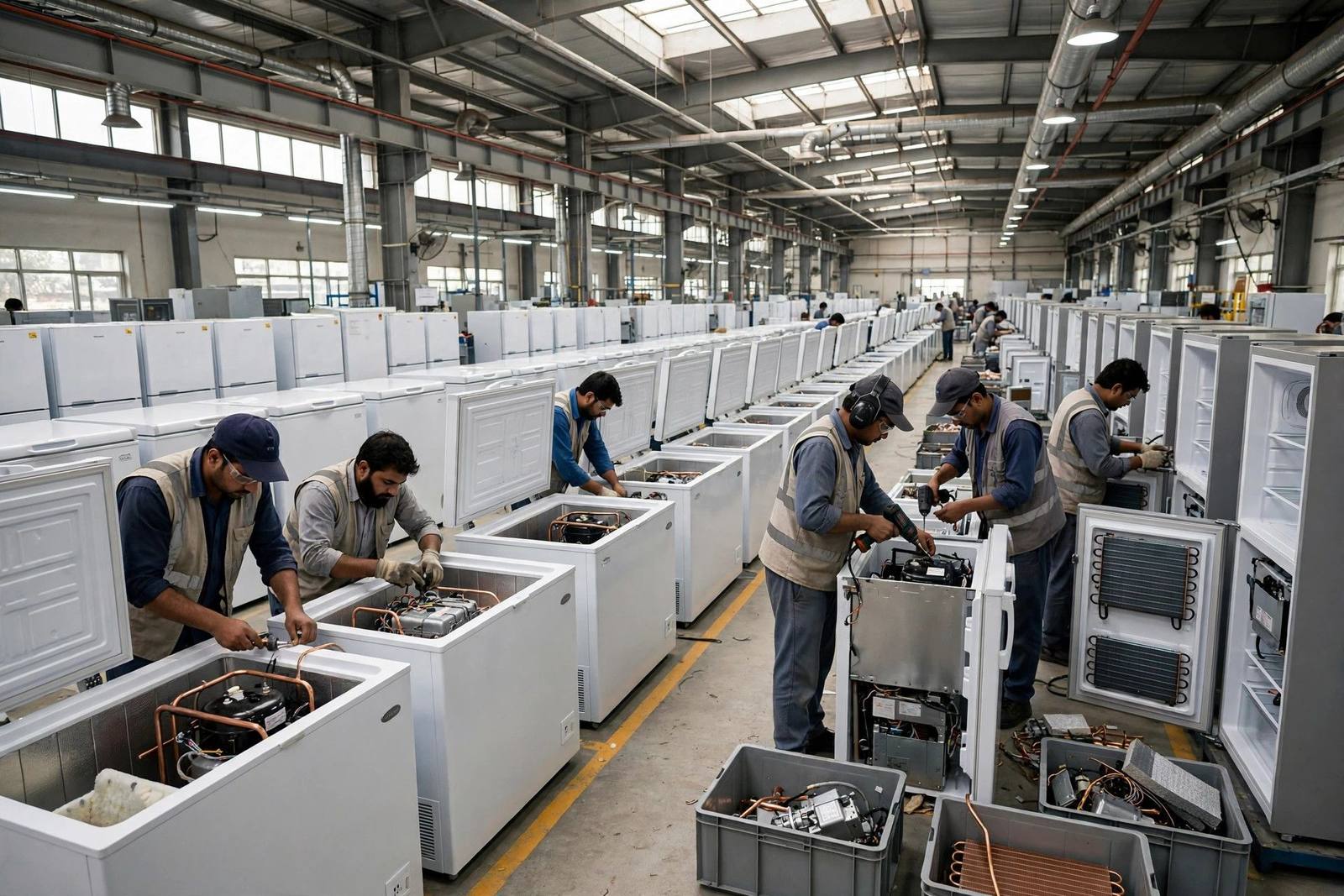
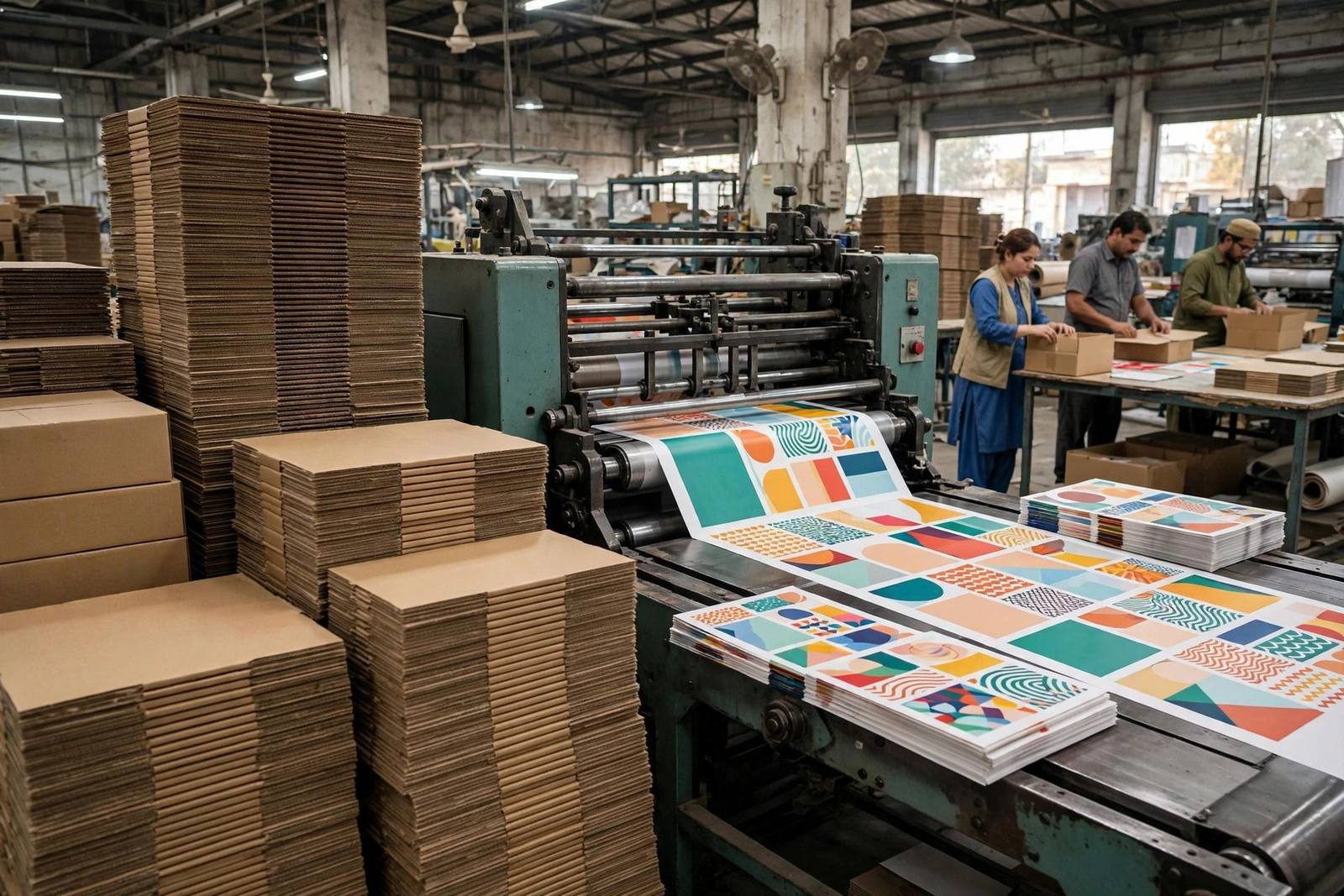
The operating company, headquartered at Johar Town in Lahore with a marketing office in Karachi, runs two production families. The corrugation plant, on Sundar Raiwind Road in Lahore, converts paper and board into corrugated sheets and finished cartons, printed and die-cut to each customer's specification — the shipping cases for consumer goods, the display and shelf-ready trays retailers increasingly demand, and the heavy-duty export cartons for fruit and vegetables in which the company began. The flexible packaging operation prints and laminates plastic films into wrappers and pouches for confectionery, snacks, biscuits, detergents and allied products. Across both, the real product is a service: design support, print quality, reliable just-in-time delivery to a customer's factory, and the food-safety and quality systems that multinational vendor audits require.
The customer logic ties the two halves together. A consumer group that buys shipping cartons from Roshan is a candidate for its printed films; a fruit exporter that trusts its export cartons is a year-round relationship rather than a seasonal order. In the wider PSX packaging chain, Roshan occupies the converter's seat — downstream of board makers like Century and film producers, upstream of the brands — alongside the Lakson-linked Packages Group names that dominate the industry's older history, and parallel to specialists such as EcoPack, which supplies the rigid PET bottles many of the same brands fill.
How a converter makes money
Converting is a spread-and-service business. Roshan buys paper, board and films — priced off the same pulp, waste-paper and petrochemical markets that drive its suppliers — adds printing, cutting, laminating and logistics, and sells finished packaging at a margin negotiated job by job and customer by customer. Because packaging is bulky and customised, it does not travel far economically; a Lahore converter's natural market is Punjab's factory belt, and its competition is the other converters within freight range plus the in-house packaging some large groups still run.
Margins are defended by mix and execution rather than pricing power. Shelf-ready and die-cut work earns more than plain cases; long runs earn more per hour than short ones; and the flexible side adds value through print quality that carton work cannot match. Against that stand the converter's classic exposures: raw-material prices that can jump between order and delivery, energy costs, and customer concentration — a handful of consumer groups can represent a large share of volumes, and their tender rounds set the tone for pricing. Seasonality still echoes the founding business: fruit export campaigns and the consumer goods calendar, with its Ramadan and summer peaks, load the plants unevenly through the year. Working capital is the quiet governor of growth — paper and film must be stocked, customers pay on terms, and a converter that grows fast finances the gap itself. In the language of our working capital explainer, Roshan is a company where the cash conversion cycle, more than any single contract, decides how fast it can safely expand.
Strengths, risks and the Sun Tao lesson
The strengths are a coherent package: an established Lahore production base in both major packaging formats, a two-decade vendor record with demanding consumer customers, the founding expertise in export-grade fruit packaging that few rivals bother to match, and a listed balance sheet that has funded growth since 2017. Being part of the wider Roshan Group brings relationships and a sponsor family with its name literally on the door — the governance pattern, strengths and limits alike, that our guide to family businesses on the PSX examines.
The risks start with the industry's structure. Converting has lower barriers than paper making: capable local rivals and new printing lines can appear quickly, and big customers know it. Input costs — paper, board, films, inks, energy — are volatile and largely imported or import-priced, while selling prices adjust with a lag and a negotiation. The Sun Tao venture adds a company-specific lesson that followers should keep in view: the disputed, still-unresolved joint venture shows how a sensible strategy on paper — secure your own corrugated paper — can strand capital and management attention when partners fall out, and the outcome of that court process, reported in the company's accounts, matters to the balance sheet's tidiness. Finally, consumer Pakistan is the ceiling: when household demand stalls, packaging volumes are among the first industrial orders to thin.
The name on the PSX: RPL since 2017
RPL is a relative newcomer to the exchange — listed in February 2017 through a book-built offering when Pakistan's IPO market was enjoying one of its periodic revivals. It trades as a small-cap industrial: outside the big index heavyweights, with liquidity that comes and goes with small-cap sentiment, so that the discipline in our guide to reading the PSX order book is worth applying before trading it. Dividends, as with most growth-stage converters, have taken second place to capacity and working capital in the company's cash priorities, and any payout arrives through the standard declaration and book-closure route explained in how PSX dividends work. Its results are best read alongside the consumer companies it supplies: when Pakistan's biscuit, confectionery and detergent makers report volume growth, converters like Roshan are where that growth shows up wearing overalls.
The demand map in front of the company keeps redrawing itself in its favour — and against it. In its favour: Pakistan's packaged-food and consumer-goods industries keep formalising, e-commerce has added an entirely new category of shipping packaging that barely existed when Roshan listed, and brands increasingly treat packaging as media — shelf-ready trays and high-quality printed films are marketing surfaces, not just containers, which shifts spending toward converters who can print and finish to a design agency's standard. The sustainability turn cuts both ways for a converter. Pressure against plastic films favours paper-based formats — squarely Roshan's corrugated home ground — and rewards converters who can offer brands a credible recycled and recyclable story; at the same time it threatens the flexible-film volumes the company spent a decade building, and the transition demands new materials knowledge rather than new machines alone. The converters who navigate it will be those, like Roshan, with a foot in both material worlds and the customer relationships to be told early what the brands intend. None of that guarantees any single year's result — paper prices and consumer volumes will see to the noise — but it explains why a box factory founded for a fruit exporter still has a strategic story to tell a stock exchange. It also explains the company's enduring local importance in Lahore's industrial belt, where a converter of this scale anchors work for printers, transporters, die-makers and ink suppliers far beyond its own payroll. In that sense Roshan is best read as infrastructure: unglamorous, essential, and noticed mainly on the rare days it is not there.
What kind of investor studies Roshan Packages
RPL suits the investor who likes second-order stories: not the brand on the shelf, but the company that prints the wrapper and folds the box. The watch-list is practical — paper, board and film prices; the volume reports of its consumer customers; utilisation of the corrugation and flexible lines; receivables discipline; progress, if any, on resolving the Sun Tao venture; and any fresh capacity announcements in the Lahore converting cluster. This article is educational content, not financial advice, and nothing in it is a recommendation to buy or sell any security.
Key takeaway: Roshan Packages grew from making export fruit cartons for its own group in 2002 into a listed Lahore converter of corrugated and flexible packaging — a business that lives on conversion margins, customer service and working-capital discipline.