KARACHI: Some tickers are abbreviations. CTM is closer to a monument. Colony Textile Mills Limited, listed on the Pakistan Stock Exchange as CTM, carries the name of the Colony Group — founded by Mohammad Ismaeel, rooted in cotton ginning in the nineteenth century, and builder of what is remembered as the first textile mill commissioned in independent Pakistan. The modern listed company, headquartered in Lahore with its great spinning mill at Ismailabad in Multan and a weaving unit at Raiwind, makes yarn, fabric, garments and made-ups, and even trades in real estate. Its story reaches from 1881 to a corporate re-registration in 2011, and it asks the reader to hold two ideas at once: the name is genuinely historic, and the shares are those of a contemporary, cyclical textile business that must earn its keep in today's cotton and energy markets.
1881 to 1947: ginning, flour and a mill at Multan
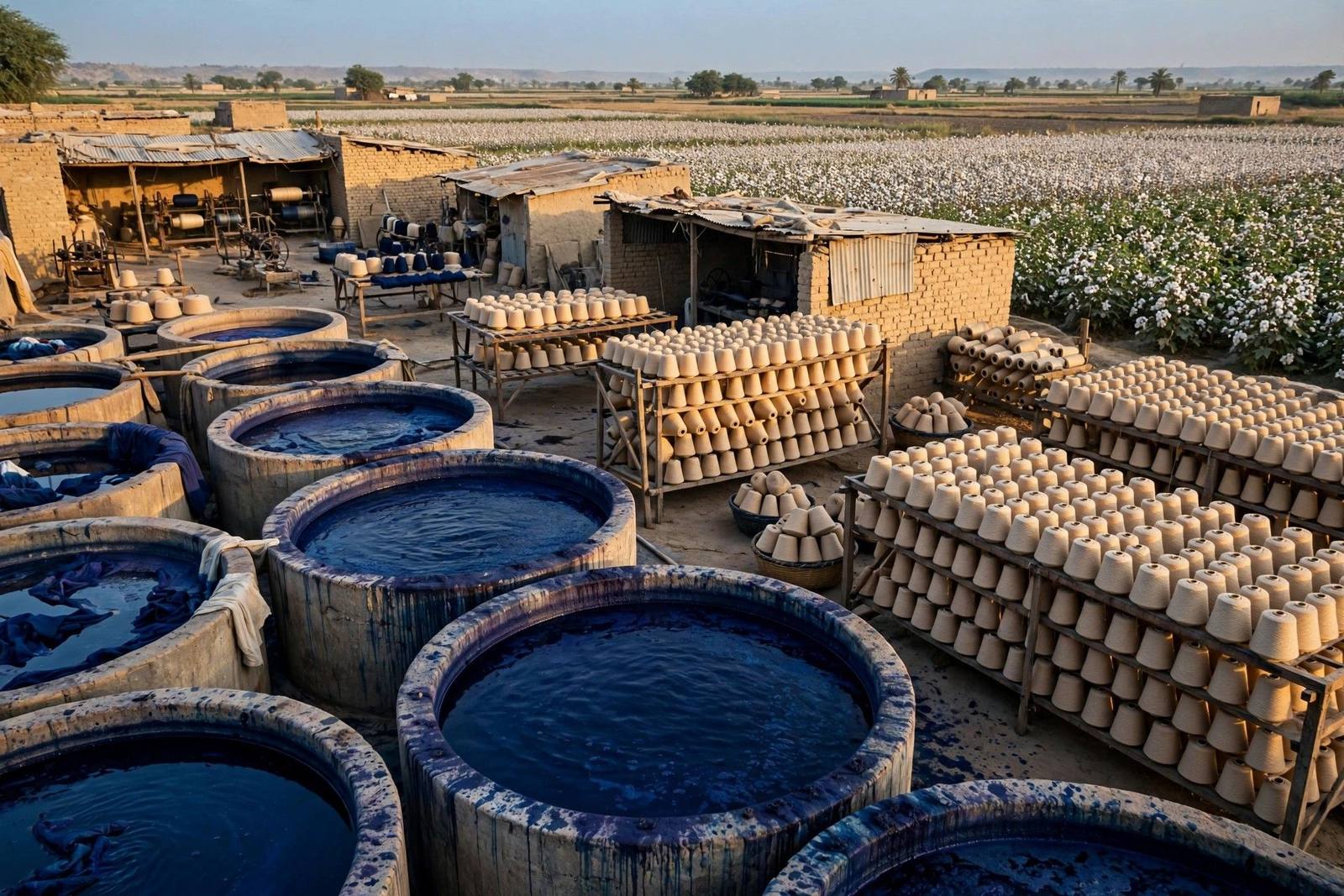
The Colony Group's own profile traces its first industrial venture to cotton ginning in 1881 — the business of separating cotton fibre from seed, the necessary first step between the farm and any mill. By the time its founder, Mohammad Ismaeel, turned to spinning, he was already operating a chain of ginning factories — fourteen by one historical account — and several flour mills. That sequence matters: Colony did not enter textiles as a financier's speculation but as a processor moving one step up its own supply chain, from cleaning cotton to spinning it.
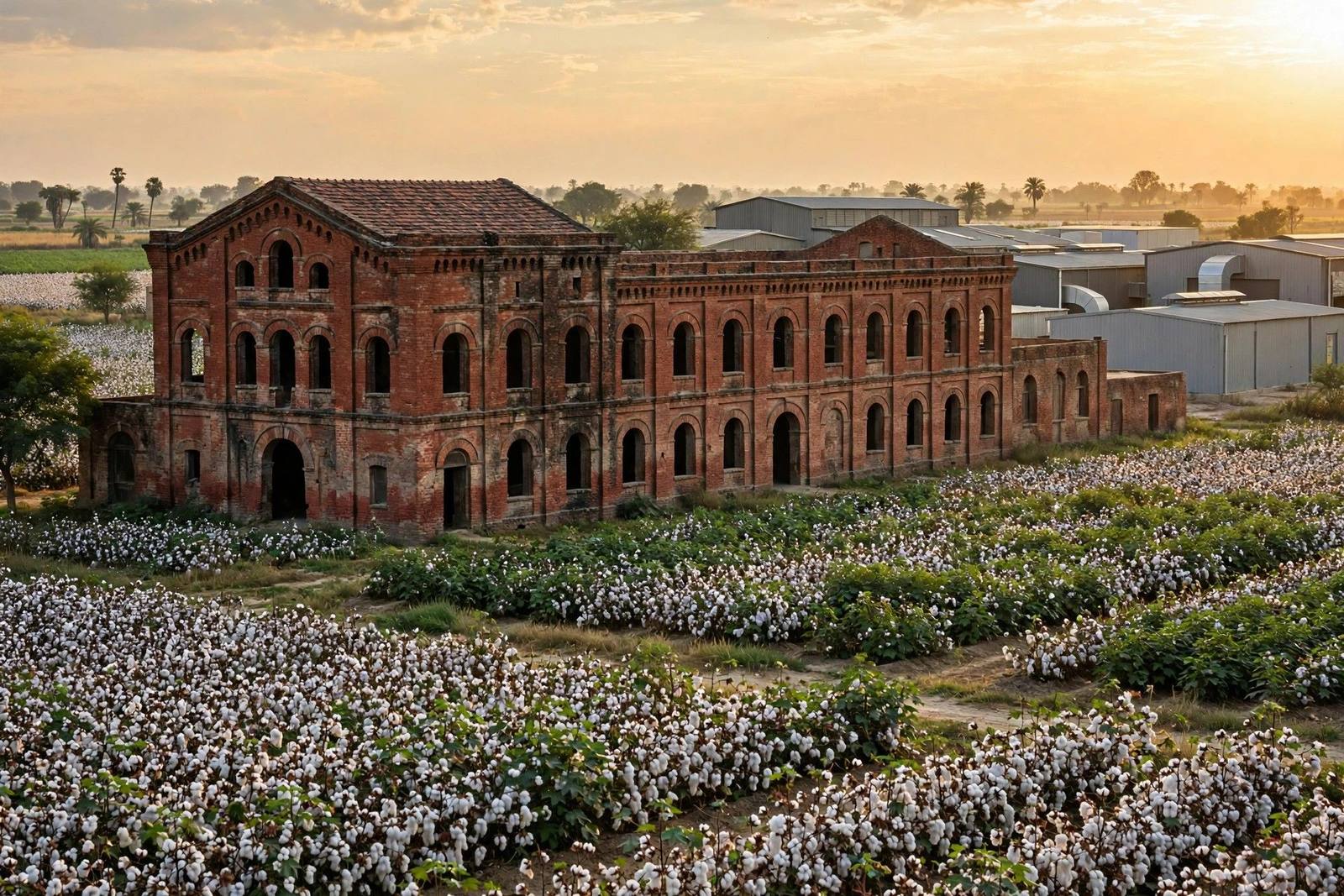
Work on Colony Textile Mills at Multan began in 1945, and the first spinning plant was put up in 1946, initially in the Faisalabad area's orbit before the operation settled at Multan — historical accounts describe the move as a response to competition, including from the established Delhi Cloth & General Mills. Multan proved an inspired location: it sits in the heart of southern Punjab's cotton belt, so the mill's raw material grew in the fields around it. When Pakistan became independent in August 1947, Colony's Multan mill was among the very first industrial assets of the new country — group histories describe it as the first textile mill commissioned in independent Pakistan — and the group has traded on that founding status ever since, including the claim that Colony was among the first companies registered on the Karachi Stock Exchange on its creation.
Expansion was rapid. By 1952, by the group's account, Colony Textile Mills was already a composite plant of some 120,000 spindles and 1,500 looms, with fabric finishing capacity in excess of 150,000 metres a day — a large mill by the standards of any country of that era. The group ventured beyond textiles into banking, insurance, cement and power, and by 1970 the Colony family stood among Pakistan's top industrial groups — counted in the era's famous lists of leading families that dominated the country's industrial assets — with interests extending into newspapers and politics as well as manufacturing.
Division, survival and a 2011 rebirth on paper
Like many first-generation Pakistani groups, Colony was eventually divided among the founder's heirs. Mohammad Ismaeel's sons — among them Farooq A. Shaikh, Naseer A. Shaikh and Mughis A. Shaikh, names that recur across the group's history — headed separate divisions, with the textile mills associated particularly with Mughis A. Shaikh's branch. The group's twentieth century also contains one of Pakistan's darkest industrial episodes: in January 1978, during the military regime of General Zia-ul-Haq, paramilitary forces fired on striking workers at the Colony mills in Multan, killing a number of workers — accounts of the toll vary widely — in an event still remembered in labour history as the Multan massacre. A serious profile does not skip it: the mills' history includes the people who worked in them, and the relations between mill owners and mill workers are part of what the Colony name means in Multan to this day.
The listed company a PSX investor buys today is, in legal form, younger than the name suggests. Colony Textile Mills Limited states in its financial statements that it was incorporated in Pakistan on 12 January 2011 under the companies law then in force, and is listed on the Pakistan Stock Exchange, with its registered office on Ferozepur Road in Lahore. Such re-incorporations and restructurings — an old operating business rehoused in a new corporate vehicle, commonly through court-sanctioned schemes that transfer mills, assets and liabilities — are a recurring feature of Pakistani industrial history, and they are why the careful reader dates the business to 1946 and the company to 2011, and checks what came across in the transfer.
What the mills make today
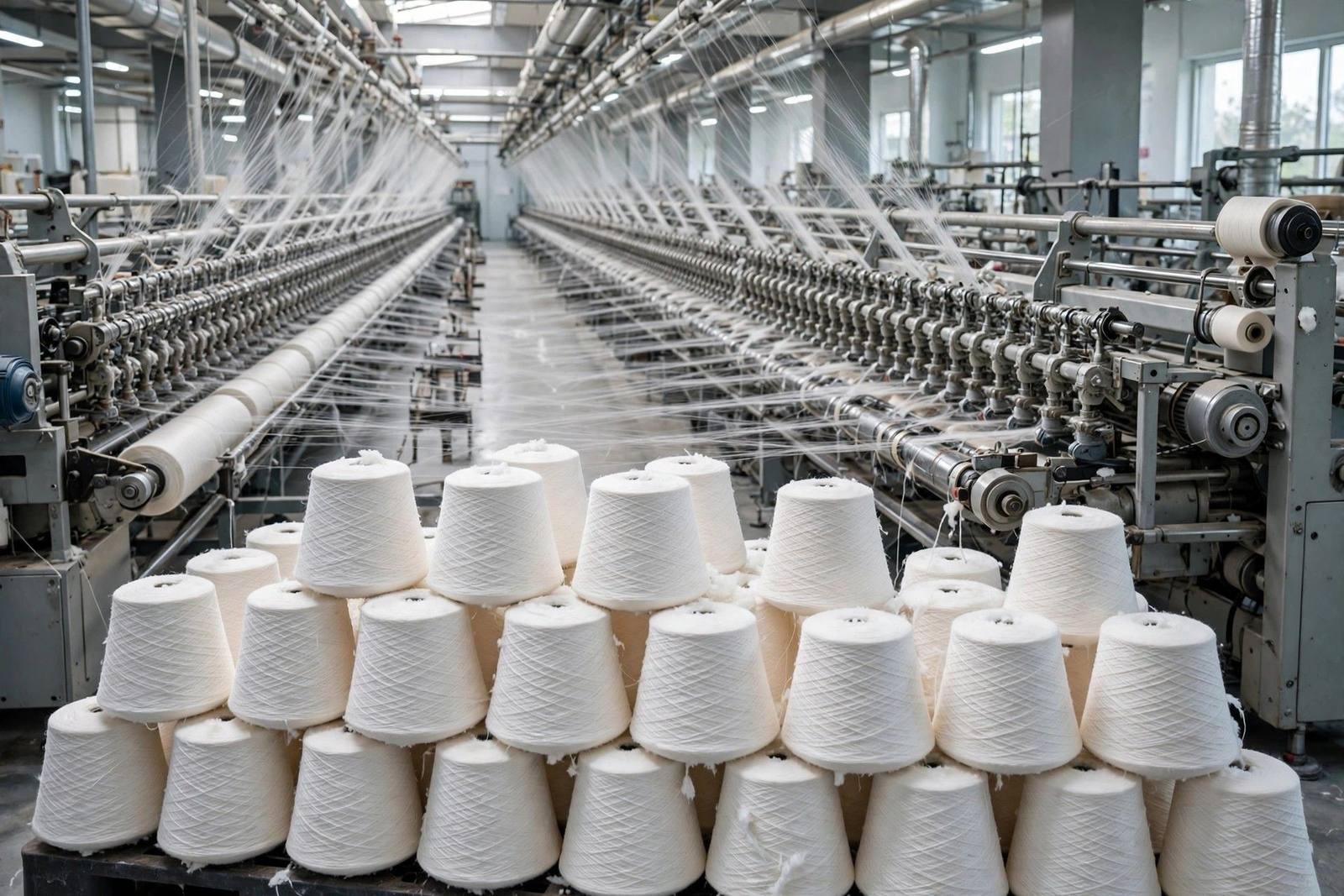
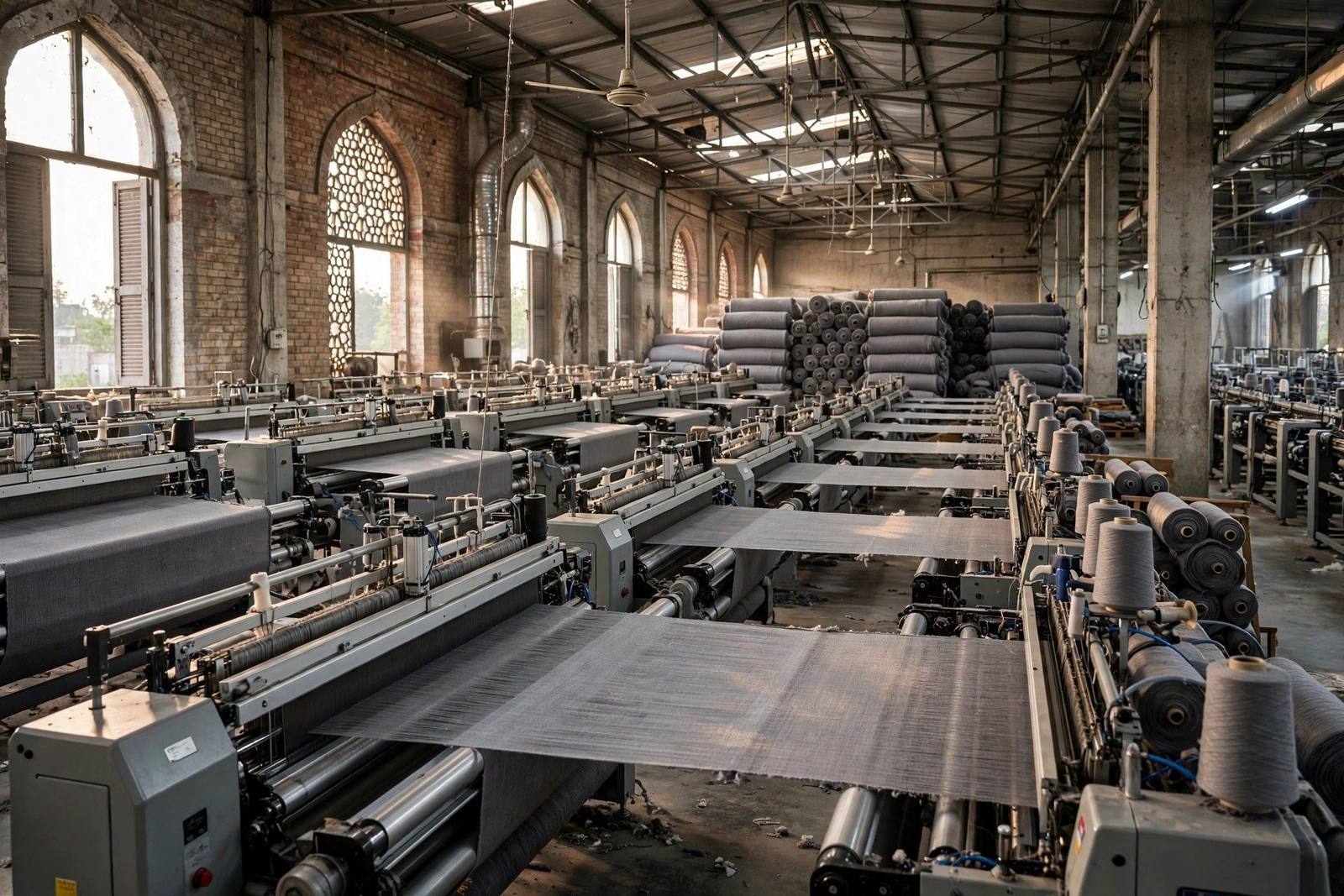
The company's stated principal activities are the manufacture and sale of yarn, fabric, garments and made-ups — and trading in real estate, a pairing that tells its own story about old industrial groups sitting on valuable urban and peri-urban land. Its production geography is set out in its annual report: a spinning unit on Sher Shah Road at Ismailabad, Multan, and a weaving unit on the Raiwind–Manga Road near Lahore, with head office functions in Lahore. Group profiles describe CTM's spinning capacity at around 195,000 spindles, alongside a sister private company, Colony Industries, with its own spindles and air-jet looms — group figures of that vintage should be read as a sense of scale rather than a current plant census, since machinery counts change with every balancing and modernisation round.
The yarn range described by the group spans coarse to medium counts, roughly Ne 7 to Ne 50, in single and double yarns, for both the apparel sector and home textiles — the workhorse counts of Pakistani spinning, sold to weavers and knitters at home and to export markets. The weaving side converts yarn into greige fabric on air-jet looms, and in-house power generation at group facilities reflects the industry's universal answer to unreliable grid supply: a mill that cannot run around the clock cannot pay for its spindles.
How Colony makes money
CTM's core earnings follow the spinner's spread set out in PSX textile stocks: cotton in at a world-linked price, yarn and fabric out at prices set by demand from the garment and home-textile trades, with energy, labour and finance as the conversion costs in between. Its Multan location shortens the haul from the southern Punjab cotton belt, a genuine if modest advantage in a business of thin margins, and the crop itself — its size, quality and price — remains the first variable in any year, as Pakistan's cotton economy explains.
The composite element matters more to CTM than to a pure spinner: fabric and made-ups capture a second margin and diversify the customer base beyond yarn buyers. The real-estate trading line matters differently — it is episodic rather than operational, capable of flattering a single year's result with a property transaction, and therefore an item the careful reader separates from mill earnings before judging performance. Old groups across the PSX hold land bought generations ago at prices no balance sheet fully reflects; how and when that value surfaces for shareholders is a governance question as much as a business one, a theme our guide to family businesses on the PSX explores.
Strengths, risks and the weight of the name
Colony's strengths are longevity, location and scale. A spinning business that has operated, in one corporate form or another, since before independence has bought cotton through every kind of harvest and sold yarn through every kind of market. Its Multan base sits amid its raw material. Its spindleage places it among the larger spinning operations in the country, with the purchasing and marketing weight that follows.
The risks are the sector's risks, sharpened by the company's profile. Spinning margins are the thinnest in the textile chain and the first to vanish when cotton spikes or yarn demand softens; energy tariffs in Pakistan have risen to levels that punish older machinery; and a company whose listed form dates to a 2011 restructuring invites the standard questions about asset quality, debt and related parties that attach to any rehoused business. Liquidity in the shares can be thin, so prices may not reflect the mills' condition promptly in either direction — see free float for why sponsor-held registers behave this way. The 1978 episode, finally, is a reputational inheritance the company carries whether it discusses it or not; it belongs in an honest history, recorded here as it is remembered in labour and press accounts, with casualty figures that sources do not agree on.
An old name in a young country's industry
Colony's longevity deserves one more layer of context, because Pakistan's textile industry is younger than its reputation suggests. At independence the country inherited cotton fields in abundance and almost no mills to process them — the great spinning and weaving capacity of British India sat largely on the other side of the new border. The first industrial generation, Colony prominent among it, therefore built under conditions a modern investor can barely picture: machinery imported against scarce foreign exchange, a domestic market of millions accustomed to imported cloth, and a state that alternately championed and, in the nationalisation era of the 1970s, threatened its industrialists. That Colony's mills kept spinning through the nationalisation decade, the 1978 tragedy, the liberalisations and import shocks that followed, and the energy crisis of the 2000s is the substance behind the founding legend.
The 2011 re-incorporation belongs to that same long adaptation. Pakistani industrial history is full of businesses whose operating life is continuous and whose legal life is episodic — partnerships becoming companies, companies merging, schemes of arrangement moving mills between vehicles as families divide estates, settle successions and refinance. Colony's three-way family division is the textbook case: the name, the mills and the craft persisted while the ownership chart was redrawn generation by generation. The researcher's rule follows naturally — always ask which company, in which years, owned which mill, and never assume that a century-old brand and a present-day listed shell are the same legal thing. Colony rewards that care: its history is genuine, and precisely because it is genuine it needs the dates kept straight.
There is a final, practical way to read Colony: through its land and its location decisions. The mills sit where the nineteenth-century ginning trade put them, the head office sits in Lahore where the family's other interests gathered, and the weaving unit sits at Raiwind on Lahore's expanding edge — ground whose value as industrial land has been transformed by the city's growth. Old Pakistani groups are often, in part, property stories wearing industrial clothes, and Colony's own disclosure of real-estate trading among its principal activities says the quiet part aloud. For the shareholder, the question is never whether such value exists, but whether it is being realised for all shareholders or merely held for the family's option — a question answered slowly, transaction by transaction, in the notes to the accounts.
The name on the PSX and who studies it
CTM trades in the PSX's textile sector as a mid-sized composite name, followed mainly by investors who specialise in the older industrial groups — readers comfortable weighing mill operations against land, restructuring history and sponsor intentions. Dividend behaviour in such companies is typically irregular and board-dependent, following cash and the cycle rather than a stated payout policy; the mechanics for any declared dividend are in how PSX dividends work.
What followers watch: cotton arrivals and prices in the southern belt; spindle utilisation and any modernisation spending; the split between yarn, fabric and made-ups in sales; real-estate transactions and what they do to reported profit; debt levels and finance costs; and any group-level reorganisation between CTM and its sister companies. This profile is educational content, not financial advice, and nothing in it recommends buying or selling CTM shares.
Key takeaway: Colony Textile Mills carries one of Pakistan's oldest textile names — ginning from 1881, a Multan mill from 1946 — in a company incorporated in its present form in 2011, earning a spinner-weaver's living on cotton, energy and the spread between them.