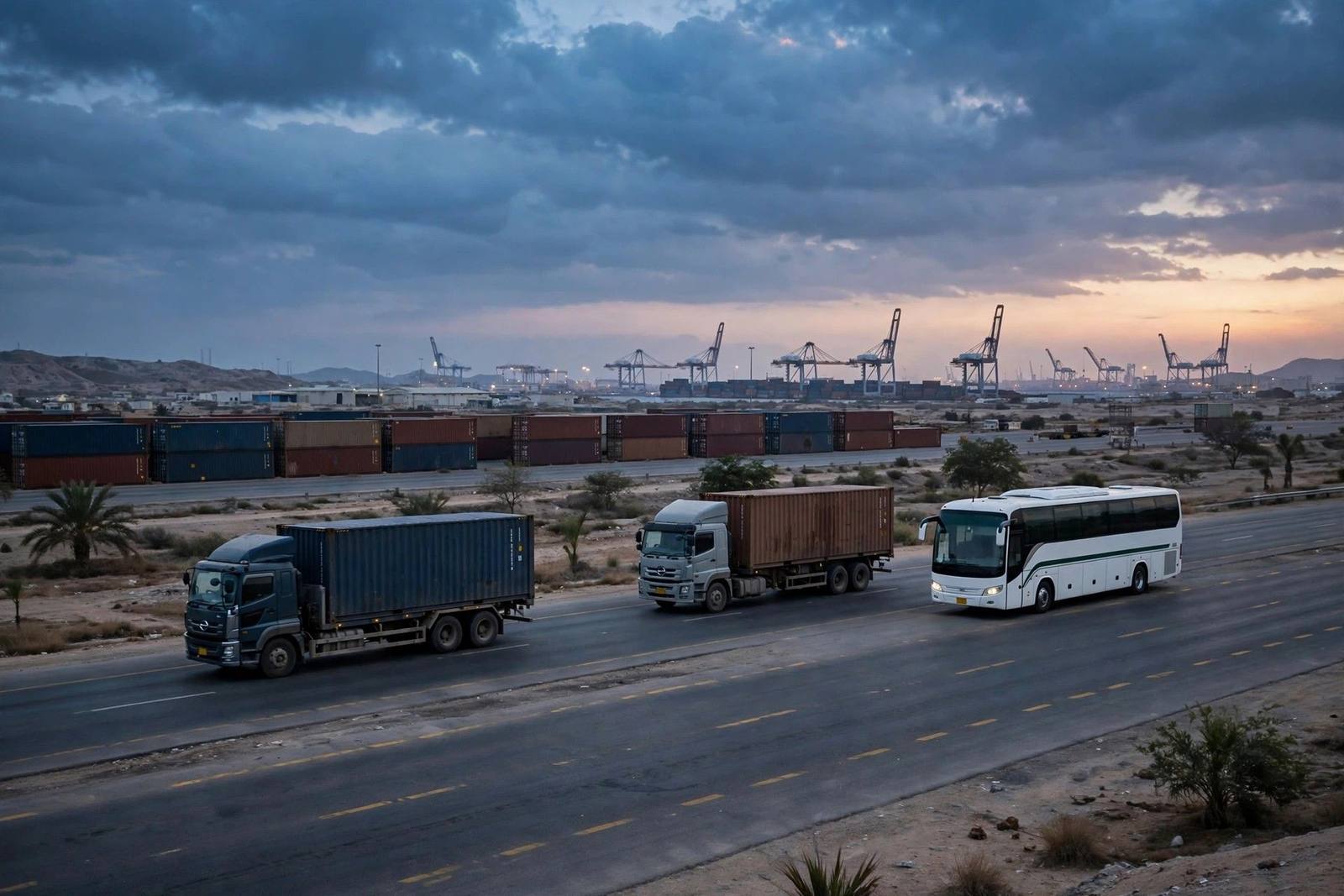
KARACHI: Passenger cars have dealers and launch parties; trucks have loading docks at midnight. Pakistan's freight moves overwhelmingly by road, and for most of the past four decades a large share of it has moved on vehicles assembled in Karachi's S.I.T.E. industrial area by Hinopak Motors Limited — HINO on the Pakistan Stock Exchange. Hinopak builds the trucks that carry containers out of the ports, the prime movers that haul trailers up the national highways, and the bus chassis underneath the coaches that connect every city in the country. It is a Japanese subsidiary in the fullest sense: founded by Hino Motors of Japan, majority-owned by Hino and Toyota Tsusho since the 1990s, reporting on a Japanese April-to-March financial year, and run to a parent's global standards. Its story is the commercial-vehicle counterpart to the car story told elsewhere in this series.
Formed in 1985, Japanese-controlled by 1998
Hinopak was formed in 1985 by a four-way founding partnership: Hino Motors and Toyota Tsusho Corporation from Japan, the Al-Futtaim Group from Dubai, and the state-owned Pakistan Automobile Corporation (PACO). The logic matched the era's joint-venture template precisely — Japanese product and technology, a Japanese trading house to manage the supply chain, a regional commercial partner, and the Pakistani state providing the industrial-policy frame. The company was listed on the Karachi Stock Exchange in 1988, taking its place early among the exchange's automobile assemblers.
The defining ownership change came a decade later. In 1998, after disinvestment by the other two founding investors, Hino Motors and Toyota Tsusho obtained majority shareholding in the company. From that point Hinopak's governance settled into its long-term shape: Hino as the technology and product parent — itself part of the wider Toyota group, Japan's largest truck maker — and Toyota Tsusho, the Toyota group's trading arm, as the second anchor shareholder handling much of the commercial connective tissue. The arrangement has now lasted more than a quarter of a century essentially intact, giving Hinopak one of the most stable ownership records on the PSX — a useful contrast with the repeated restructurings elsewhere in Pakistan's auto sector, surveyed in our overview of automobile stocks on the PSX.
What it actually makes
Hinopak assembles, manufactures and sells Hino trucks and buses from its plant at S.I.T.E., Karachi. The range works upward by size. At the working end sit light-duty trucks for city and regional distribution — the vehicles that deliver everything from beverages to building materials. Above them are medium and heavy trucks and prime movers for long-haul freight, tankers and tippers, including specialised vehicles built for particular hauling jobs. Alongside the cargo range sits the bus business: Hinopak supplies bus chassis and builds bus bodies, the foundation under Pakistan's inter-city coaches and institutional fleets. Spare parts and after-sales service form the quiet third business — for a commercial operator, a truck is only as good as the workshop that can return it to the road, and Hino's parts and dealer support are a decisive part of why fleets buy the badge.
That fleet logic distinguishes Hinopak's whole market. Its customers are rarely individuals buying one vehicle for pleasure; they are transport companies, logistics fleets, goods carriers, bus operators and institutions buying transport capacity as a business asset. Purchases are calculated — fuel consumption per kilometre, payloads, maintenance cost, resale value — and measured in total cost of ownership over hundreds of thousands of kilometres. A brand that survives decades of such arithmetic, as Hino has in Pakistan, has earned its position in ledgers rather than advertisements.
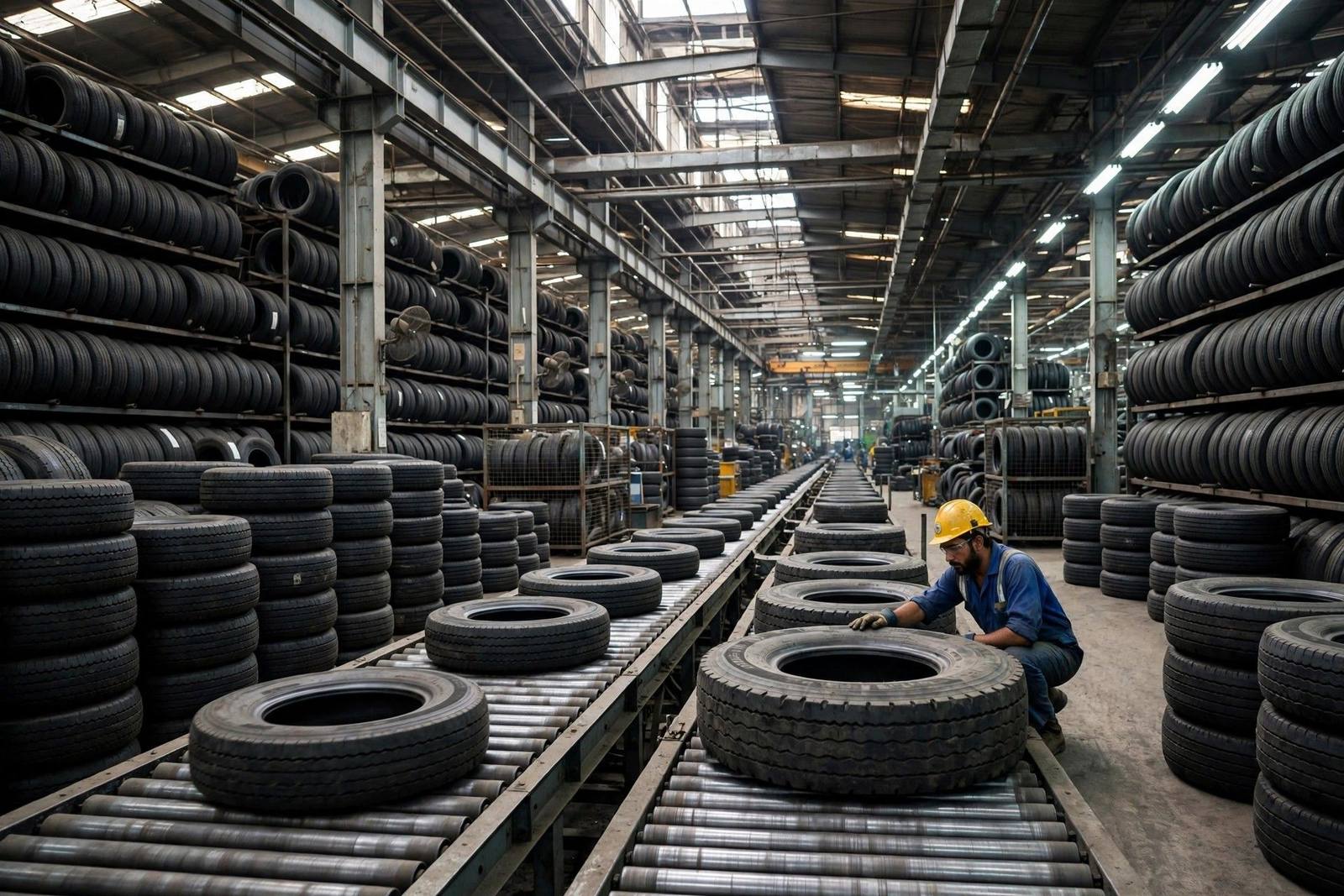
The plant itself is run on the Japanese production disciplines its parents practise worldwide — standardised work, quality built into each station rather than inspected in afterwards, and a supplier programme that pushes the same habits into the Pakistani vendor base that feeds it. Localisation under such a regime is a ladder, not a slogan: castings, pressings, seats, tyres and electricals move onshore as vendors prove they can hold tolerance and schedule, and each rung climbed is margin protected from the exchange rate and a skill banked in Karachi's industrial workforce. The wheel and tyre suppliers in this series — Baluchistan Wheels and Ghandhara Tyre — live on exactly such ladders, on the other side of Hinopak's purchase ledger.
How it makes money: freight is the customer
A truck assembler earns when Pakistan's goods economy invests. Freight rates, port volumes, construction activity, and the economics of road transport versus rail all feed into fleet-owners' decisions to replace or expand. When trade is brisk and diesel economics work, operators order; when the economy slows, they sweat their existing fleets for another year, and assembler volumes fall faster than almost any other line in the vehicle industry — a truck is a postponable capital purchase in a way a replacement tyre or battery is not. Hinopak's results therefore swing on a clear, visible cycle, and its best years have historically included its record profit performance in the late 2010s, when commercial-vehicle demand across Pakistan ran hot.
Costs carry a heavy imported-content signature. Kits and components shipped from Japan — engines, transmissions and technology-dense parts — are priced in yen and dollars, while localisation covers cabs, chassis work, bodies and a growing parts programme. The exchange rate thus sits inside every margin calculation, and price increases to fleet customers must be negotiated against Chinese-brand competition at the cheaper end — trucking upstarts that have chipped at the Japanese incumbents across Asia — and against the other established Japanese names sharing the market. Parts and service revenue smooths the mix: the installed base of Hino trucks on Pakistani roads keeps consuming spares in years when new sales rest, a stabiliser that car assemblers enjoy too but truck makers feel even more strongly because working vehicles cannot wait.
Life on the road: parts, service and the installed base
A truck's first sale is made by the assembler; its second, third and fourth owners are retained by the parts network. Pakistan's commercial fleet is worked hard and kept long — vehicles pass from large fleets to smaller operators to owner-drivers, accumulating years and kilometres at each step — and at every stage the availability of genuine spares and competent workshops decides whether the Hino badge remains an asset or becomes a liability to be traded away. Hinopak's after-sales operation, supplying parts and support for the parc of Hino vehicles built up since the 1980s, is therefore not an appendage to the manufacturing business but its moat: it generates steadier revenue than vehicle sales, and it manufactures the trust that sells the next generation of trucks to the same families and fleets.
Bus work deserves its own note, because it shows the company wearing two hats at once. As a chassis supplier, Hinopak sells the rolling foundation to operators and body-builders; as a body builder itself, it delivers finished buses. Pakistan's inter-city coach market — the Daewoo-era motorway coaches and their successors — professionalised around reliable Japanese chassis, and the bus side of the plant has shared in that story. Fleet buyers in both segments judge a supplier across decades, which is why the company's customer relationships often predate its current sales staff.
One more pressure shapes the order book: finance. Trucks are bought on credit more often than not, so the State Bank's policy rate reaches Hinopak's showroom by a short road — when borrowing costs spike, fleet renewal freezes even in a decent freight year, and when they ease, pent-up replacement demand can arrive faster than production planning likes. Seasoned watchers of the company therefore keep one eye on interest rates and one on the ports, and treat any quarter explained by only one of them as half-read.
Strengths, risks and honest caveats
The strengths start with the badge and its parents. Hino's global reputation in medium and heavy trucks, Toyota Tsusho's supply-chain muscle, an assembly plant operating since the 1980s in Pakistan's industrial heartland, and for long stretches a commanding position in Pakistan's truck and bus market — company histories have put its historical segment share at the top of the industry by a wide margin — add up to a formidable incumbent. Fleet trust compounds slowly, and Hinopak has had forty years to compound it.
The risks mirror the customer. Commercial-vehicle demand is among the most cyclical in Pakistani manufacturing, amplified by interest rates (most trucks are financed), fuel prices and the general freight economy; downturns that trim car sales can halve truck orders. Imported-content exposure makes pricing a permanent negotiation with the exchange rate. Competition has structurally intensified — Chinese trucks at lower price points and new entrants across segments press the premium Japanese model from below — and emission and safety regulation, whenever Pakistan tightens it, forces model changes on the parent's timetable rather than Karachi's. The other caveat is scale and float: the two Japanese parents hold the overwhelming majority of the shares, so the public float is thin and trading can be sparse, with prices moving in jumps when interest does arrive. None of this makes the company fragile — its parents' standing sees to that — but it does shape what owning the minority line feels like.
The name on the PSX
HINO trades under its parent's brand name in the automobile assembler sector, with the April-to-March financial year its Japanese ownership imposes — a small oddity that makes its reporting calendar different from almost every Pakistani peer, which close in June or December. Students comparing Hinopak with Indus Motor or Honda Atlas Cars should line up the periods before lining up the ratios. Its dividend record follows the commercial cycle — payments in strong freight years, restraint in the downturns — and is best read over a full cycle rather than a single year, through the standard mechanics explained in how PSX dividends work. Note, too, for ticker-watchers: HINO is a different company from the similarly named pharmaceutical stock HINOON elsewhere on the board — a confusion the market's shorthand invites and this series is careful to avoid.
Reading Hinopak through a full cycle
The practical lesson of the company's history is to judge it across a complete freight cycle rather than at any single point on one. At the top of a cycle — construction booming, fleets renewing, credit cheap — a truck assembler looks brilliantly profitable, because fixed plant costs are spread over full production and pricing holds. At the bottom, the same plant reports the mirror image, and commentators periodically write the premium truck business off altogether, usually just before fleet replacement can be postponed no longer and orders return in a rush. The useful questions are the through-cycle ones: does the parts and service base grow the installed parc year after year? Is the balance sheet carried into downturns in the conservative condition Japanese parents typically insist on? And is the product range being renewed — engines, emissions, safety — at the pace regulation and competition will shortly demand? An investor who tracks those three can let the cycle's noise look after itself.
There is a final, quiet point in the company's favour: commercial vehicles are bought by professionals who publish their judgements in repeat orders. A consumer brand can live for years on advertising; a truck brand lives or dies in fleet managers' spreadsheets, renewed model by model. Forty years inside those spreadsheets is evidence of a kind no marketing can manufacture.
What kind of investor studies Hinopak
Hinopak rewards the investor who watches Pakistan's real economy: port throughput, freight rates, construction starts, diesel sales. It is a leveraged reading of the goods economy with a Japanese parent — conservative in governance, dramatic in cycle, and honest in what it reveals about whether the country is moving more stuff this year than last. This profile is educational content, not financial advice. Readers building the wider picture can continue with the sector overview and the Aktzien learning library.
Key takeaway: Hinopak, formed in 1985 and majority Japanese-owned since 1998, assembles Hino trucks and buses at S.I.T.E. Karachi — a stable, parent-anchored company whose earnings rise and fall with Pakistan's freight economy.