KARACHI: For more than three decades, the name on some of Pakistan's most familiar medicine boxes was Sanofi — and behind that name stood a Karachi factory in the Korangi industrial area making the tablets and insulins the country's doctors prescribed daily. The company is Sanofi no longer. Since 2023 it has been Hoechst Pakistan Limited — HPL on the Pakistan Stock Exchange — after Pakistan's Packages-led investor consortium bought out the French group and restored the name the company was born with in 1967. Few listings carry their history so visibly in their name: Hoechst, then Aventis, then Sanofi, then Hoechst again, each change recording a global merger or a local buyout. For a beginner surveying the PSX pharmaceutical stocks, HPL is the returning original — a large, established drugmaker that has come home to local ownership.
The drugmaker with three famous names
Strip the renamings away and one continuous business remains: a Karachi pharmaceutical manufacturer, incorporated in 1967, making medicines in Korangi since the early 1970s and listed since 1977. Its catalogue has always centred on established prescription brands — the kind of mature, trusted products that Pakistani pharmacies dispense in enormous volume. In recent directors' reporting, the brands singled out for driving growth are names of exactly that character: Flagyl, the long-standing anti-infective; Lantus, the insulin central to modern diabetes care; and Plavix, the cardiovascular staple. A portfolio of that sort does not need novelty to earn; it needs manufacturing quality, distribution reach and the prescribing habits of a generation of doctors.
What changed, repeatedly, was the letterhead. Each global convulsion in the pharmaceutical industry — the Hoechst and Rhône-Poulenc merger that created Aventis, Sanofi's acquisition of Aventis — arrived in Karachi as a new name over the same factory gate, until the final change of control brought the business back to its first name and to Pakistani owners.
Hoechst beginnings: 1967 to 1977
The company was incorporated in Pakistan on 8 December 1967 as Hoechst Pakistan Limited, the local arm of the German chemical and pharmaceutical giant Hoechst AG. Manufacturing of pharmaceuticals and speciality chemicals began in 1972, from the Karachi site in Korangi that the company occupies to this day — its registered office is at Plot 23, Sector 22, Korangi Industrial Area. In 1977 the company went public and listed on the Karachi Stock Exchange, joining the first generation of multinational subsidiaries that gave Pakistan's young market its blue-chip core.
The early decades were broader than medicines. An agrochemical formulation business started in 1985, reflecting the parent group's strength in crop science. The 1990s then unwound that breadth as the global parent reorganised: in 1996 the agriculture business was spun off into a separate entity, AgrEvo Pakistan, and the following year the speciality-chemicals business was sold to Clariant Pakistan. In June 1996 the company itself was renamed Hoechst Marion Roussel (Pakistan) Limited, after the parent's American pharmaceutical arm, and its business was restricted to pharmaceuticals — the shape it has kept ever since.
Becoming Aventis, then Sanofi
At the end of 1999 Hoechst AG and Rhône-Poulenc merged their life-sciences businesses globally into a new company, Aventis. Karachi followed: in November 2000 the company became Aventis Pharma (Pakistan) Limited, and in April 2003, after the local merger with Rhône-Poulenc Rorer Pakistan, it was renamed Aventis Limited. The sequence lasted barely five years. In 2004 Sanofi-Synthélabo acquired Aventis worldwide to form the group known as sanofi-aventis, and in September 2005 the Pakistani company took the name sanofi-aventis Pakistan Limited — the name a whole generation of patients, pharmacists and investors would know it by. When the global group simplified its identity to Sanofi in 2011, the Pakistani legal entity kept the sanofi-aventis name, even as its boxes and branding said Sanofi.
Through all of this the Karachi operation remained what it had been designed to be: the local manufacturing and marketing arm of a top-tier global drugmaker, one of the larger pharmaceutical companies in Pakistan, supplying mature brands at regulated prices through one of the country's deepest distribution networks. Its shares, trading under the symbol SAPL, were a classic multinational-subsidiary counter — tightly held by the French parent, which owned just over half the company, with the balance spread among local institutions and the public.
2023: the local buyout and the return of Hoechst
The Sanofi era ended by contract. Under a share purchase agreement signed in April 2022, Sanofi Foreign Participations B.V. agreed to sell its entire holding — 52.87 per cent of the company — to an investor consortium comprising Packages Limited, IGI Investments (Private) Limited and affiliates of the Arshad Ali Gohar Group. The transaction completed on 28 April 2023, and Packages Limited became the parent company by virtue of its 41.07 per cent shareholding. In August 2023 the board proposed restoring the company's original name, and sanofi-aventis Pakistan Limited became Hoechst Pakistan Limited — a deliberate act of corporate memory, reaching back past Sanofi and Aventis to the 1967 incorporation. The PSX symbol changed with the name: the counter that traded for decades as SAPL now trades as HPL.
The buyout placed the company inside one of Pakistan's oldest industrial orbits. Packages, founded by Syed Babar Ali, is the flagship of a group spanning packaging, insurance and consumer products — the same group family that stands behind Packages Limited itself and several other listings. For HPL, local sponsorship replaced a distant parent with owners for whom Karachi is home ground, while raising the questions every such transition raises: which global brands remain under licence, what investment follows, and how a mature portfolio is refreshed without the pipeline of a research giant behind it.
How Hoechst Pakistan makes money
The model is the classic established-brands drugmaker. Revenue comes from manufacturing and selling — and trading in — pharmaceutical and related products, dominated by mature prescription medicines whose volumes are large, whose prices are set within Pakistan's regulated pricing framework, and whose demand rests on chronic and everyday conditions: diabetes, cardiovascular disease, infections and pain. Medicines of this kind do not boom; they accumulate, prescription by prescription, across a population that is growing, ageing and urbanising.
Costs are the industry's familiar list, sharpened by history. Active ingredients and specialised inputs, including for products made under licence from the former parent and other originators, are substantially imported, so the rupee runs through the gross margin. A large field force, distribution to pharmacies and institutions nationwide, and the quality systems of a plant built to multinational standards must all be paid for from regulated prices. The post-buyout reporting illustrates the tension honestly: strong volume growth in leading brands in recent periods has at times been accompanied by margin pressure from costs and currency — the permanent negotiation between a drugmaker's price list and its import bill.
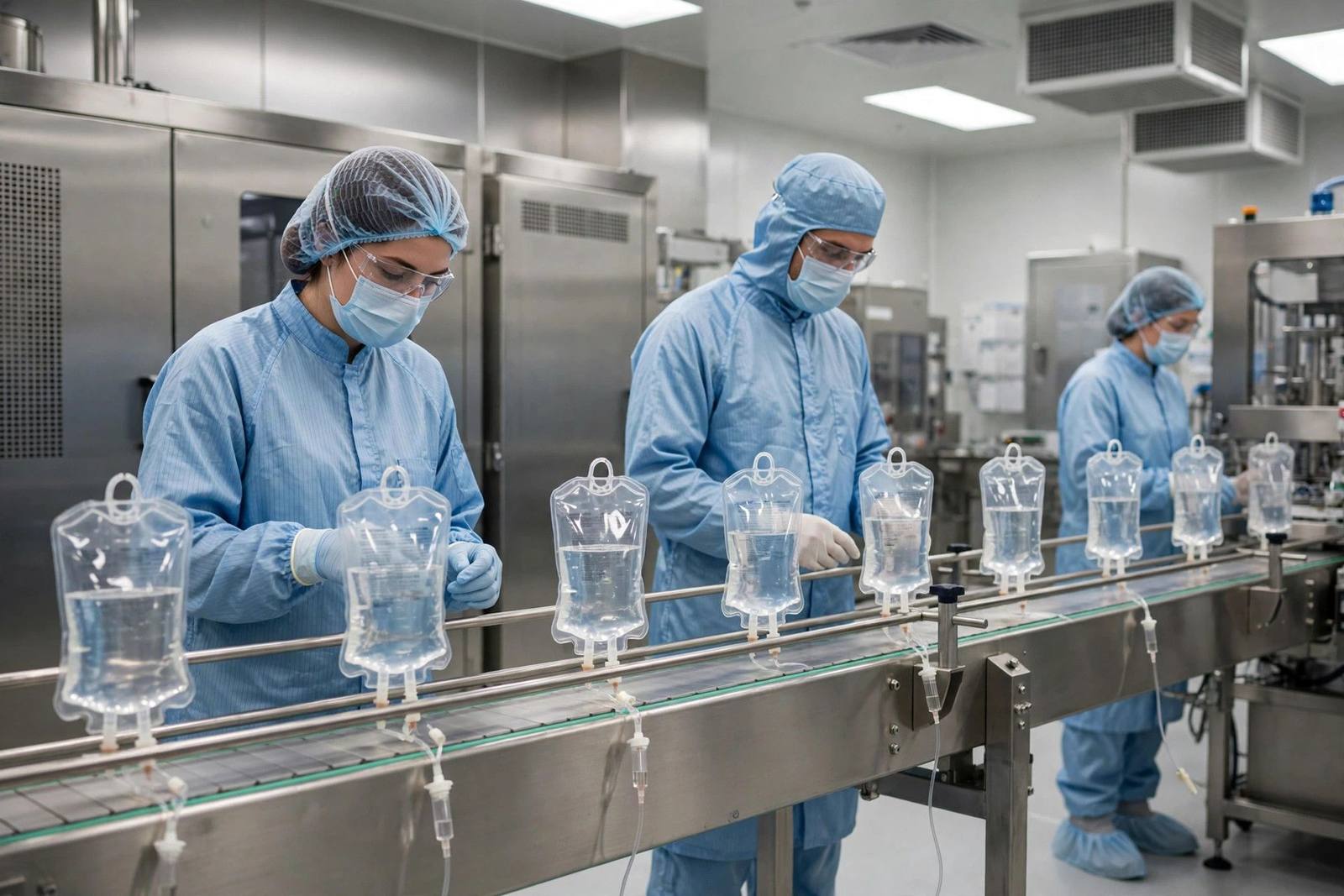
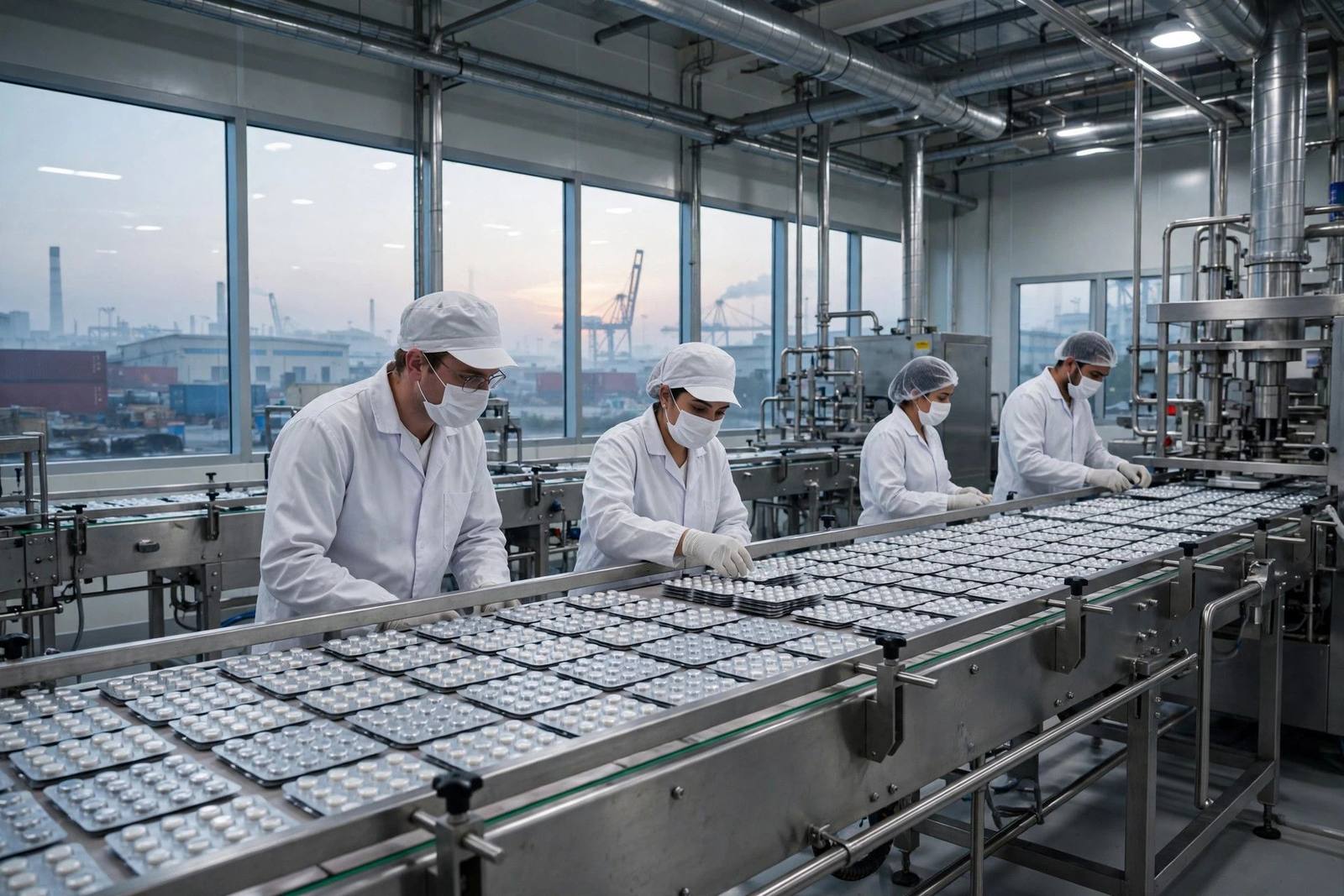
It is worth pausing on the factory itself, because Korangi is where the abstractions become concrete. A plant making pharmaceuticals continuously since 1972 accumulates things that cannot be bought quickly: validated production lines for tablets, capsules, liquids and sterile and insulin products; quality laboratories and documentation systems built to satisfy, over the years, German, French and global-group auditors as well as Pakistan's own regulator; and a workforce whose senior members have spent careers inside one set of walls. When control changed in 2023, what the consortium chiefly bought was that accumulated capability plus the brands it produces — the two assets that decide whether a drugmaker can hold its shelf space when its parent's name comes off the gate.
The transition also changed the questions minority shareholders should ask. Under Sanofi, strategy, pipeline and much pricing philosophy flowed from Paris, and the local listing was a comparatively passive claim on a global machine. Under Packages-led ownership, capital allocation is a local decision: how much to invest in the plant, whether to add products or acquire brands, how much to distribute as dividends and how the company should be positioned among the group's other listed holdings are now debated in Karachi and Lahore. That can mean sharper attention to the Pakistani business — or divided attention across an empire. The early evidence to weigh is operational: brand growth, margin recovery and investment at Korangi, reported period by period in the company's own filings.
Strengths, risks and the questions that remain
The strengths are scale, brands and the factory. Decades of continuous Korangi manufacturing give the company regulatory standing and process depth; its leading brands hold prescribing habits built over generations; and its new sponsors are substantial local industrialists with a record of running listed companies in Pakistan. The portfolio's maturity is itself a form of defence: demand for insulin and anti-infectives does not depend on consumer confidence.
The risks follow from the same facts. Mature brands face generic competition and regulated prices while imported costs float. The licence and supply arrangements that connect the company to its former parent's products are commercially sensitive and can be renegotiated over time — readers should treat the brand list in any year's annual report as the document that matters. And the share itself is structurally unusual: the company has a very small number of shares in issue for a business of its size, a large sponsor holding, and consequently a limited float, so the quoted price per share is high in nominal terms and trading can be thin. Comparisons with the diversified catalogue of GlaxoSmithKline Pakistan and the partnership model of Ferozsons Laboratories help place HPL's steadier, brands-and-factory character in context.
One more feature of the portfolio is easy to overlook: its centre of gravity in chronic care. Insulins, cardiovascular medicines and long-course anti-infectives are not bought once; they are refilled, month after month, by patients whose doctors rarely switch a stable prescription. That refill character gives a mature portfolio a visibility that acute, fashion-driven categories lack, and it is why the company's leading brands can be discussed in its own reporting in terms of steady percentage growth rather than launch spikes. The corollary is that losing a chronic brand — to a licence change or a generic rival — removes an annuity, not a season's sales, which is precisely why the brand-tenure question raised above matters so much to this particular company.
The name on the PSX
Hoechst Pakistan trades as HPL in the pharmaceutical sector, the successor symbol to SAPL. Its dividend history under both names has been that of a profitable mature drugmaker returning a meaningful share of earnings in many years, with interim and final payouts decided by the board according to cash and investment needs. The small share count means dividend per share figures look startling beside ordinary counters; what matters is the total returned and its sustainability, which the guide to how PSX dividends work helps a new reader put in proportion.
For the exchange, the counter also carries a small historical distinction: it is one of the relatively few Pakistani listings to have changed its name and symbol to mark a return to local control after decades inside a multinational group, reversing the direction of travel that defined the market's earlier privatisations and subsidiary sales. That makes its register — sponsor, institutions and a patient public minority — a live test of how the market values local sponsorship against a famous foreign parent.
What kind of investor studies Hoechst Pakistan
HPL suits the investor who studies transitions: a multinational subsidiary becoming a locally sponsored company, with famous brands, a real factory and new owners whose plans must be judged over years, not quarters. The reading list is concrete — brand licences and their tenure, margin recovery, investment at Korangi, and how the Packages group allocates capital across its empire. This article is educational content, not financial advice; a familiar name on a medicine box is the beginning of the research, not its conclusion.
Key takeaway: Hoechst Pakistan — Hoechst in 1967, Aventis in 2000, Sanofi from 2005 and Hoechst again since the Packages-led buyout of 2023 — is a mature Karachi drugmaker whose brands outlasted every name above its factory gate.