KARACHI: In a country where engine oil was long the preserve of the big oil companies, Hi-Tech Lubricants built a national brand out of somebody else's product — and then, step by deliberate step, made the business its own. The product was ZIC, the lubricant brand of South Korea's SK Lubricants, which Hi-Tech began marketing in Pakistan in the late 1990s and turned into a household name in workshops and parts markets from Karachi to Khyber. The steps that followed read like a textbook of how a distributor becomes an industrial company: a listing in 2016 — the very first on the newly unified Pakistan Stock Exchange — a state-of-the-art blending plant of its own completed the same era, an oil marketing licence, storage depots and petrol pumps. Trading as HTL, the Lahore-based company now straddles the two ends of the oil trade: premium lubricants, where its margins live, and fuel retail, where its volumes might. This profile explains how it got there and what the blend means for investors.
It begins with a can of Korean oil
The company's own histories date the business to March 1997, when Hi-Tech Lubricants began as an Association of Persons — a partnership, in plain terms — to market lubricants in Pakistan. Its founding wager was on provenance and branding. The lubricants it sold under the ZIC name were imported from SK Lubricants of South Korea, made from the high-grade base oils for which Korean refiners are known, and positioned above the commodity oils of the day: a premium product for a car fleet that was modernising, sold through a distributor network that rating-agency coverage would later count at more than 150 distributors nationwide. Through the 2000s ZIC carved out a position industry reports described, at the time of the listing, as roughly an eighth of the passenger-car motor oil segment and a mid-single-digit share of the total lubricants market — small numbers in absolute terms, but won against Shell, Caltex, PSO and Total brands with vastly deeper pockets.
The corporate form caught up with the business in stages: the partnership converted to a private limited company in 2011, then to a public unlisted company, as the founders prepared the business for outside capital. The lubricant industry it operated in was itself splitting into two markets — a formal, branded market of documented quality, and an informal one of recycled and counterfeited oil that undercut on price and damaged engines. Hi-Tech's entire strategy can be read as a bet on the formal side: branded packs, service tie-ups, and later its own HTL Express service centres, designed to put a trusted roof over the moment a motorist chooses an oil. That bet mattered when the time came to ask public investors for money, because it converted a distribution contract into a story about brand equity — though the contract, as we will see, remained the foundation, and foundations can be renegotiated by their owners.
2016: the first listing on the new PSX, and a plant of its own
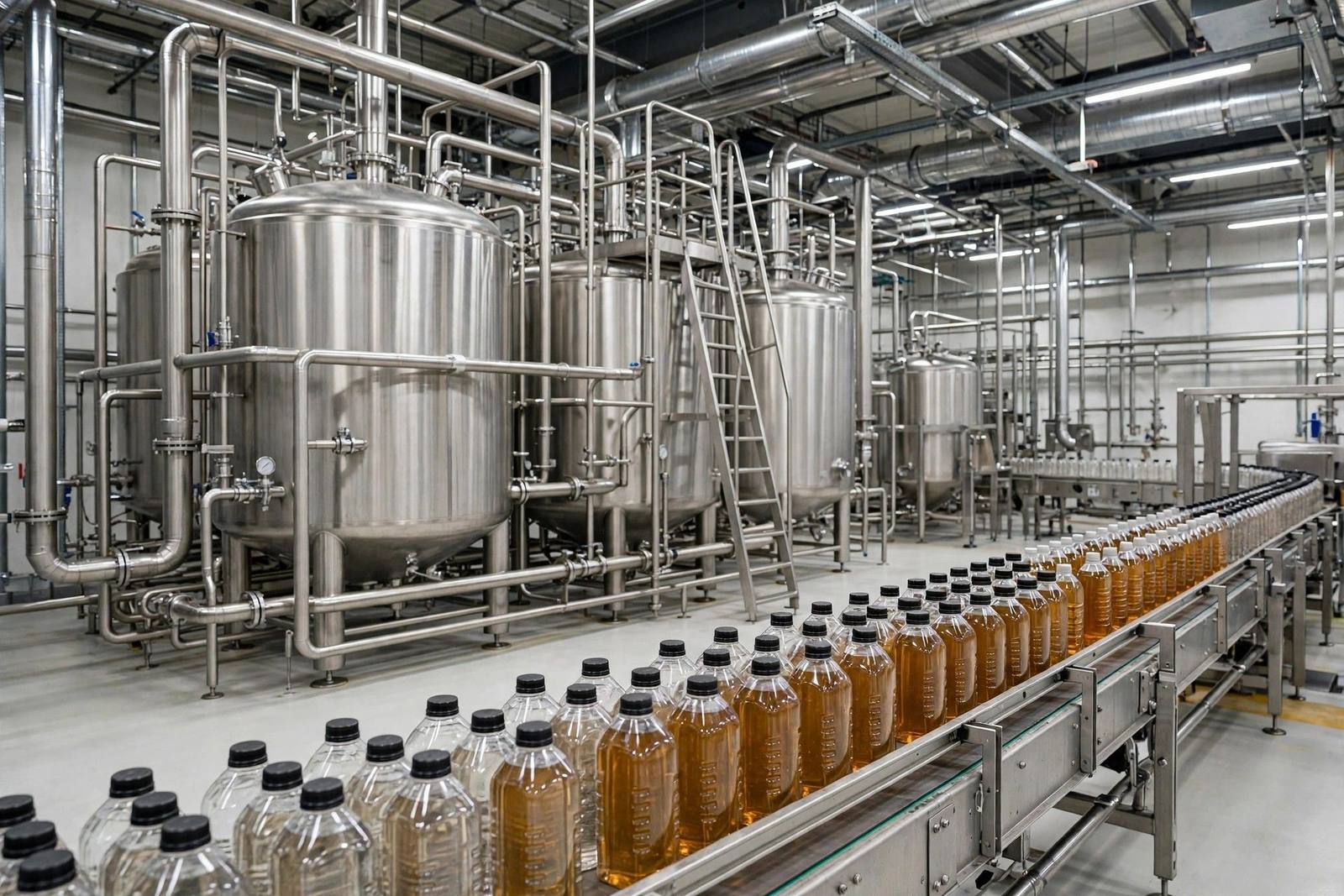
January 2016 saw Pakistan's three regional stock exchanges merged into a single Pakistan Stock Exchange, and Hi-Tech Lubricants holds a small, permanent place in that history: its initial public offering was the first listing of the new bourse. The book-building portion of the issue was oversubscribed about 2.24 times, and the strike price cleared well above the floor — contemporary reports record a strike of Rs62.50 against a Rs37 base — raising on the order of Rs1.8 billion across the book-built and public portions. The company was candid about what the money was for: filling lines and capacity at its blending plant, working capital, and footprint. The listing thus coincided with the transformation's second act. The idea of blending locally had been conceived in 2013, when the first stone was laid in a ceremony attended by SK executives; the plant — held through the wholly owned subsidiary Hi-Tech Blending (Private) Limited — was completed in August 2016, with reported investment around Rs1.7 billion. Instead of importing every finished litre, Hi-Tech could now import base oils and additives and blend ZIC in Pakistan, under licence and to SK's formulations, cutting cost per litre, easing the import bill's timing, and gaining the pricing competitiveness the rating agencies noted at the time.
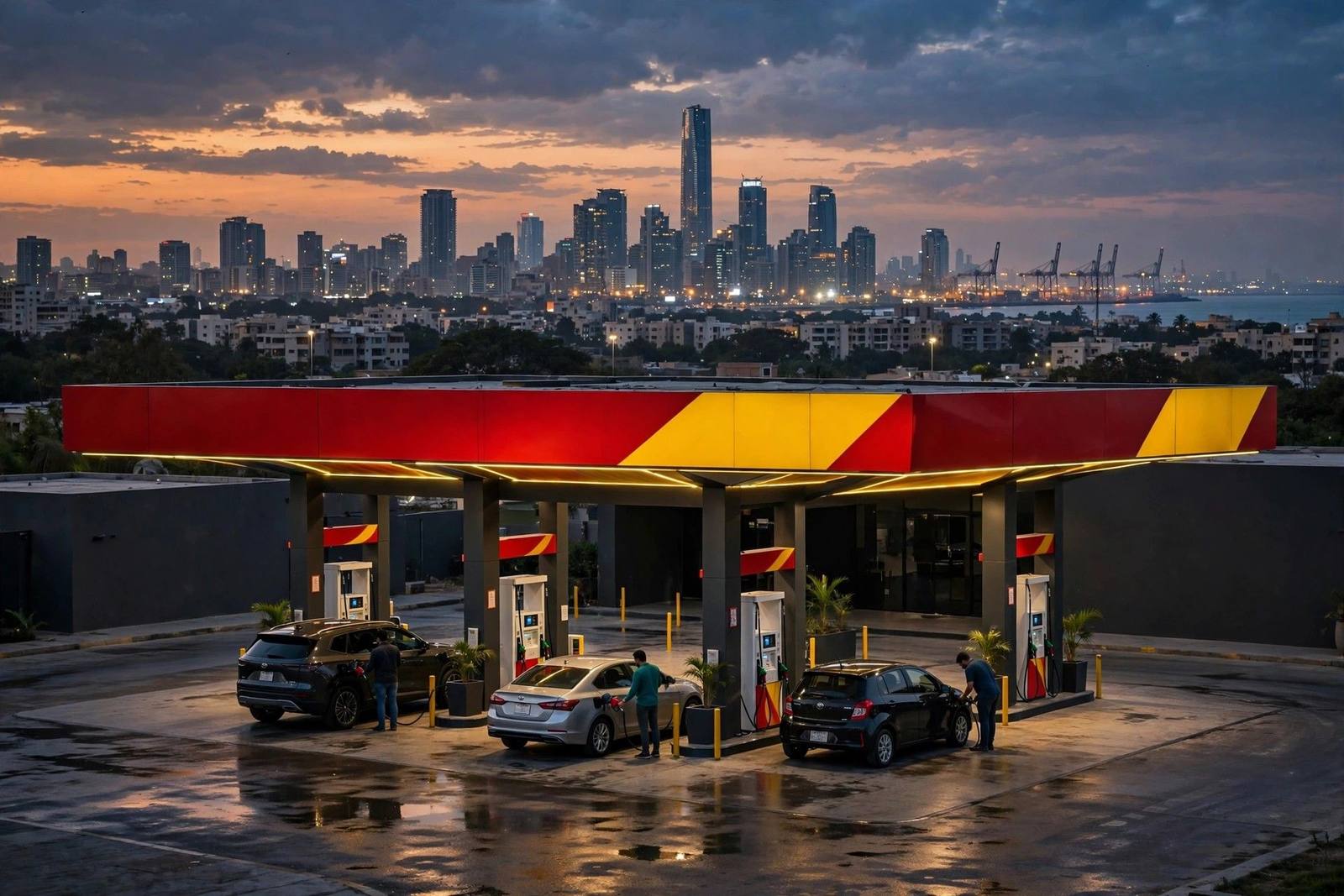
The third act followed quickly. In the financial year ended June 2017 the Oil and Gas Regulatory Authority granted Hi-Tech a licence to establish an oil marketing company, and the company began building the storage that an OMC licence obliges: a depot at Sahiwal opened the way to marketing permission for Punjab in May 2019, fuel sales began on 20 January 2020, and a second storage facility at Nowshera brought Khyber Pakhtunkhwa permission in 2023, with the provisional OMC licence renewed in stages into the mid-2020s. A lubricant company was becoming, deliberately, a small integrated oil company — blending plant behind it, depots beneath it, and eventually pumps in front of it, in the same downstream arena as Wafi Energy and Hascol, though at a fraction of their scale and — pointedly — without their leverage history.
How Hi-Tech makes money
Start with the lubricants, because they carry the economics. A blender-distributor buys base oil — in Hi-Tech's chain, within the SK supply relationship that also supplies the ZIC licence and formulations — plus additive packages, blends and packs them, and sells through distributors to retailers, workshops, fleets and industrial users. Gross margins in branded lubricants are structurally better than in fuels: the customer is buying engine protection and brand assurance, pack sizes are consumer-like, and pricing power, while contested, is real. The inputs, however, are imported and dollar-priced, so the rupee is the silent partner in every year's results — depreciation raises replacement cost instantly while retail prices adjust in steps — and base-oil supply ultimately traces back to refineries like National Refinery, Pakistan's sole base-oil maker, and its imported equivalents. Volume follows the vehicle fleet: car and motorcycle sales, the parc of ageing vehicles that consume more oil, and the grinding competition of the informal market.
Fuels invert that profile: enormous litres, a regulated per-litre margin shared with dealers, and heavy working capital, against which the blending plant's steady cash generation must be set. The strategic logic management has articulated is synergy rather than empire: pumps and depots give ZIC a physical retail presence and give the company a second, volume business riding the same brand and logistics. The financial logic is subtler — fuel retail smooths the lubricant cycle in good times and devours cash in bad ones, as every Pakistani OMC of the last decade can testify. Which side of that bargain dominates is, in substance, the question an HTL investor is underwriting. The group's structure keeps the two visibly separate: the listed parent in Lahore, at 1-A Danepur Road, procures and distributes lubricants and petroleum products, while the blending subsidiary owns the plant economics — a structure worth noting when reading segment results.
Strengths, risks and the single-brand question
Hi-Tech's strengths are brand, balance and sequence. ZIC is one of the few lubricant brands in Pakistan built from challenger status into genuine consumer recognition, and the company's premium segment position has been independently described as among the top handful of players in the industry. Its financial risk through the expansion years was rated low by the agencies that covered it — the growth was funded substantially by the IPO rather than by a borrowing tower, a contrast with the sector's cautionary tales that investors should not underrate. And its sequence was right: distribution first, manufacturing second, fuels third, each funded by the last.
The risks begin with the obvious one: concentration. The company's flagship economics rest on a single brand owned by a single Korean partner. Licences and supply agreements in the lubricants world are durable but not eternal — they are renewed by counterparties with their own strategies, and SK's global lubricants business has itself been through ownership changes and restructurings over the years. A reader of HTL's reports should always locate the current status of the SK relationship before anything else. Second comes the informal market: counterfeit and recycled oil cap the formal market's growth and punish any premium brand's pricing. Third, the fuel business imports all the hazards catalogued elsewhere in this series — regulated margins, inventory swings, and the working-capital appetite that broke bigger companies — at a scale where a small OMC has the least cushion. Finally, the long horizon: electrification eats lubricant demand vehicle by vehicle, motorcycles last of all, and Pakistan's two-wheeler-heavy fleet gives Hi-Tech time — but time is a runway, not a destination.
The fight for the oil-change moment
To see where Hi-Tech's brand is actually defended, stand in a Pakistani workshop at the moment of an oil change. That moment — a mechanic's recommendation, a familiar pack, a price negotiated in seconds — is the real marketplace of the lubricant industry, and it is contested by global brands, local blenders, smuggled stock and outright counterfeits poured into copied packaging. Hi-Tech's answer, beyond advertising, has been to build places: the HTL Express service centres, company-branded outlets where oil changes and basic care happen under the ZIC banner, putting the brand's promise of genuine product in physical form. Alongside them sits the unglamorous machinery of the formal trade — distributor networks reaching into secondary cities, fleet and industrial contracts for trucks, generators and machinery, and marine and speciality lines filling out the catalogue the importer began with.
This ground game matters to the investment story for a practical reason: it converts a supply contract into a franchise. A pure importer lives at its principal's pleasure; a company with hundreds of trade relationships, its own service format and a blending plant has assets that retain value across renegotiations, and customers whose loyalty is to the local organisation as much as to the Korean label. It also explains where the company's capital keeps going — depots, service centres, filling lines, distribution — a steady reinvestment in physical presence rather than in financial engineering, and the main reason the balance sheet reached the fuel business in the comparatively healthy shape it did. The contrast with the decade's failed marketers is not incidental: Hi-Tech's founders built their expansion the slow way, out of an IPO and retained cash, and the company's reported borrowings through the growth years stayed modest by the standards of the trade it was entering. Whether the pumps now extend that franchise or dilute it is the live debate around the stock; the oil-change counters, at least, are not in dispute.
HTL on the PSX: a compounder's silhouette, a small cap's reality
HTL has traded since 2016 as a modest-capitalisation consumer-industrial name, with the founding partners' group retaining the anchor holding and the register showing the usual small-cap pattern of quiet stretches and event-driven volume. Its dividend behaviour has followed the lubricant cash flows — the profile investors hope for from a branded business — rather than the feast-and-famine of pure refiners, though fuel losses or currency shocks can interrupt any year's pattern, and past payouts should be read across several years. The follower's checklist is specific: lubricant volumes and any disclosure of market share; the SK relationship's status and the blending plant's utilisation; base-oil and exchange-rate movements between reporting periods; the OMC build-out's milestones — depots completed, provincial permissions, pumps opened — and the working capital it consumes; and management's discipline in keeping the fuel adventure funded by lubricant cash rather than by debt. Our guide to how to buy shares on the PSX is the place to start for readers meeting the ticker for the first time.
The investor who studies HTL is typically looking for the rarest silhouette on the PSX: a founder-led, brand-led business that reinvests in widening its own moat — and is willing to accept small-cap liquidity and single-brand concentration as the price. This article is educational content, not financial advice. From a 1997 partnership selling imported Korean oil to a listed group blending it at home and retailing fuel under its own licences, Hi-Tech's first three decades are a study in climbing one rung at a time — which, in Pakistan's oil trade, may be the most radical strategy of all.
Key takeaway: Hi-Tech Lubricants turned Pakistan's ZIC distributorship into a listed, blending-plant-owning lubricant business and then a small OMC — its story is brand and discipline, its risk is single-brand dependence and fuel's appetite for cash.