KARACHI: The name promises one business and the annual report delivers another — larger, and more interesting. Indus Dyeing & Manufacturing Company Limited, traded on the Pakistan Stock Exchange as IDYM, was incorporated in 1957, in the first decade of Pakistan's existence, and its name preserves the dyeing trade in which the Indus Group began. The company an investor meets today is, by its own legal description, principally a manufacturer and seller of yarn, operating mills in Hyderabad, Karachi and Muzaffargarh, heading a group that includes spinning subsidiaries, a home-textiles joint venture and even a wind-energy company. Its yarn goes into the looms of Pakistan and the supply chains of global denim and towel brands — the fabric of jeans and home textiles around the world begins, in part, on Indus spindles in Sindh.
Incorporated in 1957: a first-generation industrial name
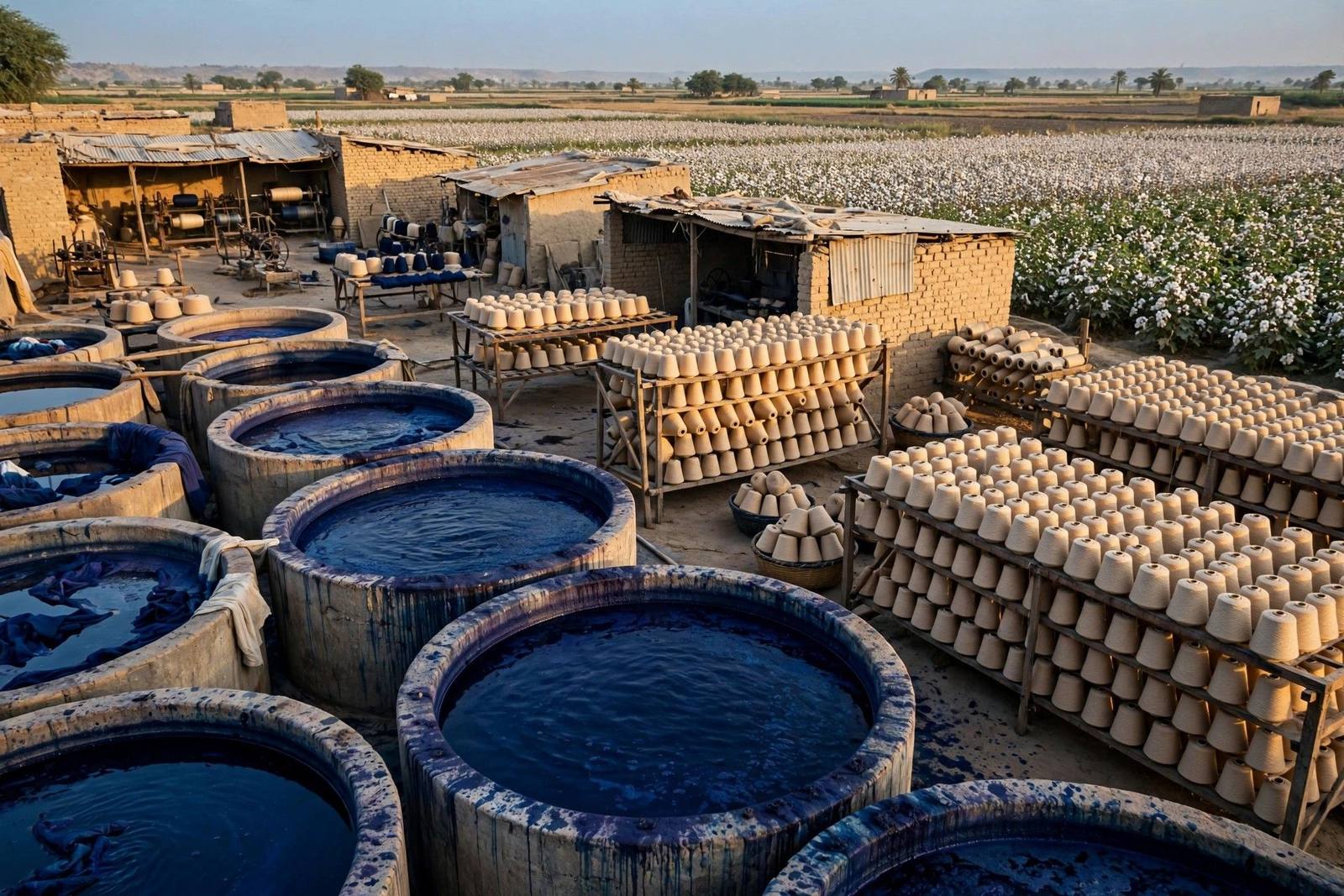
Indus Dyeing was incorporated in Pakistan on 23 July 1957 as a public limited company under the companies law of the time, with its registered office in Karachi — today at Beaumont Plaza in Civil Lines. To be founded in 1957 is to belong to Pakistan's first industrial generation: the merchant families who, in the decade after Partition, moved capital from trade into the mills that the new country desperately needed if it was to clothe itself and earn foreign exchange. Textiles were the obvious industry — the raw material grew in the Indus valley itself — and a dyeing and manufacturing house in that era sat close to the finishing end of the trade, where cloth acquired the colours and qualities that made it saleable.
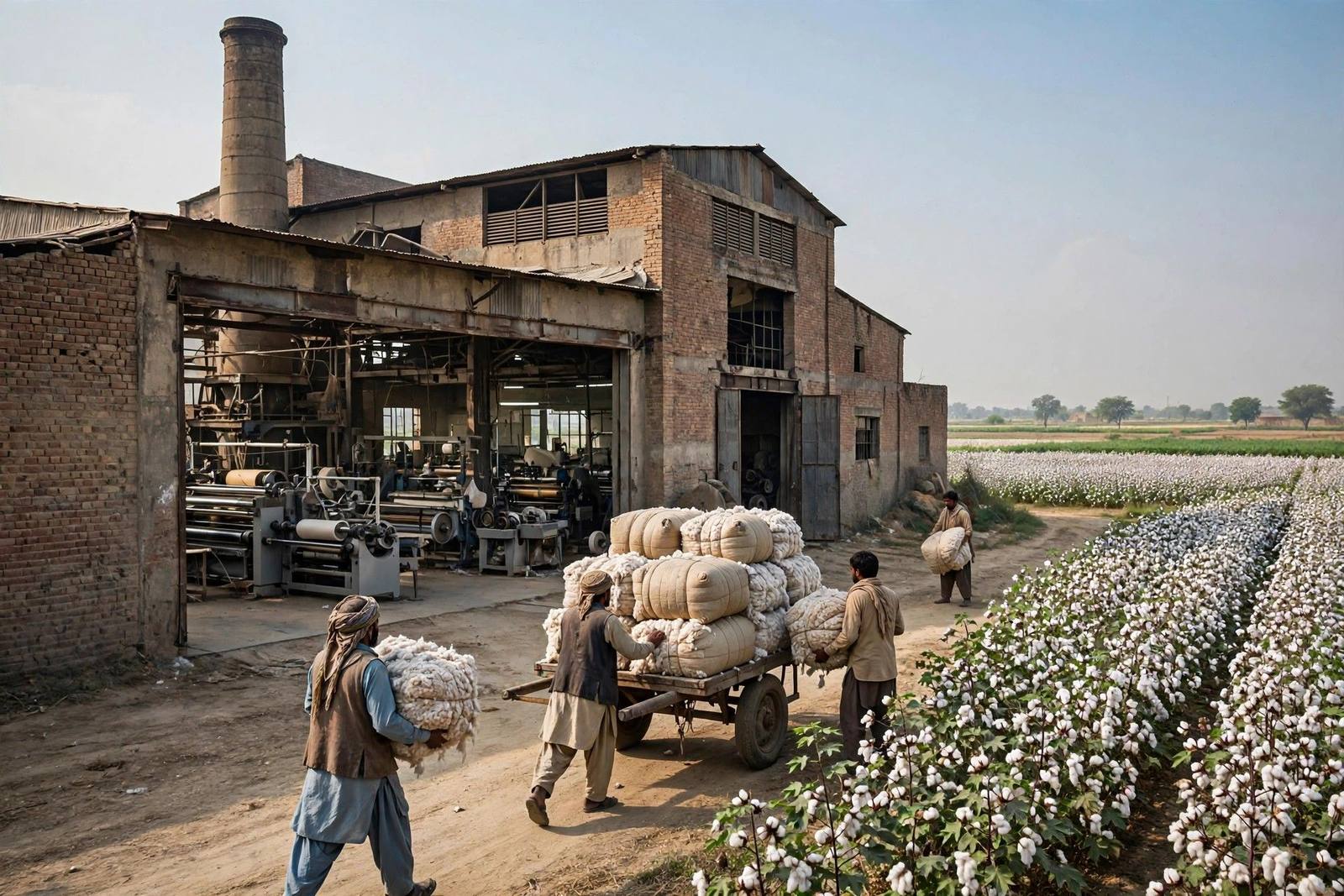
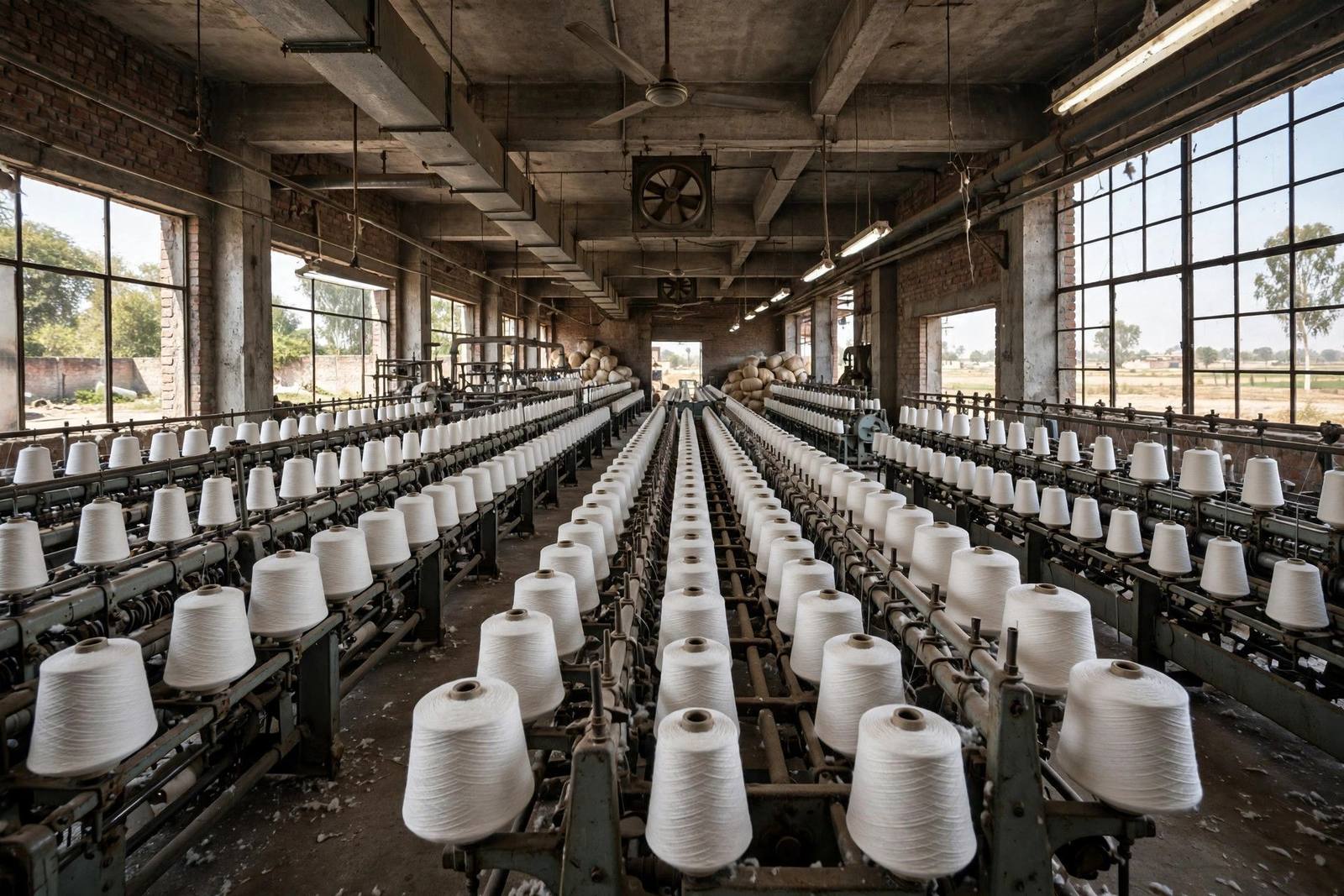
The decades since have steadily reweighted the business toward spinning. That is a common Pakistani pattern with a specific logic: finishing and trading margins are attractive but fragile, while owning spindles means owning the chain's foundation. Indus built and acquired spinning capacity at three principal sites — at the S.I.T.E. industrial estate in Hyderabad, its historic Sindh base; at Korangi Industrial Area in Karachi; and at Muzaffargarh in southern Punjab — placing mills in both cotton-surplus Punjab and port-adjacent Sindh. In its earlier reporting the company also operated ginning units, including leased units in the Multan–Lodhran cotton belt, reaching one step further back toward the farm, and at one stage made and sold terry towels directly, a thread that later grew into a separate home-textiles venture.
The Indus Group around the listed company
IDYM is the holding company of a compact industrial group, and its consolidated accounts are the right place to read it. Its wholly owned subsidiary Indus Lyallpur Limited, incorporated in 1992 and formerly known as MIMA Cotton Mills, spins yarn at a plant on Sheikhupura Road in District Faisalabad — Punjab's textile heartland. Its joint venture Indus Home Limited, at Manga Mandi near Lahore, carries the group's home-textiles business, the descendant of the towel trade: terry products woven and finished for export programmes. An associate, Sunrays Textile Mills, adds a further spinning interest. And in a diversification typical of energy-hungry mill groups, the group has developed Indus Wind Energy Limited at Thatta in Sindh — a mill owner generating its own power from the coastal wind corridor rather than merely buying it.
The structure tells a reader how the sponsors think. The listed company holds the core mills and the stakes; operating specialities — Faisalabad spinning, home textiles, wind power — are housed in subsidiaries and ventures where they can be financed, managed and reported distinctly. For minority shareholders, the consequence is that IDYM's consolidated turnover is the true scale of the enterprise, and the split between the parent mills and the group companies is a standing item in the accounts. Chief executive Shahzad Ahmed leads the group in recent reporting, under a Karachi board drawn from the sponsoring family and its executives — the standard governance shape discussed in family businesses on the PSX.
Yarn for denim, towels and the world's looms
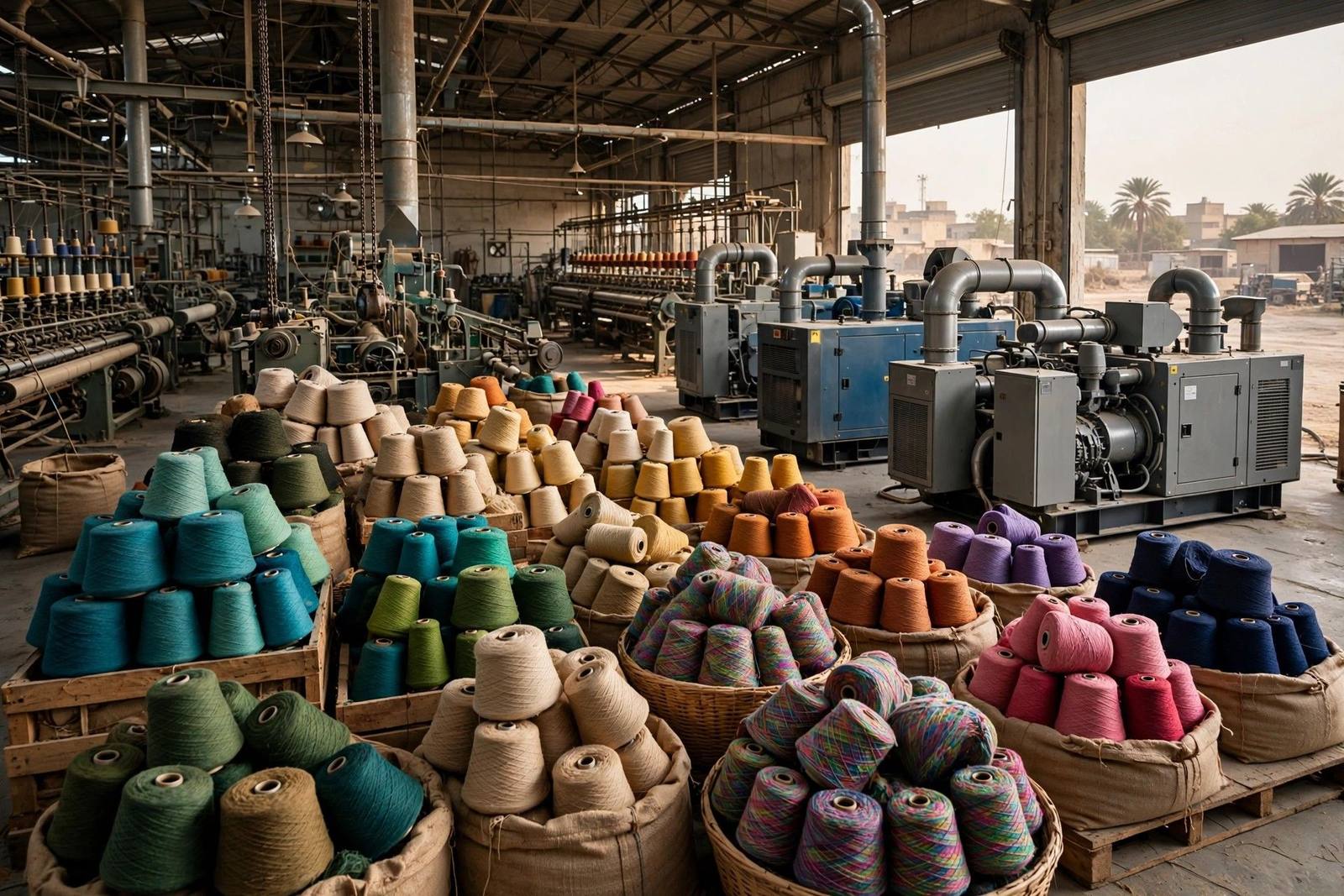
What Indus sells, overwhelmingly, is yarn: cotton and blended yarns spun for weaving and knitting, bought by denim mills, towel manufacturers, garment exporters and fabric houses in Pakistan and abroad. That positions the company at the foundation of two of Pakistan's proudest export trades. Denim fabric begins as yarn — much of it coarse, strong open-end and ring-spun yarns of exactly the kind large spinners produce — before it is indigo-dyed and woven into the cloth of jeans. Terry towels begin as soft, absorbent yarns, many spun in Sindh and Punjab for the home-textile exporters of Karachi and Faisalabad. Indus's own history in dyeing and towels is not a coincidence; it is the group's memory of where its yarn ends up, retained in the finishing and home-textile ventures beside the spinning core.
Scale is the quiet fact here. The group employs several thousand people across its sites, and its consolidated sales place it among the larger yarn producers in the country, even though the parent alone is classified on the PSX in the textile spinning sector. Customers are businesses, not consumers: the company's name appears on invoices and inspection reports, not on the jeans or towels its yarn becomes — a point worth remembering whenever a familiar global brand's label is mistaken for the whole supply chain behind it.
How Indus makes money
The parent mills earn the spinner's spread explained in PSX textile stocks: cotton — bought from the domestic crop and, in the lean modern era described in Pakistan's cotton economy, increasingly imported — spun at a conversion cost dominated by energy and labour, and sold at yarn prices set by the regional market. Ginning interests shorten the first step of that chain; the home-textiles venture captures margin beyond yarn when its towels sell; wind generation attacks the energy line from the ownership side rather than the tariff side.
Two features shape the consolidated result beyond the spindle. First, working capital: a spinner buys a season's cotton in months and sells yarn across a year, so inventory and receivables decisions can matter as much as machine efficiency, and high Pakistani interest rates punish every extra week of stock. Second, the group's earnings mix: subsidiary and associate contributions and the home-textiles business rise and fall on somewhat different cycles from commodity yarn, smoothing the consolidated picture a little — but only a little, because everything in the group ultimately begins with the same cotton bale.
Strengths, risks and the lesson of the name
Indus's strengths are age, scale and integration of knowledge. A group spinning since the 1950s has supplier relationships, buyer trust and technical depth that cannot be bought quickly; mills in three regions balance freight, labour and energy conditions; and ventures in ginning, home textiles and wind power show a management that treats its cost chain as a system to be owned, not a bill to be paid. Hyderabad's S.I.T.E. plant, the company's founding industrial home, still anchors that system in Sindh.
The risks are the spinners' risks in concentrated form. Yarn is the chain's most commoditised product; margins vanish quickly when cotton is dear, energy is expensive and Chinese or regional yarn floods the market. The domestic cotton decline raises the group's import dependence and dollar exposure. Export demand for denim and towels — the end markets for much of its yarn — follows consumer spending on the other side of the world. The dividend record reflects that reality: in lean recent years the board has at times declared no dividend at all, conserving cash inside the mills; readers should read each year's decision through how PSX dividends work rather than assuming a policy that does not exist. And the name itself is a small governance lesson in reading Pakistani companies carefully: the business described on the tin — dyeing — is the ancestor, not the present, and only the financial statements' own description of principal activity tells the current truth.
Hyderabad: the founding site and what it still means
The Hyderabad plant deserves its own passage, because places in this industry are never only addresses. S.I.T.E. Hyderabad was one of the planned industrial estates through which Pakistan's early governments tried to spread manufacturing beyond Karachi, and a dyeing and manufacturing house established there in the late 1950s put the Indus name into Sindh's industrial founding generation. Hyderabad gave the group a second geography beside Karachi: close enough to the port for exports and imported inputs, deep enough into Sindh to draw labour and, in time, cotton from the province's own growers, and positioned for the Muzaffargarh expansion across the provincial border in Punjab that followed.
That three-region footprint — Karachi for commerce and finishing connections, Hyderabad for the Sindh mill base, Punjab for cotton-belt capacity — is the mature shape of the group, and it explains how a company whose name advertises one process in one city became a national yarn producer. It also frames the group's later moves: Indus Lyallpur took the name to Faisalabad, the one great textile city the original trio lacked, and Indus Home placed home textiles near Lahore's export houses. Each addition filled a map rather than chasing a fashion. Groups that expand this way tend to look dull in any single year and formidable over thirty of them, and Indus — public since before most of its shareholders were born, still sponsor-led, still spinning — is the type specimen of that temperament in the Sindh-Punjab textile belt.
For the student of the sector, IDYM also demonstrates why consolidated accounts exist. The parent company's own result, a Karachi-Hyderabad-Muzaffargarh yarn business, is only part of the economics a shareholder owns; the Faisalabad subsidiary, the towel venture and the wind project each contribute on different terms. Analysts who quote only the unconsolidated figures will alternately overstate and understate the group in successive years — a trap the annual report's structure is designed, for the careful reader, to prevent.
The group's sidelines follow the same logic of owning the chain. Ginning units, held directly or on lease in the Multan–Lodhran belt in earlier reporting, put the first cleaning of the crop under the same roof as the spinning it feeds. The towel venture took the opposite end, finishing a consumer product from the group's own yarn. Wind energy attacked the cost line that no negotiation with a utility could fix. None of these is a diversification in the conglomerate sense — no hotels, no banks, no unrelated trades — and that coherence is itself the Indus signature: every venture touches cotton, cloth or the power to make them. When such a group reports a weak year, the cause is almost always legible in the textile cycle itself, rather than hidden in an unrelated segment.
The same coherence helps explain the group's longevity through the industry's worst decades: when yarn margins vanished, towels, ginning or power could carry part of the load, and when those faltered, the core mills' cash generation usually remained.
Longevity, in the end, is the group's loudest statement: mills founded when Pakistan itself was ten years old do not survive by accident.
The name on the PSX and who studies it
IDYM trades as a textile spinning name with a long listing history, a sponsor-held register and trading liquidity that comes and goes with the textile cycle — see free float for the mechanics. It appeals to the sector's specialists: investors who track yarn prices, cotton imports and denim demand, and who are comfortable reading a holding company's consolidated accounts for the group story underneath.
What they watch: cotton arrivals, prices and import volumes; yarn export demand, especially from denim and towel programmes; capacity utilisation across Hyderabad, Karachi, Muzaffargarh and Faisalabad; energy costs and the wind venture's contribution; Indus Home's towel order book; and the balance between parent-company and consolidated results. This profile is educational content, not financial advice, and nothing in it recommends buying or selling IDYM shares.
Key takeaway: Indus Dyeing & Manufacturing is a 1957-vintage Karachi group whose Hyderabad-anchored mills now spin yarn at scale for the denim and home-textile trades — the dyeing house grew into a spinning group, and its name is the clue to its history.