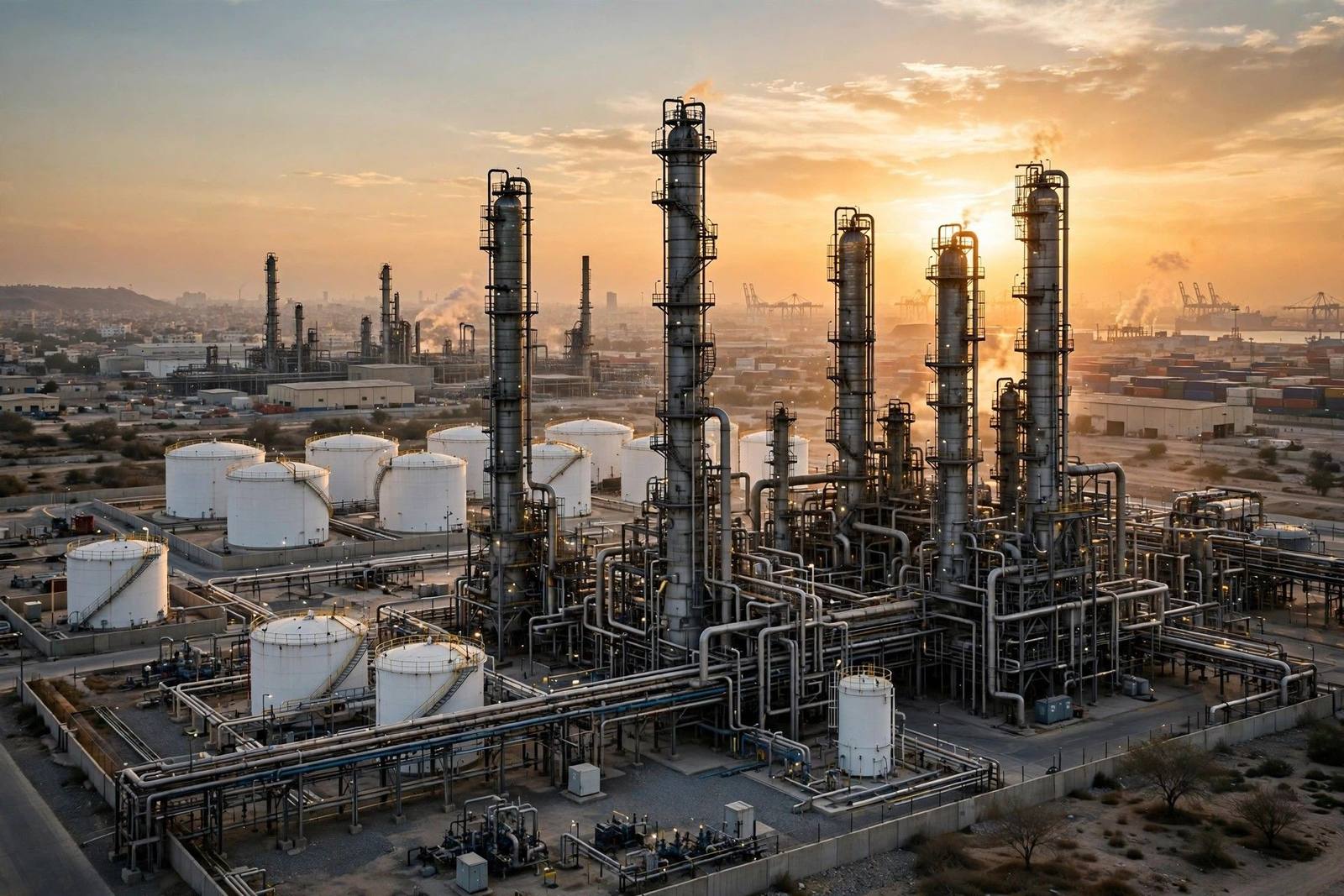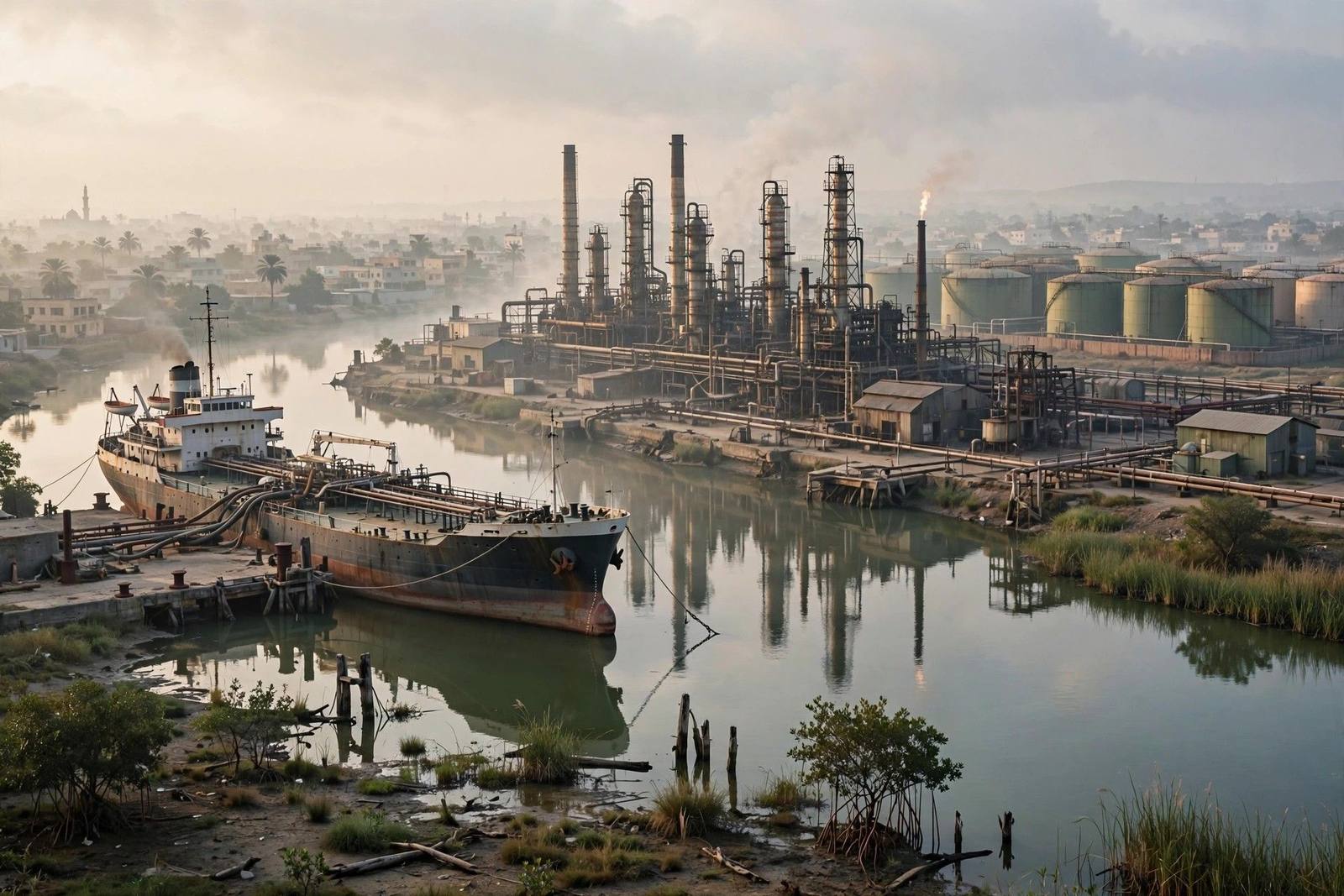
KARACHI: Drive south from Lahore on the Raiwind side of the city, past the factories and farm plots of the old Multan Road corridor, and you reach one of the smaller survivors of Pakistan's 1990s power boom: Kohinoor Energy Limited. Its plant, near Raja Jang, runs on banks of Finnish-built diesel engines burning heavy furnace oil — a technology chosen in 1994 for speed, when Pakistan needed megawatts faster than big steam stations could be built. The sponsor was the Saigol group, one of Lahore's old industrial families, in partnership with Japan's Tomen Corporation. Listed in the mid-1990s and trading today as KOHE, the company is a compact case study in how the fast-track IPPs of that era were financed, fought over, and eventually left running at the edge of a grid that has moved on to cheaper fuels. This profile follows that arc.
Engines, not boilers: what the plant actually is
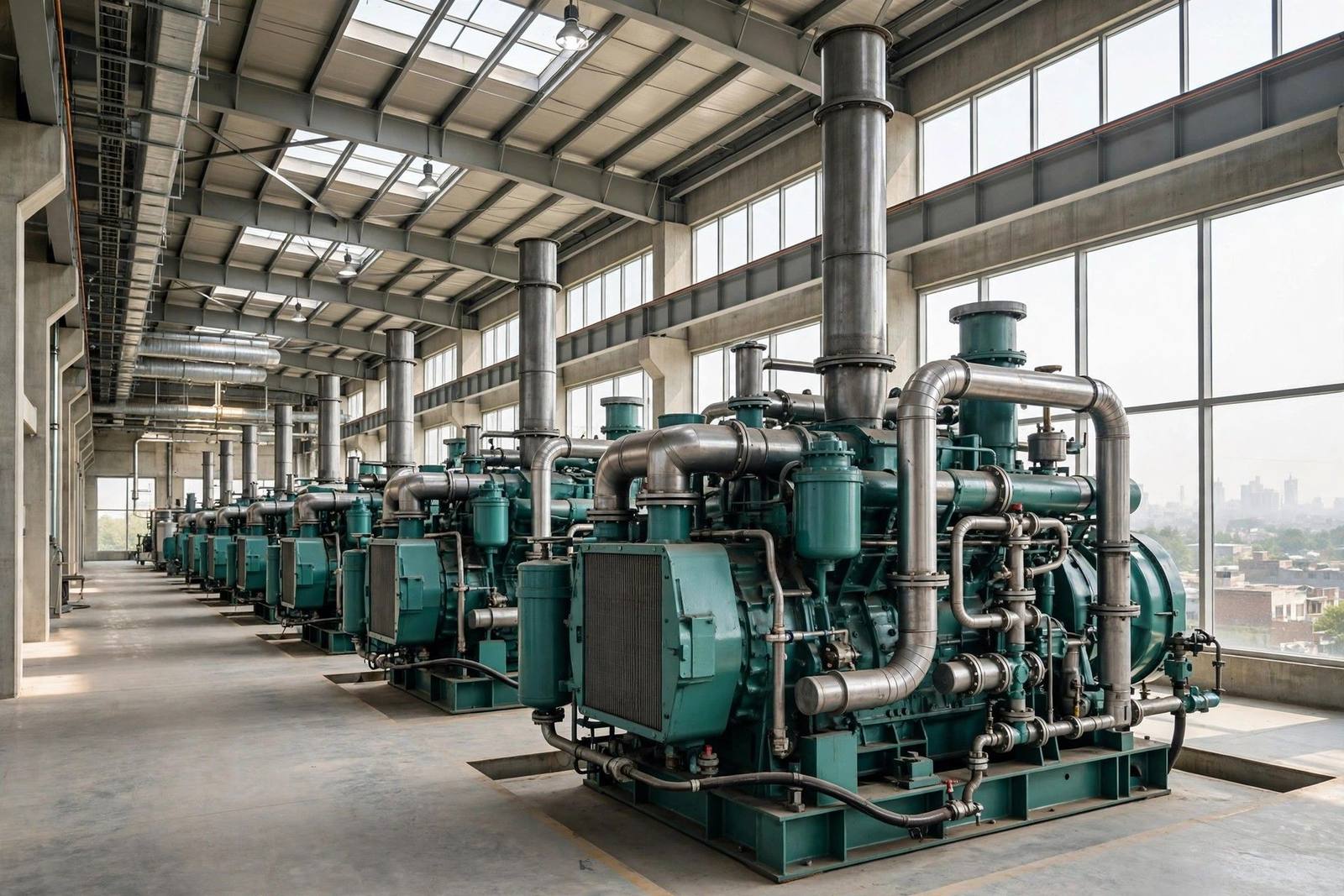
Kohinoor Energy owns and operates a furnace-oil-fired power station with a net capacity of 124 MW. Its design is what sets it apart from contemporaries such as Lalpir Power, which relies on a single large boiler and steam turbine. Kohinoor was built around reciprocating engines — eight Wärtsilä diesel engines of roughly 15 MW each, running on heavy fuel oil, supplemented by a small steam turbine-generator that recovers energy from the engines' exhaust gases. The original project documents describe a gross capacity of about 131 MW and a saleable capacity of around 120 MW. An engine-based plant has a particular character: capacity comes in modules, so units can be started, stopped and maintained one at a time; the station can respond quickly when the grid calls; and its fortunes depend on keeping many large engines, rather than one boiler, in good mechanical order over decades.
The site sits at Ijtemai Road near Raiwind, roughly 30 kilometres from Lahore, with the company's plant address given as Post Office Raja Jang. The location was the point. Lahore and central Punjab formed the country's largest load centre, and a plant at the city's edge shortened the distance between generation and demand. The sole customer, as with every IPP of the era, is the state purchaser — originally WAPDA, and in the modern system the Central Power Purchasing Agency (CPPA-G), with which recent company reports describe an exclusive power purchase arrangement. Fuel, in the original scheme, came from Pakistan State Oil under a fuel supply agreement matched to the purchase contract's term.
A fast-track child of the 1994 policy
Kohinoor Energy Limited was incorporated on 26 April 1994 by Muhammad Naseem Saigol, head of the Saigol group, a family enterprise whose interests spanned textiles and other industries in Punjab. The timing was not accidental. The government's 1994 power policy was actively courting private generation with guaranteed purchase contracts, and a category of smaller, "fast-track" projects was promoted to bring capacity quickly. The Saigols joined hands with Tomen Corporation, a Japanese trading house, which took overall responsibility for project supervision, design and construction in partnership with Wärtsilä Diesel of Finland, the engine supplier; the two foreign partners undertook to deliver the plant on a fixed-price, turnkey basis with guaranteed output and fuel consumption. Prime Minister Benazir Bhutto, whose government authored the policy, attended the groundbreaking on 28 January 1995 and laid the first brick — a measure of how politically central these projects then were. The International Finance Corporation and ABN AMRO were among the institutions involved in the project's finance package.
The company listed on Pakistan's three stock exchanges in December 1995, launching its public offering before the plant was even finished — common for the era's project companies, whose shares sold the promise of contracted dollar-linked returns. Construction ran ahead of its contractual deadlines: the first units completed reliability testing in late 1996. Then came the dispute that wrote Kohinoor into the history of the 1994 policy's troubles. The independent engineers declared the commercial operations date — the moment from which capacity payments flow — as 20 June 1997. WAPDA contested the testing and the date, withheld the standby letter of credit the contract required, and Kohinoor briefly stopped despatch and issued a default notice, invoking the government's support under its implementation agreement. Contemporary trade press reported speculation that WAPDA might try to escape the agreement altogether, amid a new government's broader criticism of the 1994 deals. The state ultimately instructed WAPDA to accept the June date and honour its obligations — but the episode, arriving within months of start-up, taught every IPP investor in Pakistan a permanent lesson: the contract is only as strong as the politics behind it.
The Saigol group and the long operating years
Kohinoor Energy remained a Saigol company through the decades that followed. The family name runs through its board to this day: M. Naseem Saigol has chaired the company, and Muhammad Zeid Yousuf Saigol has served as chief executive in recent reports. For the Saigols, the plant was never a standalone speculation but one asset in a diversified Lahore-centred group, and that sponsorship mattered practically — a family with banking relationships, industrial cash flows and a name to protect could carry a single-plant company through the payment crises that periodically froze the sector's cash.
The operating story of the 2000s and 2010s is the familiar IPP rhythm, played on a small instrument. The plant earned its capacity payments for availability, ran its engines when the grid required them, serviced and retired its project-era debts, and paid dividends in the years when collections allowed — the pattern examined in our guide to dividend investing in Pakistan. Its original purchase agreement ran for 22 years, a shorter term than the 30-year contracts of the big AES and Hubco plants, which placed Kohinoor earlier in the queue of IPPs facing life after their founding contracts. Successive arrangements with the state purchaser followed, and recent quarterly reporting describes the plant operating at modest capacity factors — in the low single digits in some recent periods — as the grid, rich in cheaper coal, gas, nuclear and hydro capacity, calls on furnace-oil engines only at the margins. A low capacity factor sounds alarming until the tariff model is understood: the plant is paid principally to exist and be ready, and it is the energy despatch, not the income, that has shrunk.
Kohinoor was also the first of a small ring of engine-based stations that grew up around Lahore in that era. Sector listings of the period place it ahead of a cluster of similar fast-track plants — Japan Power Generation and Southern Electric and Saba Power among them, each in the 125–136 MW range, each built around reciprocating engines or simple-cycle machines near the Punjab load centres, and each wrestling with the same furnace-oil economics in later life. Most of that ring has since faded from the market's attention entirely. Kohinoor's survival as a listed, sponsor-held, still-reporting company — long after its founding contract's term — is in that company a distinction of its own, and it owes as much to the Saigols' decision to keep the asset tidy and owned as to anything in the plant's design.
How Kohinoor makes money
The revenue logic is the standard two-part IPP tariff, and Kohinoor's small scale makes it unusually easy to see. Capacity payments form the spine: a contracted stream, received when the plant is available, that was designed to cover debt service, fixed costs and the sponsors' equity return over the agreement's life. Energy payments ride on top, covering fuel and variable costs for the units actually generated, with furnace oil — bought under the fuel supply arrangements and priced off international markets — passed largely through to the buyer. The company's profit in any period therefore depends less on how much electricity Lahore consumed than on three quieter variables: the plant's certified availability, the tariff components still running under its current arrangements with CPPA-G, and the speed at which the state purchaser actually pays. That last variable is the sector's famous one: receivables build when the payment chain clogs, and clear — in lump-sum settlements, subsidy releases or bond issues — when Islamabad attacks the circular debt stock. KOHE's results, like those of Saif Power and the other small IPPs, tend to move with those clearance cycles as much as with anything that happens inside the plant fence.
On the cost side, the defining items are engine maintenance and fuel handling. A Wärtsilä engine fleet requires disciplined overhauls and genuine spare parts over a multi-decade life, and heavy fuel oil must be treated and heated before it will burn cleanly — unglamorous work that decides whether an ageing plant keeps its availability certification. The company has also, in recent years, broadened its stated objects into solar generation and related services, a common move among legacy IPPs looking for a second act in a system whose future capacity will be renewable; readers should treat such clauses as option value rather than a present business, since the company's reports still describe a single operating furnace-oil station.
Strengths, risks and honest limitations
Kohinoor's strengths are longevity, simplicity and sponsor continuity. The plant reached its commercial operations date in June 1997 and has been part of the grid's furniture ever since; the business has one asset, one customer and one tariff, so there is little an investor cannot understand from its published reports; and the Saigol family's continuing presence gives the company a sponsor with reputational skin in the game. Its modular engine design, built for the fast-track era, also ages more gracefully than a single-boiler plant in one respect — individual units can be retired or held in reserve without silencing the whole station.
The risks are the mirror image. Furnace oil is the most expensive mainstream fuel in the system and the one national policy has been retiring, so despatch is structurally thin and politically exposed. The founding contract belonged to the 1994 policy, the most renegotiated — and most criticised — generation of deals in Pakistani economic history, and the mid-2020s drive to terminate or restructure the oldest IPP agreements early hangs over every company of this vintage. Collections risk is perennial: a small company has limited bargaining power when payments slow, and its dividend capacity in any year is hostage to the same circular-debt arithmetic as the giants'. Finally, there is the simple question of scale: at 124 MW net, in a system whose installed capacity is counted in tens of thousands of megawatts, Kohinoor is a rounding error in national supply — which cuts both ways, making it easy for the grid to live without, and cheap for the state to settle with.
KOHE on the PSX: a small ticker with a long memory
KOHE has traded since the mid-1990s, through the exchange's own transformations from three regional bourses into the single Pakistan Stock Exchange. It is a small-capitalisation, modest-liquidity stock: the register is anchored by the Saigol side, the free float is limited, and trading can be quiet for long stretches before sector news — a renegotiation headline, a dividend, a circular-debt settlement — wakes it up. Its dividend character over the years has been episodic rather than metronomic, tracking cash collections rather than the calendar, and anyone studying it should read several years of payout history rather than a single announcement. The watchlist for followers is short and concrete: availability and any despatch the plant is given; the receivables position in each quarterly report; statements on the status and pricing of its arrangements with CPPA-G; maintenance and overhaul spending on an engine fleet now well into its third decade; and any concrete step — rather than objects-clause language — toward a solar or other second business.
Investors who gravitate to KOHE are typically students of the IPP endgame: people who enjoy working out what a contracted, ageing, single-plant company is worth under each plausible settlement with the state, and who are comfortable with illiquidity while they wait. This article is educational content, not financial advice. As a teaching example, though, Kohinoor Energy is hard to beat — a company whose 1995 groundbreaking was graced by a prime minister, whose first month of operation produced a default notice, and whose engines are still, decades later, standing ready at the edge of Lahore.
Key takeaway: Kohinoor Energy is the Saigol group's 124 MW Wärtsilä-engine furnace-oil plant near Lahore, running since June 1997 — a small, sponsor-anchored IPP whose value turns on availability payments, collections and the settlement of the 1994-era contracts.