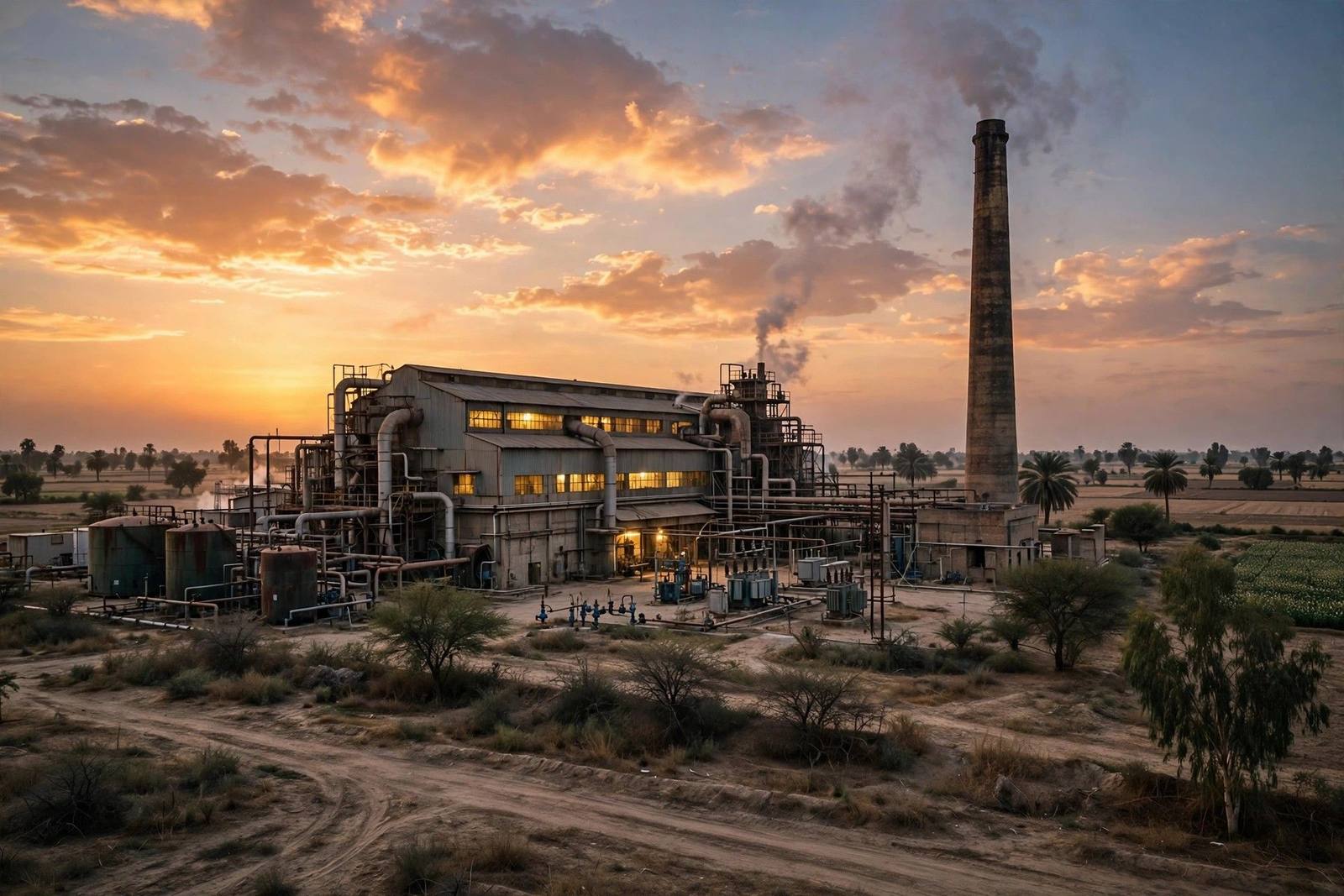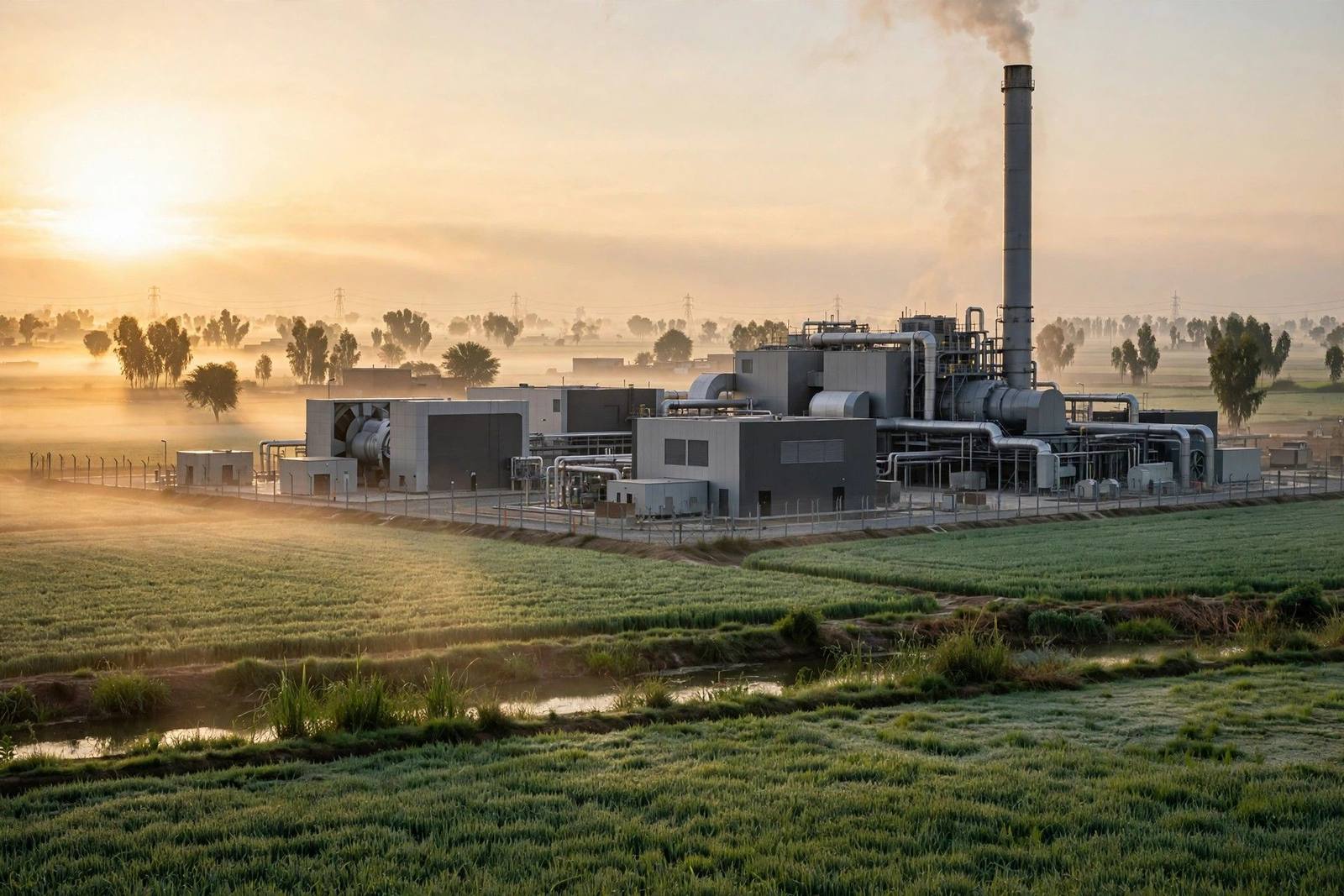
KARACHI: Ask a Pakistani investor about power generation in Sahiwal and they will probably describe the giant Chinese-built coal station that rose there under the China-Pakistan Economic Corridor. Saif Power Limited is something else entirely: a smaller, older and wholly Pakistani-sponsored plant, a 225-megawatt combined-cycle station that has been selling electricity from the Qadirabad area of Sahiwal district since 2010. It belongs to the Saif group, a family conglomerate from Khyber Pakhtunkhwa whose interests have run from spinning mills to the country's first mobile phone network. On the Pakistan Stock Exchange, where it trades as SPWL, the company gives public investors a direct, single-plant exposure to the economics of a modern gas-fired independent power producer, or IPP. This profile traces where the plant and its sponsors came from, how the business earns, and what followers of the stock tend to watch.
One plant, one customer, one job
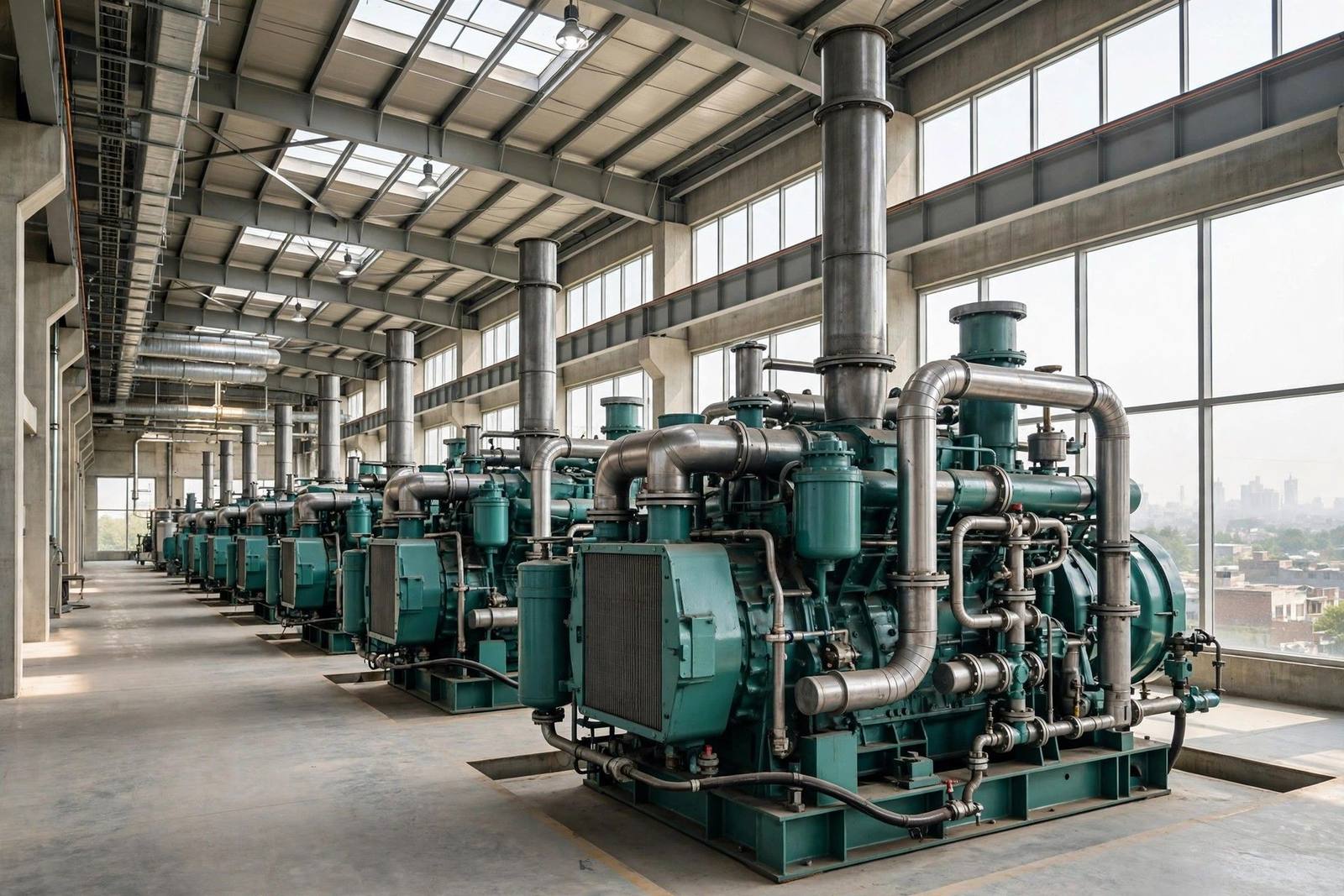
Saif Power's entire business fits on one site: Chak 56/5L, on the Qadirabad-Multan Road in Sahiwal district, Punjab. There the company owns, operates and maintains a combined-cycle thermal power plant with a nameplate capacity of 225 MW. In a combined-cycle station, gas turbines generate electricity first, and the hot exhaust that would otherwise be wasted is used to raise steam for a second, steam-turbine stage, so more electricity is squeezed from the same fuel. Brokerage research on the company has described its General Electric turbines as among the most fuel-efficient in their class, and the plant's combined-cycle efficiency as among the highest in Pakistan for a station of its size. General Electric has served as the plant's operations and maintenance operator, an arrangement common among Pakistani IPPs, where the equipment maker's own engineers run the machines they built.
The plant is dual-fuel. Its primary fuel is RLNG — natural gas imported as liquefied natural gas and re-gasified — and its backup fuel is high-speed diesel, burned when gas is unavailable. That design reflects the reality of Pakistan's fuel market in the 2000s, when the plant was conceived: domestic gas was allocated but never guaranteed, so a serious project needed a fallback. Everything the plant generates is sold to a single buyer, the Central Power Purchasing Agency Guarantee Limited, known as CPPA-G, which buys power on behalf of the country's distribution companies. Until an amendment to its implementation agreement in February 2021, the contractual counterparty was the National Transmission and Despatch Company; the change simply followed the national buyer's reorganisation. Like other IPPs of its generation, Saif Power therefore does not compete for customers. Its commercial life is defined by a long-term power purchase agreement, a tariff set by the regulator, and the despatch instructions of a grid that calls on cheaper plants first.
A family that began with a power station
The Saif group's own story, improbably, also begins with electricity. Group histories trace its industrial roots to the 1920s, when Khan Faizullah Khan, a landowner and major government contractor from the Lakki Marwat area of what was then the North-West Frontier Province, acquired the Bannu Electric Supply Company in 1927 — one of the earliest power stations in the subcontinent, a diesel plant supplying the town of Bannu. His son Saifullah Khan, a barrister turned industrialist, expanded the family's businesses during the Second World War. When Saifullah Khan died in 1964, leadership passed to his widow, Begum Kulsum Saifullah Khan, who ran the group for more than two and a half decades and became one of Pakistan's most prominent businesswomen — later the country's first woman federal minister, and a recipient of the Hilal-i-Imtiaz.
Under Begum Kulsum, the group built its textile base. Kohat Textile Mills was incorporated in 1967 and began production at Saifabad, Kohat, in 1970; the family histories describe its success as the catalyst for the group's later diversification. Saif Textile Mills followed, incorporated in 1989 and producing at the Gadoon Amazai industrial estate in Swabi from 1992. The family's holding company, Saif Holdings Limited, was incorporated in February 1993 to consolidate its investments. The group's most famous venture came a year later: in June 1994 it entered a joint venture with Motorola of the United States to form Pakistan Mobile Communications, which launched Mobilink — the first GSM mobile service in South Asia. Egypt's Orascom bought Motorola's stake in 2001 and the Saif group's remaining shares in 2007, but the episode established the family as builders of new industries rather than only mill owners. The modern Saif group spans textiles, power generation, oil and gas exploration through Saif Energy, healthcare, real estate and information technology. Saif Power, incorporated in Islamabad on 11 November 2004, was the vehicle through which the group returned, eight decades on, to the business its founder had started in Bannu: generating electricity for sale.
From incorporation to first power, 2004–2010
Saif Power was incorporated as a public limited company in November 2004, under the power policy framework that followed the landmark 1994 policy and its successors — the regime under which Pakistan invited private sponsors to build stations against long-term, government-guaranteed purchase contracts. The late 2000s were a difficult time to build anything in Pakistan: the country was sliding into an acute electricity crisis, with load-shedding spreading as demand outran a stagnant generation fleet, and financing conditions tightened through the global financial crisis. Even so, the Sahiwal project was completed, and the plant commenced commercial operations on 30 April 2010 — in the same season as a cluster of similar 200-megawatt-class plants, including Atlas Power, Nishat Power and Engro Powergen Qadirpur, that came on stream around 2009–2011 to relieve the shortage.
The timing matters for understanding the stock. Plants of this vintage hold contracts whose capacity payments — the fixed stream paid for being available, whether or not the grid takes their energy — were designed to repay project debt and deliver sponsors a contracted return on equity, typically in dollar-linked terms. Saif Power's first decade therefore followed the rhythm of most Pakistani IPPs: heavy early debt service, then a progressively cleaner balance sheet, and a dividend record that strengthened as project loans were repaid. The shares are quoted on the Pakistan Stock Exchange, and the company's registered office sits in Islamabad's Blue Area, far from the plant it owns — a reminder that an IPP is as much a financial contract with a turbine attached as it is an industrial operation.
How a combined-cycle IPP makes money
An IPP like Saif Power earns through a two-part tariff, and understanding the two parts explains almost everything about its results. The first part is the capacity payment: a fixed amount, paid when the plant is available to generate, that covers debt service, fixed operating costs and the sponsors' return. The second is the energy payment, which varies with actual generation and largely passes the cost of fuel through to the buyer. When the grid orders Saif Power to run hard — in a hot summer, or when cheaper hydroelectric output fades in winter — energy revenue rises, but so does fuel cost, and the margin on that part is comparatively thin. When the plant sits idle because cheaper sources, from Thar coal to nuclear, rank ahead of it in the merit order, capacity income continues so long as the plant is ready. Followers of IPP stocks therefore often say the real product being sold is availability, not electricity.
Two cost and revenue drivers dominate. The first is fuel: RLNG prices are linked to international oil and gas markets and billed in a currency environment that rarely stands still, so the rupee's movement feeds directly into both the tariff the plant receives and the receivables it carries. The second is efficiency: a combined-cycle plant converts more of each unit of gas into saleable electricity than an older steam plant, which is why Saif Power's machines have historically ranked respectably when the system operator chooses which stations to despatch. The company's own workforce is small for a business of its financial size — power stations are capital-intensive, not labour-intensive — and with GE handling operations and maintenance under contract, a large share of the operating cost line is, in effect, a specialist service agreement. Readers comparing IPPs may find the mechanics set out in our guide to circular debt useful background, because the same payment chain runs through every plant in the country.
Ownership: Saif Holdings and a register that was deliberately widened
For most of its life Saif Power was a straightforward subsidiary: Saif Holdings Limited held a majority of its shares — just over half at the end of the 2010s — and the Saif family controlled the board through the holding company. That changed in an unusual and instructive way. In 2021 and 2022, Saif Holdings distributed large blocks of its Saif Power shares to its own shareholders as a dividend in kind — that is, instead of paying cash, the holding company handed its owners the underlying listed shares. By the end of 2022 the holding company's direct stake had fallen to about 23 per cent, according to the company's annual report, while the family's influence remained anchored through Saif Holdings and the wider register of family and associated holders.
For a minority investor, the episode is worth understanding rather than merely noting. A dividend in kind of this kind widens the free float, puts more shares into hands that can trade them, and signals that the sponsor sees the listed company as a mature, cash-generating asset whose shares are worth holding directly. It also means the tidy label "subsidiary" fits less neatly than it once did: Saif Power is best described as a Saif-group company with a substantial sponsor anchor and a broader public register than most single-plant IPPs. Its sister listings underline the group's habit of using the market: Kohat Textile Mills has been listed for decades, and the group's textile and energy names recur across the exchange's smaller boards. Newcomers learning the exchange's plumbing can start with how to buy shares on the PSX before studying individual tickers.
Strengths, risks and the circular-debt shadow
Saif Power's strengths are structural. It owns a comparatively efficient, dual-fuel plant in Punjab's load heartland, close to the demand it serves; it sells to a sovereign-backed single buyer under a long-term contract; and its sponsor group has operating history in both energy and industry. As project debt has amortised, the classic IPP pattern — earnings increasingly available for dividends rather than lenders — has applied to Saif Power as it has to peers such as Lalpir Power and Kohinoor Energy, the other surviving 1990s- and 2000s-vintage listed plants.
The risks are equally structural, and they are the risks of the Pakistani power sector itself. The first is circular debt: when distribution companies fail to collect enough from consumers, the payment chain backs up through CPPA-G to generators, and IPPs carry large receivables that are eventually settled, historically, but often late. The second is fuel: an RLNG plant sits exposed to imported-fuel prices and to allocation decisions, and when gas is scarce or expensive the merit order pushes it aside. The third is contract politics. The 1994-era and 2000s-era IPP contracts have been renegotiated more than once, most prominently in the 2020–21 round in which Saif Power's own implementation agreement was amended and its counterparty changed to CPPA-G, and again in the mid-2020s when the government pressed to end or restructure the oldest contracts early. A single-plant company has no diversification against any of this: one site, one buyer, one fuel contract, one tariff. What it offers in exchange is simplicity — an investor can understand the whole business, and there is nowhere for problems to hide.
SPWL on the PSX: the investor who studies a contract
SPWL trades as a small, single-asset power stock, and its behaviour follows the sector's logic. Dividends, paid from capacity income once debt service is met, are the centre of the story; IPP shares of this type are commonly studied as income instruments, a theme explored in dividend investing in Pakistan, rather than as growth stories. The things followers watch are concrete: the plant's availability and despatch levels in the monthly generation data, the size and ageing of receivables from CPPA-G, RLNG supply and pricing, the remaining life of the purchase agreement, and any fresh round of sector renegotiation in Islamabad. Liquidity in the shares is modest compared with the index heavyweights, so prices can move sharply on thin volume when sector news breaks — good news and bad.
The investor who studies SPWL is therefore really studying a contract and a payment chain: how much of the tariff is fixed, how reliably the state buyer pays, and how politics treats contracts signed in another era. This article is educational content, not financial advice, and it describes the company so readers can frame their own questions. The Saif family's first power venture supplied one frontier town from a diesel station in the 1920s; its listed descendant supplies the national grid from a combined-cycle plant in Punjab — and the distance between those two facts is a fair summary of how far both the family and Pakistan's power sector have come.
Key takeaway: Saif Power is a single-asset, 225 MW RLNG combined-cycle IPP of the Saif group, running since 2010 near Sahiwal — a stock whose story is its tariff, its receivables and its dividends, not its growth.