KARACHI: Open the bonnet of a Pakistani-assembled car and most of what you see carries a famous badge. Look instead at what you cannot easily see — the exhaust system running underneath, the radiator standing behind the grille, the pressed sheet-metal parts holding it all together — and you are looking at the world of Loads Limited. LOADS on the Pakistan Stock Exchange is one of the country's foundational auto-parts makers: founded in 1979, in parts production since 1983, supplying radiators, exhaust systems and other components to the car, truck, bus, tractor and motorcycle assemblers from its plant in Karachi's Korangi Industrial Area. It listed only in 2016, late for a company of its age, and its group structure — subsidiaries with names like Specialized and Multiple, an associate in Treet Corporation, a long-planned alloy-wheel venture — makes it one of the more intricate small caps in the parts sector, and one of the more instructive.
From transport to parts: 1979 to the Suzuki moment
Loads Limited was incorporated in Pakistan on 1 January 1979 as a private limited company. Rating-agency histories record that the business began in transport before turning to manufacturing: the company started production of auto parts in 1983, after the arrival of Pak Suzuki in the country. That timing is the founding insight. Pak Suzuki's formation in 1982–83 created, almost overnight, a volume car assembler committed to local content — and local content meant somebody in Pakistan had to learn to make the unglamorous components: exhausts bent and welded to Japanese drawings, radiators cored and tanked to specification, sheet metal pressed to tolerance. Loads was among the vendor generation that grew up inside that deletion programme, and the vendor–assembler relationships formed then still structure its customer list today.
The corporate milestones after that are sparse and telling. On 19 December 1993 the company converted from a private limited company to an unlisted public limited company — the posture of a business preparing, eventually, for public capital — and then waited more than two decades before the shares were actually listed on the Pakistan Stock Exchange on 1 November 2016. The head office and plant sit at Plot No. 23, Sector 19, Korangi Industrial Area, Karachi: the same eastern industrial belt as the assemblers it serves, because exhaust systems and radiators are bulky, model-specific and ruinously expensive to ship far — proximity is a competitive feature in this trade, as it is for Baluchistan Wheels at Hub on the other side of the city.
What it actually makes — and the group around it
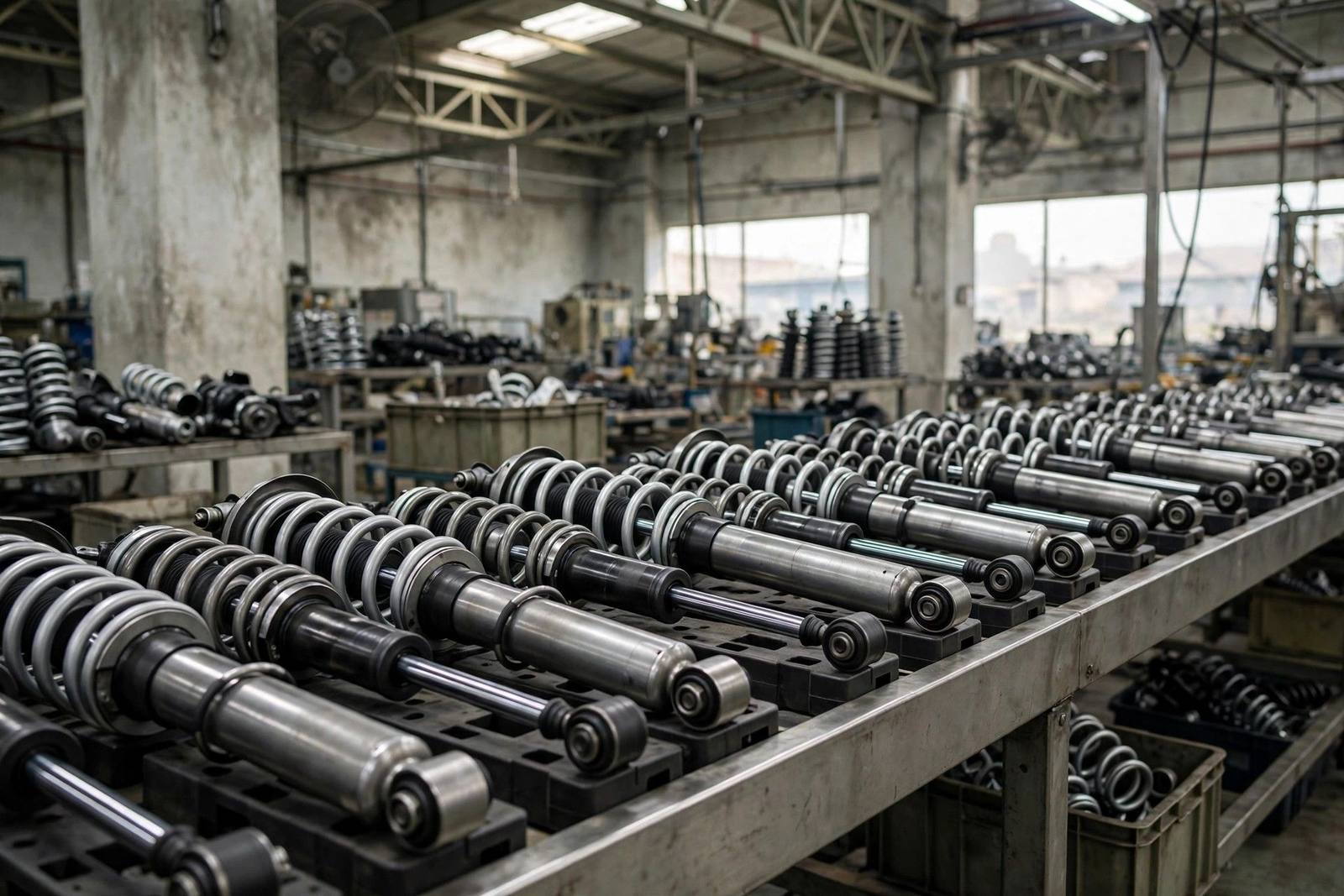
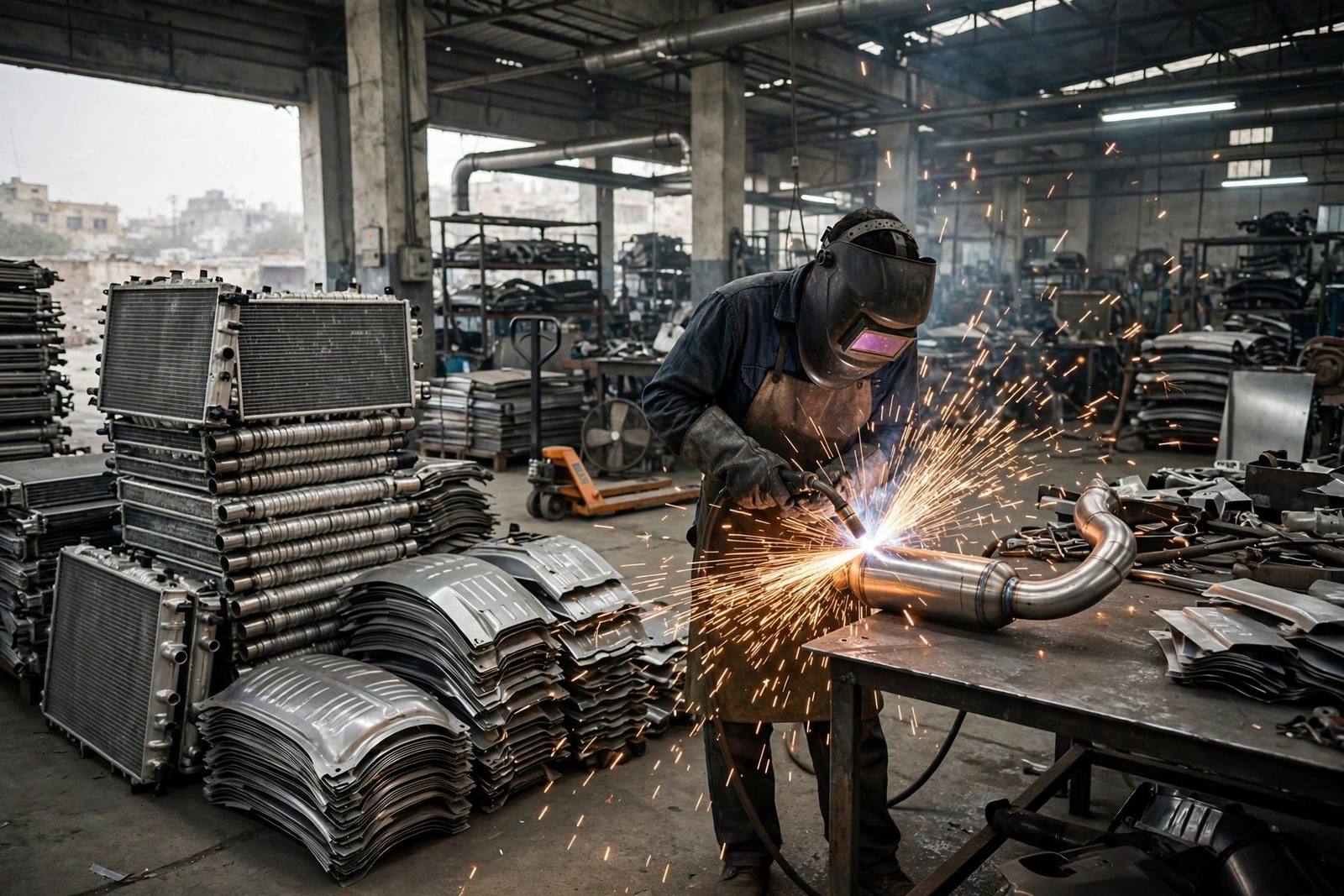
The parent company's stated principal activity is the manufacture and sale of radiators, exhaust systems and other components for the automotive industry. Around that core, filings and rating profiles describe sheet-metal components for cars, buses, trucks and tractors, with a clientele of prominent national and multinational producers of motorcycles, cars and heavy vehicles. An exhaust system is more engineered than it looks — manifolds, pipes, silencers and, in modern vehicles, emissions hardware, all tuned for back-pressure, noise and durability — and a radiator is a heat exchanger whose failure destroys engines, which is why assemblers qualify such suppliers slowly and leave them reluctantly.
The group structure is where LOADS gets complicated, and a careful reader should map it. The company has built its capacity through subsidiaries incorporated in 2004: Specialized Autoparts Industries (Private) Limited and Multiple Autoparts Industries (Private) Limited, which manufacture separate product lines for the parent's customers, and Specialized Motorcycles (Private) Limited, whose operations ceased in 2015. A fourth venture, Hi-Tech Alloy Wheels Limited, was incorporated in January 2017 to manufacture alloy wheels for local car assemblers — an adjacency with real logic, since alloy wheels are among the visible components Pakistani assemblers historically imported — though the venture's path to commercial production was long and repeatedly deferred in company reporting. Above and beside the group sit its sponsors: rating profiles describe the sponsor Syed Shahid Ali, together with Treet Corporation, as holding a majority of the shares, and Treet — the razor-blade and soap house of the Ali group — is carried as an associate company. Our sector overview of automobile stocks on the PSX shows where this family of makers sits in the wider parts industry.
Each product family carries its own engineering burden, and it is worth pausing on why assemblers guard these supply lines so carefully. A radiator must exchange heat at the rate a modern, emissions-tuned engine demands, in 45-degree traffic, for years, without leaking — its core, tanks and joints are a small exercise in metallurgy and brazing discipline. An exhaust must route hot gases through a silencer tuned so the car sounds right, drones at no cruising speed, and keeps its emissions hardware at working temperature, all while hanging from rubber mounts over Pakistani road surfaces. These are components whose failure modes are warranty claims and reputations, which is precisely why the vendor seat, once earned, is sticky — and why the assembler's audit team, not its purchasing price list, is the supplier's real examiner.
How it makes money: a vendor's spread
Loads earns the classic component-maker's spread: steel, aluminium and other metals in; finished exhausts, radiators and pressings out; the margin in the forming, welding and quality in between. Its revenue is volumes multiplied by the assemblers' production schedules — when Karachi's car plants run, Loads runs — and its prices are negotiated within long-term vendor relationships where annual cost-down expectations are a way of life. Localisation is both its origin story and its shield: components made in Korangi do not wait on import licences, letters of credit or the rupee's mood, though the metals and some sub-components within them still carry imported content, so currency weakness reaches its cost base by the back door even as it strengthens the case for buying local.
The working-capital discipline of reading a vendor applies in full. Assemblers are powerful, blue-chip customers who rarely default — and who set the payment calendar. A supplier's profit can therefore coexist with stretched receivables, and its growth consumes cash in tooling and inventory before it returns any. Students who work through reading a cash-flow statement with LOADS's accounts in hand will learn more about Pakistani vendor economics than from any textbook chapter: profit is an opinion negotiated with customers; cash is the fact that arrives two months later.
Model cycles add a rhythm of their own. When an assembler launches a new generation of a best-selling car, its vendors re-tool, re-qualify and ramp — a burst of capital spending followed by years of volume as the model matures — and when a model is discontinued, the tooling written for it retires with it. A supplier spread across several assemblers and categories, as Loads is, experiences these cycles as overlapping waves rather than a single tide, which steadies revenue but complicates planning: the Korangi plant and its subsidiaries must be simultaneously ramping one programme, harvesting another and bidding for a third. Following the assemblers' launch calendars is therefore not optional colour for a LOADS watcher; it is next year's production schedule, published in advance by the customers themselves.
Strengths, risks and honest caveats
The strengths are tenure and qualification. Four decades inside the assemblers' vendor programmes, a product set spread across vehicle categories from motorcycles to heavy vehicles, and physical proximity to the Karachi assembly cluster give Loads a position new entrants must spend years replicating — tooling, approvals and trust in safety-adjacent components are not bought off a shelf. Its sponsor connection to the Treet/Ali group adds an industrial family's ballast, and the alloy-wheel venture, if and when it reaches sustained production, addresses a genuinely imported component.
The risks are correspondingly concrete. Customer concentration is the vendor's original sin: a short list of assemblers decides the order book, and Pakistan's auto production has shown it can contract brutally under import restrictions, high interest rates and weak consumer finance — supplier revenues fell with it across the sector in those years. Metal prices and the exchange rate squeeze the spread from the cost side. The group's own complexity demands investor attention: multiple subsidiaries, a ceased motorcycle operation, an associate stake and a long-gestation wheel project mean the consolidated accounts, not the headlines, are where the truth lives, and related-party dealings within a sponsor group deserve the usual careful reading. The long gap between public-company status in 1993 and listing in 2016 is also a fair prompt for governance questions, even if the answer — a family-paced business listing when it suited it — is a common Pakistani one. None of this is unusual for the tier; all of it belongs in an honest profile.
The name on the PSX
LOADS has traded since November 2016 in the automobile-parts sector, with a June year-end, alongside suppliers such as Ghandhara Tyre and Baluchistan Wheels. Trading in small parts names is typically episodic — active around results and industry-volume news, quiet between — and the company's distributions to shareholders, where declared, follow the vendor sector's cash discipline rather than a fixed habit; the mechanics are the standard ones in how PSX dividends work. Because so much of the story sits in subsidiaries and an associate, headline earnings per share should always be traced back to the consolidated statements before being quoted.
The vendor programme: how a supplier wins and keeps its seat
Life inside an assembler's vendor programme is a discipline worth describing, because it explains Loads' longevity better than any single contract. A component maker is first qualified — plant audited, samples tested, quality systems inspected — then tooled, often with dies and jigs specific to one model, then held to delivery schedules measured in days and defect rates measured in parts per million. Prices are renegotiated against metal indices and the assembler's own cost-down targets; a model changeover every few years restarts the tooling race. The reward for surviving this regime is unusual revenue visibility: once welded into a model's bill of materials, a supplier tends to stay for the model's life, and the replacement and multi-model spread smooths what any single launch could disrupt. The cost of the seat is permanent pressure — on price, on quality, on working capital — and the ever-present knowledge that the customer is larger than the supplier will ever be. Loads has held seats of this kind since the first Pak Suzuki deletion programmes; that, more than any year's margin, is the asset its shareholders own.
Reading LOADS's accounts
The honest way into this company is through the consolidated statements, in a fixed order. First the group map: which subsidiaries produced what, whether the motorcycle company is fully wound down in the numbers, and what the alloy-wheel venture has cost and promises. Then the associate: Treet Corporation is a substantial business in its own right, and its contribution arrives in LOADS's accounts by the equity method and in dividends, not as revenue — confusing the two flatters the top line. Then receivables from assemblers against revenue, the sector's vital sign. Only then the profit, which by that point explains itself. Investors who skip the first three steps in a group-structured small cap are not analysing; they are reading headlines with numbers in them.
What kind of investor studies LOADS
LOADS is for the investor who wants to understand Pakistan's auto industry at the vendor tier — where localisation policy becomes factory reality, where a 1979 transport business became the exhaust and radiator maker behind the country's best-selling cars, and where group structures reward patient reading. It teaches scepticism of the useful kind: follow the subsidiaries, watch the receivables, and let the assemblers' production numbers tell you next quarter's weather. This profile is educational content, not financial advice; the Aktzien learning library is the place to build the reading skills it assumes.
Key takeaway: Loads Limited, founded in 1979 and in parts since Pak Suzuki's arrival in 1983, makes exhausts, radiators and sheet metal at Korangi for Pakistan's assemblers — a tenured vendor whose 2016 listing rewards readers who study its group structure closely.