KARACHI: If you have ever watched a relative breathe easier on hospital oxygen, stood near a welder's blue flame, or wondered what keeps a soft drink fizzy, you have met Pakistan Oxygen's products without knowing its name. The company, PAKOXY on the Pakistan Stock Exchange, makes and sells industrial and medical gases, welding products and medical engineering services from its historic base on West Wharf Road in Karachi. For most of its modern life Pakistanis knew it as Linde Pakistan — the local arm of the German gases giant — and before that it carried the BOC name of the British Oxygen tradition. In February 2018 it became Pakistan Oxygen Limited, after a consortium of Pakistani investors bought control from Linde. The gases did not change. The owners, the name and the story did, which is what makes this one of the more instructive small profiles on the exchange.
Roots in 1935, incorporation in 1949
The company dates its presence in the country to 1935, when the gases business that would become today's Pakistan Oxygen began serving the industries of British India from Karachi — the port city where imported machinery, ship repair, railways and the first factories created steady demand for oxygen, acetylene and welding supplies. Formally, the company was incorporated in Pakistan in 1949 under the Companies Act of the time as a private limited company, and it converted into a public limited company in 1958, with its shares quoted on the stock exchange. That makes it one of the older industrial listings in the country: a gases business that was already established when Pakistan's manufacturing base was little more than Karachi, Lahore and a handful of mill towns.
For decades the company sat inside the global gases industry — first in the orbit of the British Oxygen Company, whose initials survive in its dormant subsidiary BOC Pakistan (Private) Limited, and later as Linde Pakistan Limited after Linde's global acquisition of BOC reshaped ownership of gases businesses around the world. Under those parents, the Pakistani company inherited world-standard technology, safety practice and product range: air-separation plants, cylinder fleets, hospital pipeline engineering and a welding electrodes business that put its rods in workshops across the country. Its operational sites spread beyond Karachi to Lahore, Multan, Wah Cantt and Mehmood Kot, following industry and population upcountry.
2018: Linde leaves, Adira arrives
The turning point came in late 2017 and early 2018. Linde agreed to sell its controlling stake, and the buyer was Adira Capital Holdings (Private) Limited together with affiliates and co-investors whom the company's financial statements name as including Hilton Pharma (Private) Limited, Soorty Enterprises (Private) Limited, Al-Karam Textile Mills (Private) Limited, Mr Fawad Anwar and Mr Siraj Dadabhoy. Contemporary reporting on Adira described it as a permanent-capital investment firm founded in 2017 and associated with two well-known corporate figures, Waqar Malik, a former chief executive of ICI Pakistan, and Atif Bokhari, a former chief executive of United Bank. In February 2018, Linde Pakistan Limited changed its name to Pakistan Oxygen Limited.
Renamings of this kind are worth reading carefully, because they mark the moment a multinational subsidiary becomes a locally controlled company — the same transition Berger Paints went through in an earlier generation. The new owners inherited the plants, people and customer contracts, but also the obligation to fund investment themselves rather than through a German parent. An early statement of intent followed: Pakistan Oxygen announced an investment of about Rs4.4 billion in what it described as the country's largest air-separation plant, of around 250 tonnes per day, together with the distribution and equipment to support the volumes, with start-up then expected in 2020. Whatever the timetable's later history, the announcement captured the Adira-era strategy in one line — grow capacity ahead of demand, and behave like an owner, not a branch office.
What Pakistan Oxygen actually sells
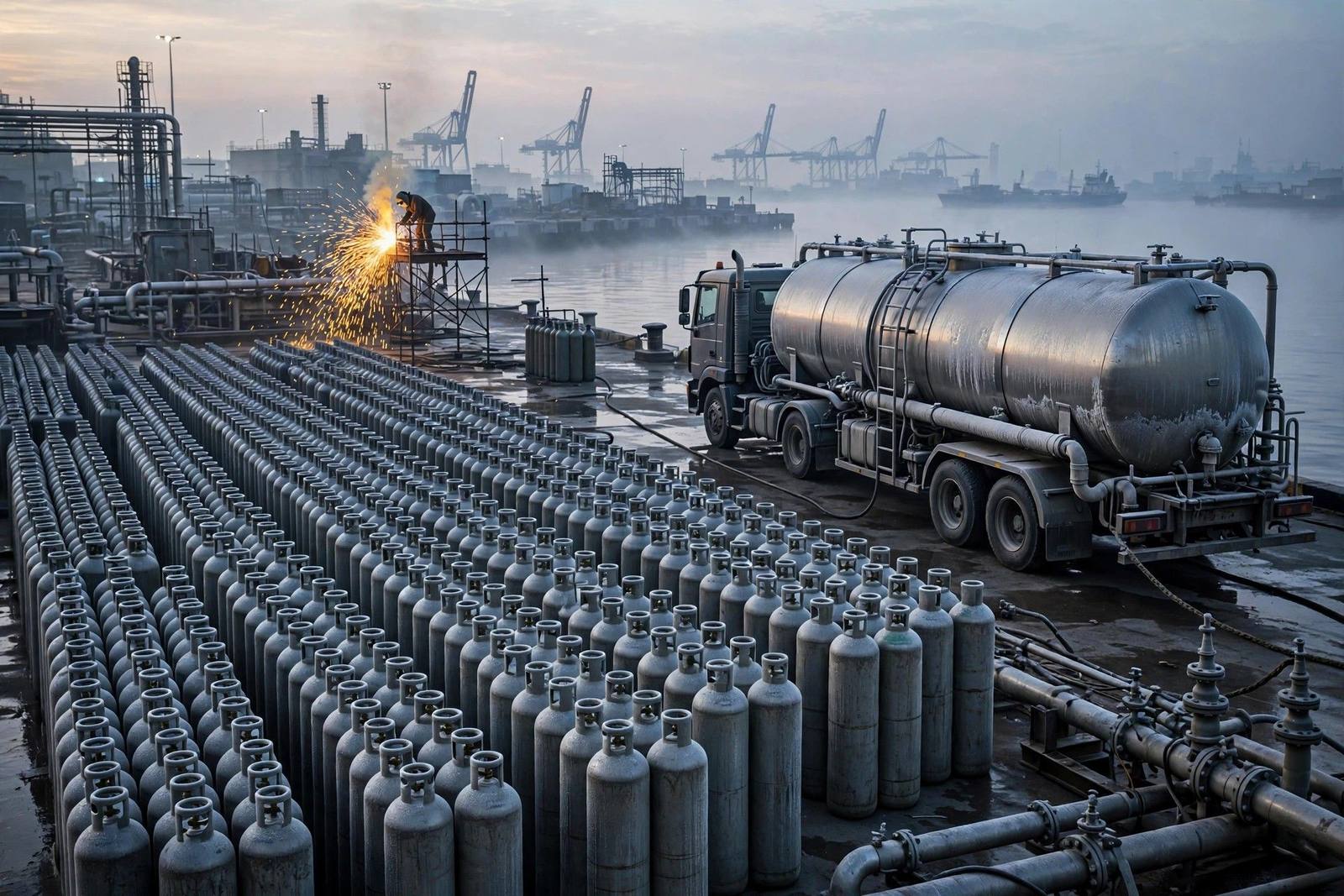
The company's own segment reporting divides the business into industrial, medical and other gases on one side, and welding and others on the other. The gases catalogue runs from the bulk commodities — liquid and compressed oxygen, nitrogen, argon and carbon dioxide — through medical oxygen, nitrous oxide and Entonox for hospitals, to hydrogen supplied by pipeline and trailer, dry ice, cryogenic dewars, and the high-purity, calibration and speciality mixtures that laboratories, pharmaceutical plants and electronics users require. Delivery is half the product: gases move in cryogenic tankers to customers' own storage, in cylinders through a national distribution network, and by pipeline where a big customer's plant justifies it.
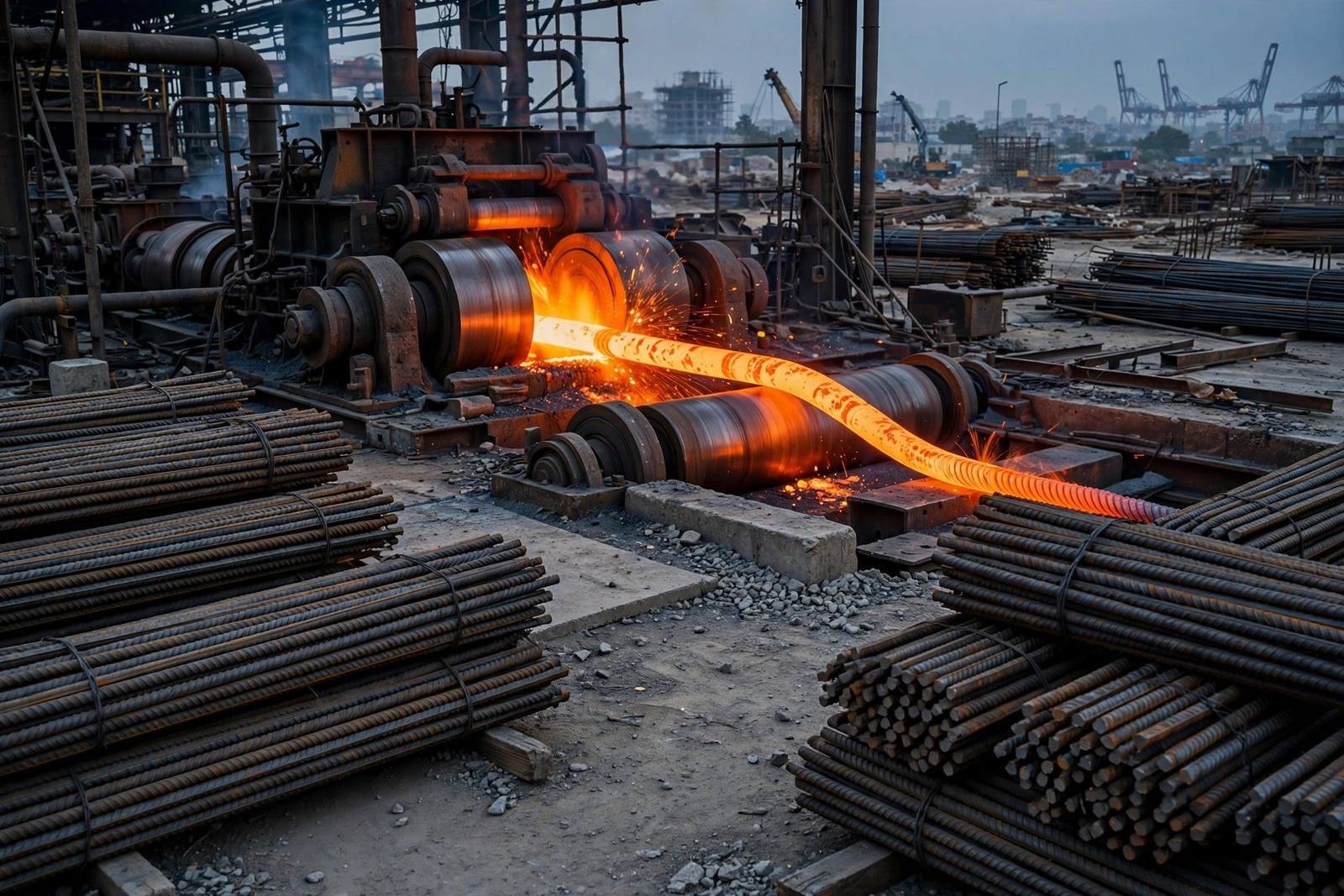
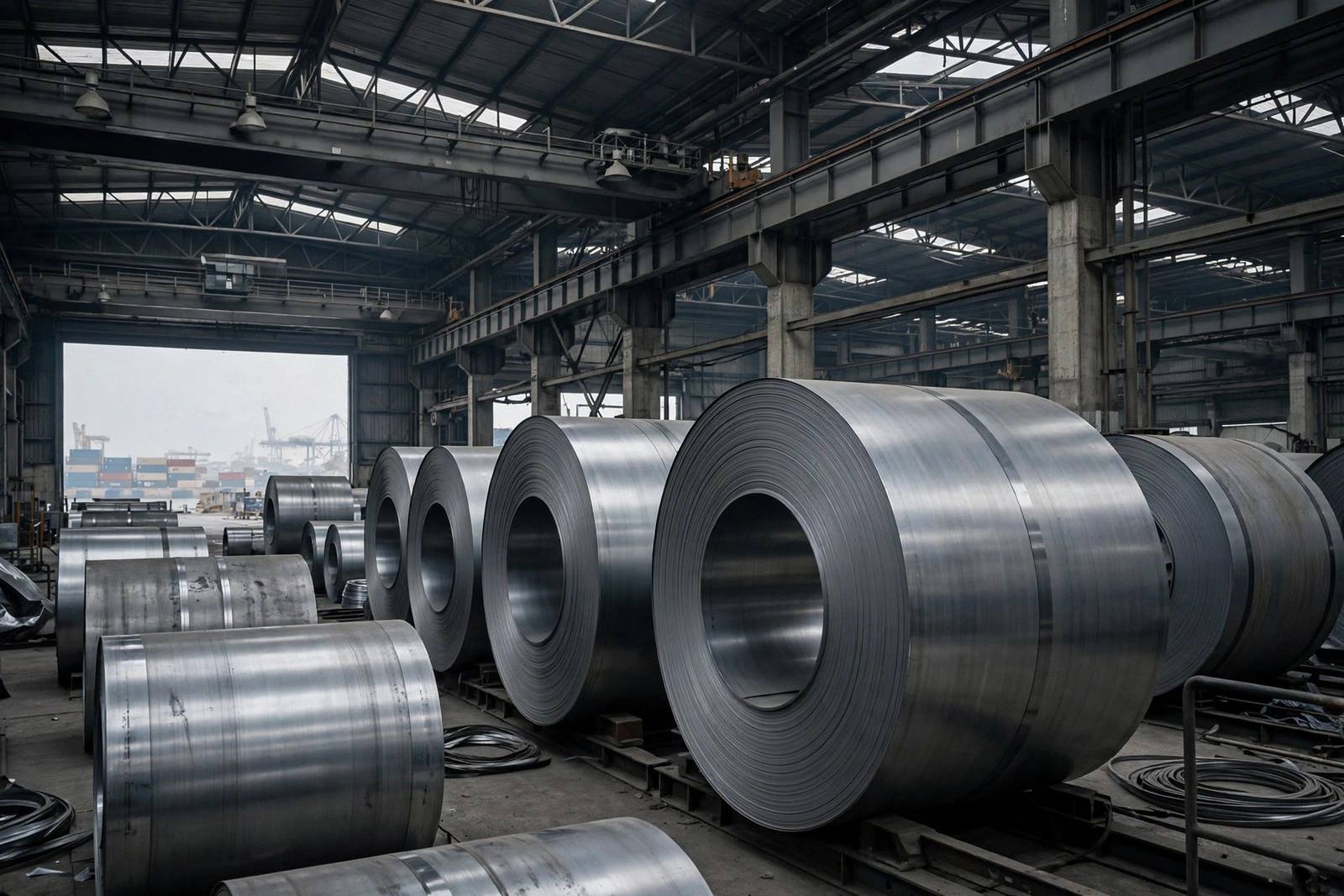
The second business is the one with sawdust on the floor. Pakistan Oxygen manufactures welding electrodes and sells welding machines, wires and consumables — the everyday kit of Pakistan's fabrication shops, shipyards, construction sites and repair workshops. The third is medical engineering: designing, installing and maintaining the pipeline systems that carry medical gases from a hospital's plant room to the outlet beside each bed, together with medical equipment. Its stated customer list spans aircraft and automotive work, chemicals, steel and metal fabrication, energy and refining, food and beverage, glass, pharmaceuticals, laboratories and healthcare — a cross-section of the formal industrial economy, which is why the company's volumes are a quiet barometer of that economy's health.
How a gases company makes money
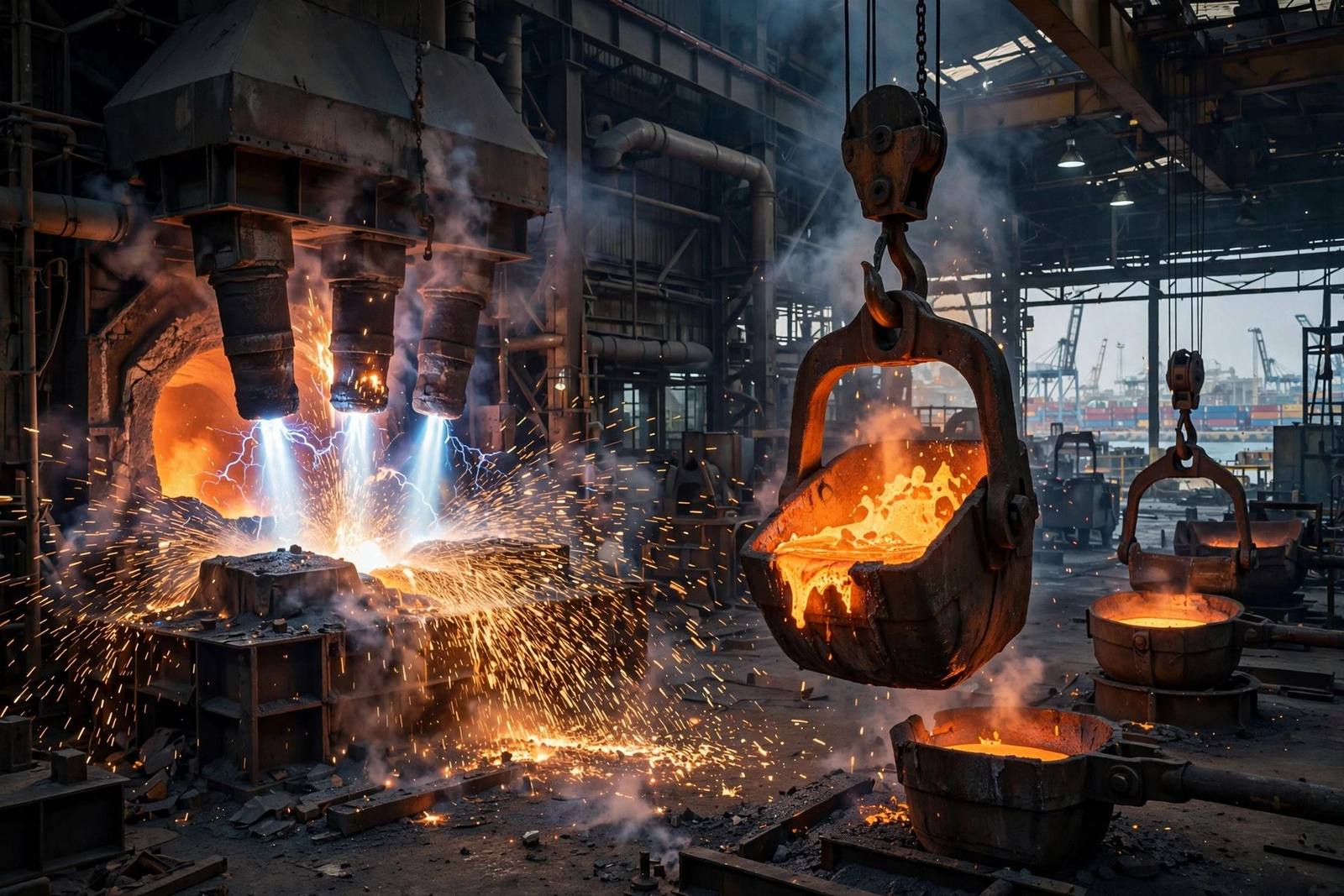
Industrial gases look like chemistry but behave like logistics and electricity. An air-separation unit consumes large amounts of power to liquefy and separate air; the gases themselves are then sold under contracts that range from multi-year bulk supply agreements with steel mills and refineries to per-cylinder sales to small workshops. Scale and density decide profitability: a plant earns its keep running steadily, and a delivery route earns its keep dropping full cylinders and collecting empties in the same trip. Medical gases add a service layer — reliability, purity certification and emergency response — for which hospitals pay because the alternative is unthinkable. Welding products, by contrast, are a classic manufacturing margin business, exposed to steel wire-rod and flux input costs and to competition from cheaper imports.
That mix gives Pakistan Oxygen a distinctive earnings character among listed manufacturers: part utility-like (contracted bulk gases), part distribution (cylinders), part cyclical manufacturing (welding). The same basic industry is pursued, at a smaller and newer scale, by the gases arm beneath Ghani Global Holdings, and comparing the incumbent's history with the challenger's is one of the cleaner sector studies available to a PSX beginner.
Strengths, risks and the honest caveats
Pakistan Oxygen's strengths are incumbency and know-how. Nine decades in a safety-critical, certification-heavy business build customer relationships and operating practice that cannot be improvised; its plant network, cylinder fleet and hospital engineering order book are all slow assets to replicate. The Adira consortium also brought owners with deep local industrial and banking networks, and the capacity investment announced after the takeover signalled growth intent rather than harvesting.
The risks are the industry's usual ones, sharpened by local conditions. Electricity is the dominant cost in air separation, so power tariffs and reliability run through margins. Industrial demand is cyclical — steel, refining and chemicals cut gas consumption quickly in a downturn — while medical demand, though steadier, is price-sensitive and often bought by institutions with slow payment habits. Capital intensity never sleeps: plants, tankers and cylinders wear out and must be replaced in hard currency-linked equipment, so a falling rupee raises the cost of staying still. And the share itself is small and closely held — the exchange profile has long shown a free float of roughly a quarter of the shares — so PAKOXY can be illiquid, with prices gaping on modest orders. A reader should hold both halves of that picture: a genuinely entrenched business, in a share that demands patience.
The name on the PSX
PAKOXY is one of the exchange's more distinctive tickers, a fossil of the name Pakistan Oxygen carried into listing. It sits in the chemical sector alongside makers such as Engro Polymer & Chemicals, far from the KSE-100 heavyweights, and it has not been a company of frequent, mechanical dividends: payouts in gases businesses tend to follow investment cycles, with cash retained for plants in expansion years. For students of the market its real value is historical. Few tickers let you trace, in one file of annual reports, the full arc of Pakistani corporate life — imperial-era gases trade, multinational subsidiary, global merger by inheritance, and finally local buyout and renaming.
What kind of investor studies Pakistan Oxygen
PAKOXY tends to attract the market's historians and its patient industrialists: investors who like essential, hard-to-replicate services, who read capacity announcements the way others read exploration results, and who are untroubled by thin trading. Their watchlist is practical — utilisation of the air-separation fleet, the balance between bulk, cylinder and medical volumes, power costs, welding margins against imports, capital spending, and how the Adira-era owners balance growth against distributions. It also pairs naturally with the sector explainers in the Aktzien learning library on how capital-intensive businesses earn their cost of capital. This article is educational content, not financial advice.
An old business in a permanently new industry
There is a final irony in Pakistan Oxygen's story. Gases are among the oldest industrial products in the country, yet the industry keeps being reinvented — by hospital expansion, by steel and glass investment, by food processing and laboratories, and now by owners betting that a locally run champion can out-serve the multinational model that created it. The cylinders stacked at West Wharf look much as they always have. The share register above them has changed completely — and learning to see both layers at once is most of what company analysis is.
The invisible infrastructure.
Gases businesses are best understood as infrastructure that happens to be privately owned. A steel mill planning a melt, a refinery planning a turnaround, a hospital planning an intensive-care ward — each assumes oxygen, nitrogen, argon or hydrogen will arrive to specification, on schedule, every day, and each builds the supplier's reliability into its own promises to others. That is why the industry's real assets are unglamorous: plant uptime records, cylinder fleets in the right sizes and places, drivers and tanker routes, purity laboratories, and engineers who can design a hospital's medical-gas pipeline so that the outlet at the bedside never becomes the story. Pakistan Oxygen's nine decades are largely a record of maintaining that invisibility through wars of independence, nationalisations elsewhere in the economy, currency crises and ownership changes at the top. It is also why the medical side of the business carries a weight beyond its revenue share: when a society argues about hospital capacity, it is arguing, whether it knows it or not, about companies like this one and the plants and fleets behind the wall socket. Newer entrants can undercut on price; replicating the trust embedded in those systems is the work of years, and it is the core of the incumbent's defence.
For the beginner assembling a first watchlist, Pakistan Oxygen also demonstrates a useful discipline: how to value steadiness. Its products cannot be postponed by its best customers, its plants cannot be replicated quickly, and its history runs through every regime of Pakistani economic life — yet its share can still sit untraded for days and its profits can still be squeezed by a single tariff notification on electricity. Steadiness of demand is not steadiness of earnings, and earnings are not steadiness of price. Holding those three ideas apart, with a company whose business a child can understand — it sells air, separated — is a genuinely good education in what the stock market does and does not reward. The cylinders will keep rolling out of West Wharf whichever way the ticker moves; the analyst's job is to keep asking what that reliability is worth, and to whom, at each stage of the country's industrial cycle.
Key takeaway: Pakistan Oxygen has supplied industrial and medical gases in the country since 1935, spent decades as BOC and then Linde Pakistan, and became a locally owned listed company in 2018 under Adira Capital — earning its money from power-hungry plants, cylinder logistics and hospital engineering.