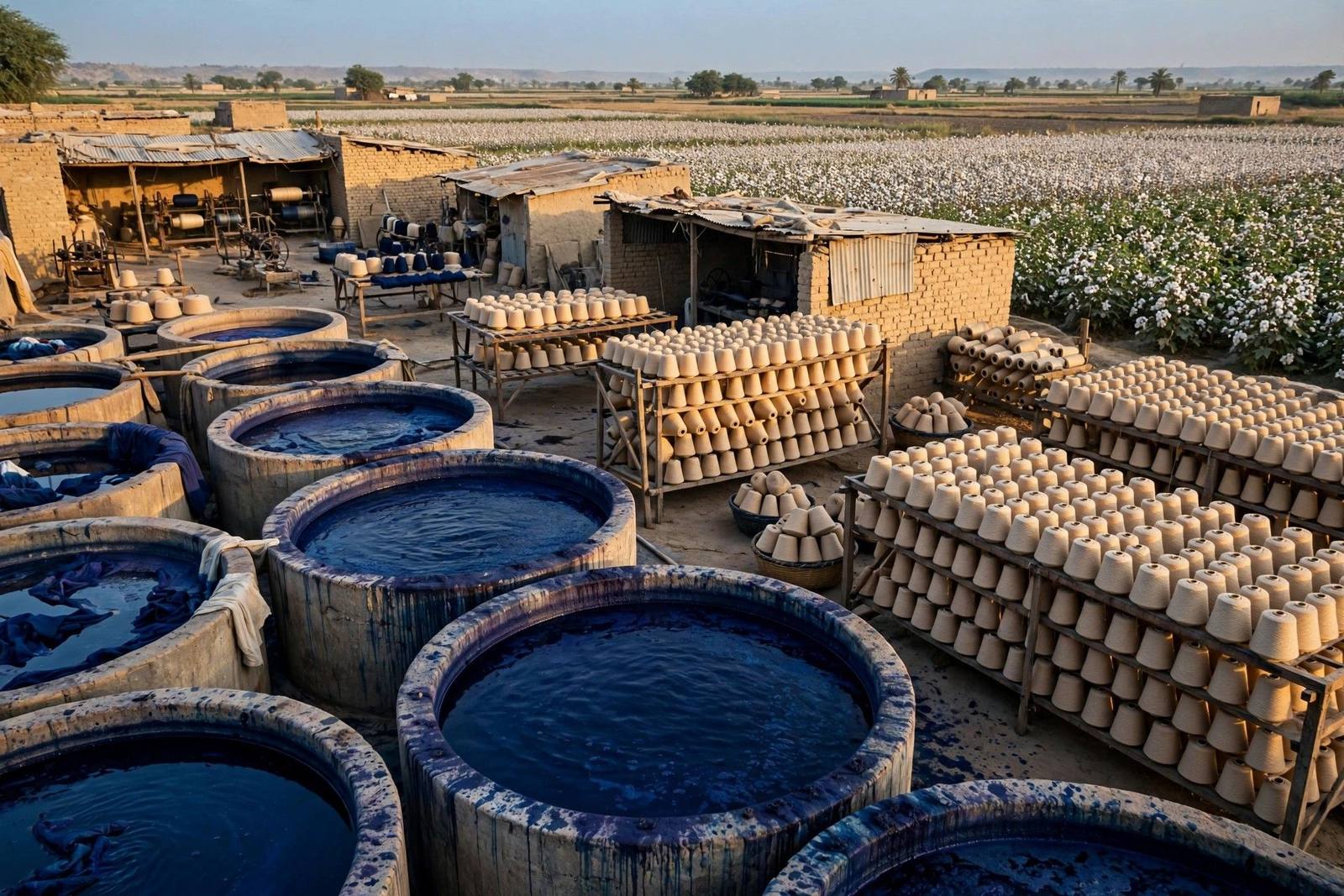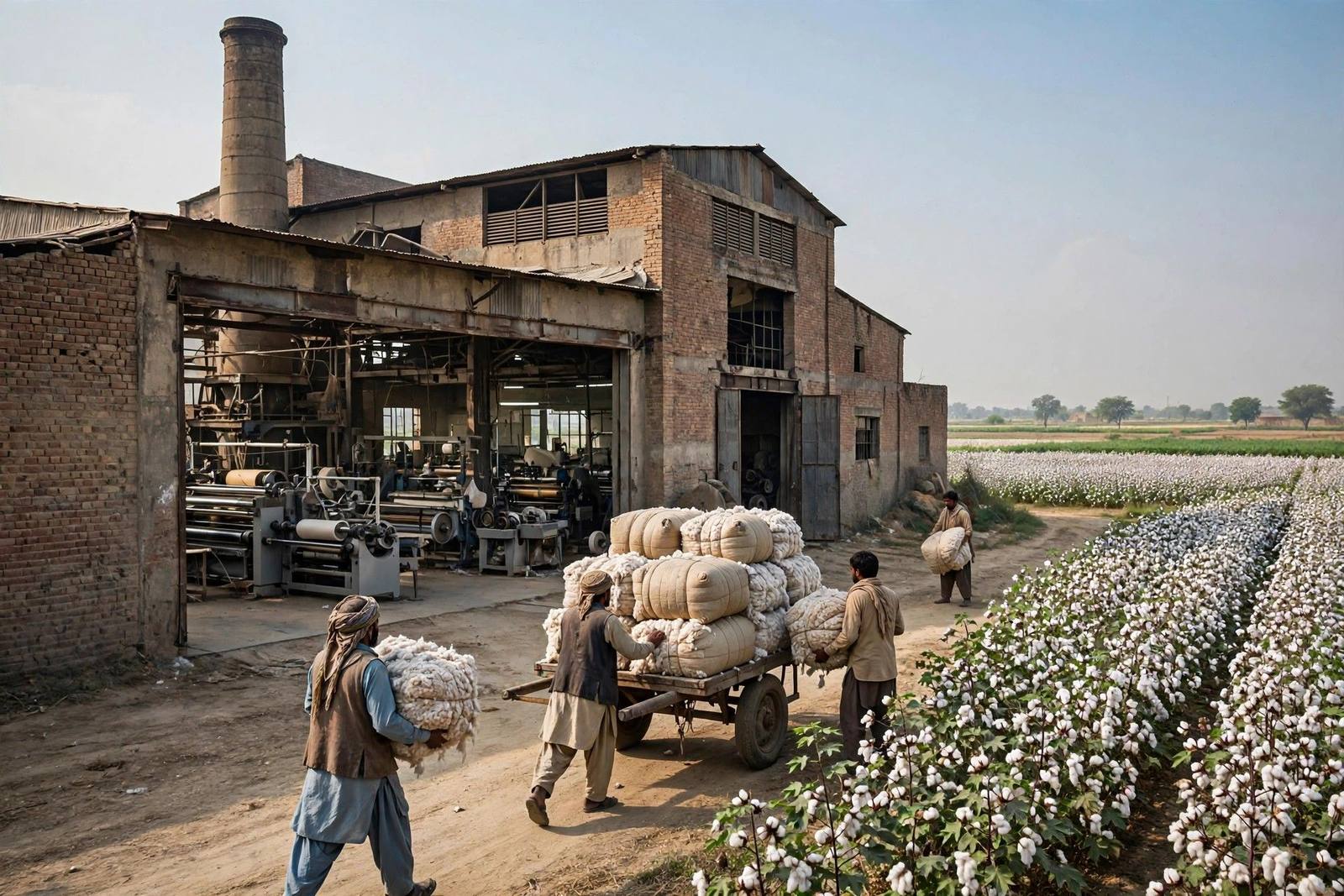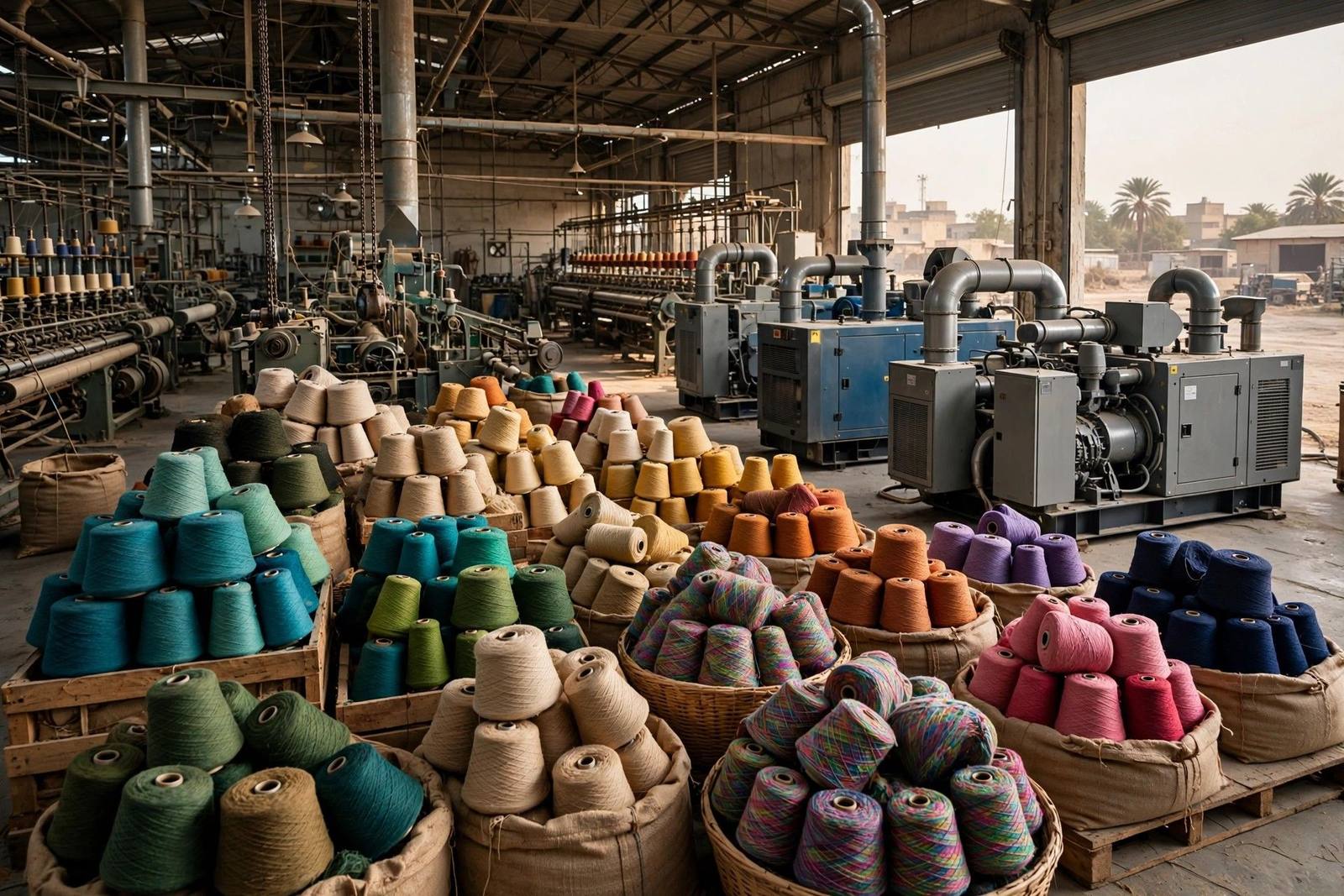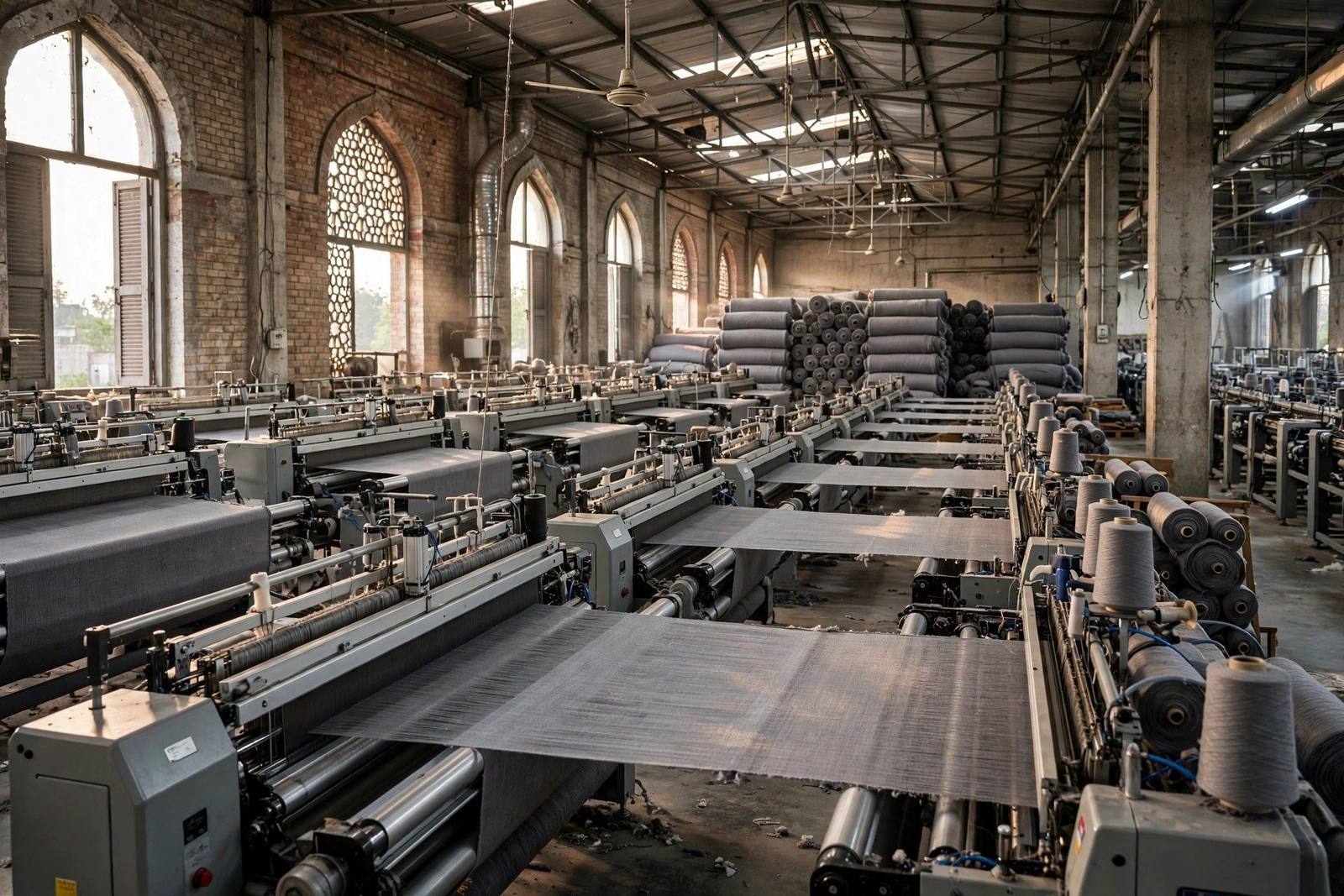
KARACHI: In Multan, a city whose name has meant cotton for centuries, sits a mill that explains how modern Pakistani groups are built. Reliance Weaving Mills Limited, traded on the Pakistan Stock Exchange as REWM, is the listed textile arm of the Fatima Group — the conglomerate better known nationally for fertiliser. Reliance began in 1990 as a weaving unit founded by Mukhtar Ahmed Sheikh, grew backwards into spinning, and now operates as an integrated yarn and grey-fabric producer selling from Multan to markets in Asia, the Middle East, Europe, Africa and the United States. Inside the Fatima portfolio it is the quiet industrial sibling: no brand on any high street, no product a consumer ever touches under its own name, but tonnes of yarn and tens of millions of metres of fabric a year, and a listed window through which a public investor can own a slice of the group's manufacturing base.
A weaving unit, founded in 1990, that learned to spin
Reliance Weaving Mills was founded by Mukhtar Ahmed Sheikh in 1990 and incorporated that year. The sequence of its growth is its signature. Most Pakistani textile companies started with spinning and added weaving later; Reliance, as its group profile tells it, started as a weaving unit and subsequently evolved into a yarn manufacturer as well. That inversion makes economic sense once seen from the loom: a weaver buys yarn every day, watches its price and quality, and eventually concludes that margin and consistency are both better if the yarn is its own. Adding spinning gave Reliance control over its largest input and a second product to sell when weaving demand softened.
The result, on the group's own description, is one of the larger weaving operations in the country: some 295 modern looms and two spinning units totalling 35,520 spindles, on a production site in Multan spread over roughly 705 kanal. Group figures put installed capacity at about 16.3 million kilograms of yarn and about 61 million metres of woven fabric a year — capacities, as always in textiles, that describe what the machinery can do at full stretch rather than what any single year's orders required. The company listed in the mid-1990s — its ordinary shares are recorded as listed from April 1996 — and its affairs are run from Multan, with the group describing Faisal Mukhtar among its leadership in recent years; its current chief executive in company listings is Faisal Mukhtar, of the founding family.
Inside the Fatima Group
The Fatima Group traces its own establishment to 1936, in the trading of commodities, before moving over the following decades into manufacturing. Its modern identity was built around fertiliser — Fatima Fertilizer and Pakarab Fertilizers made it one of Pakistan's largest fertiliser producers — and it has since spread into sugar, energy, mining, cement ventures and trading. Textiles, through Reliance, are the group's oldest-style manufacturing business: export-earning, employment-heavy and cyclical in exactly the ways fertiliser, with its regulated gas and farm demand, is not.
For a REWM shareholder, that address matters in both directions. On the supportive side, the company belongs to a large, diversified, professionally managed group with deep banking relationships and a track record of building big industrial plants — the sponsor strength that lenders and Fatima Fertilizer's own profile illustrate. Reliance's chairman in group reporting is Fawad Ahmed Mukhtar, the group's chairman, and the family continuity from the founder is direct. On the cautious side, a small listed textile company inside a fertiliser-centred group will never be the group's first call on capital or attention; its expansion, dividends and strategy are set with group priorities in mind, and related-party dealings with sister companies are a standard section to read. Our guide to family businesses on the PSX explains how to weigh exactly that bargain.
Yarn and grey fabric: what Reliance sells
Reliance reports through two segments, spinning and weaving. The spinning segment produces yarns from natural and man-made fibres; the weaving segment turns yarn — its own and bought-in — into grey fabric, the undyed, unfinished cloth that processors and garment makers then dye, print, finish and stitch. Its products are exported and sold domestically, reaching markets the company lists across Asia, the Middle East, Europe, Africa and the United States.
Grey fabric deserves a sentence of respect, because beginners underestimate it. It is not a commodity in the crude sense: weave construction, width, thread count, defects per hundred metres and delivery reliability all price into it, and a weaver who supplies consistent wide-width fabric to an export processor holds a place in that processor's programme. Reliance's installed base of modern looms and its own yarn behind them is aimed precisely at that consistency. At the same time, grey fabric is still an intermediate good — Reliance does not dye, print or stitch what it weaves, so it captures less of the final garment's value than a composite mill, and more of the price cycle of the intermediate market.
How a weaving-led mill makes money
The arithmetic has two spreads. The spinning spread — fibre cost against yarn price — governs the first segment, exactly as in PSX textile stocks generally and as the crop in Pakistan's cotton economy dictates. The weaving spread — yarn cost against grey-fabric price — governs the second. Running both segments gives Reliance an internal customer for part of its yarn and an internal supplier for part of its looms' appetite, damping, though never removing, the volatility of either market alone.
Costs behave as they do across Multan's mills. Energy is the standing anxiety: looms and spinning frames run continuously, and Pakistan's tariff path has pushed every large mill toward its own generation arrangements and efficiency retrofits. Labour is the second great cost and, in a group that publicly emphasises its welfare institutions in its home region, a reputational commitment as well. Finance cost — carrying cotton bought in a season against sales spread over a year — rewards a strong sponsor and punishes a weak balance sheet. Exports price in dollars while most costs sit in rupees, so the exchange rate lifts or squeezes margins in the familiar exporter pattern.
Strengths, risks and honest caveats
Reliance's strengths are its group's. A founder-built mill grown into an integrated spinning-and-weaving operation, positioned in the cotton belt at Multan, backed by one of Pakistan's more substantial business houses, selling an undifferentiated but essential product into five continental markets — that is a durable, if unspectacular, industrial proposition. The Fatima Group's demonstrated willingness to invest in large plants and modern technology elsewhere in its portfolio suggests a sponsor that thinks in decades.
The caveats are structural rather than scandalous, and an honest profile should say so plainly. Weaving and spinning are the lowest-margin stages of the textile chain; Reliance stops before dyeing, finishing and garments, where value concentrates. Its results will therefore swing with cotton, energy and intermediate demand more violently than a composite peer's. Textiles are a minor part of a fertiliser group, and minority shareholders have limited visibility into how group strategy will treat the mills over time. The shares are not heavily traded, and the sponsor's control means the register moves slowly — the free float mechanics that apply across this batch apply here too. No famous controversy attaches to the company; the discipline it demands of a reader is the ordinary one of segment results, related-party notes and cash conversion.
Weaving's place in the chain, honestly stated
To place Reliance fairly, it helps to walk the chain it sits in. A bale of cotton becomes yarn at a spinner, yarn becomes grey fabric at a weaver like Reliance, grey fabric becomes finished cloth at a processor — dyeing, printing, coating — and finished cloth becomes a garment or a bed set at a stitching unit, before a brand sells it to a shopper for many times the mill-gate value of everything before. Each stage keeps a slice of that final price, and the slices grow as the product approaches the consumer. Reliance lives in the middle slices: essential, skilled, capital-hungry — and structurally the hardest places to get rich, because a weaver's customers are professional buyers who know the yarn price as well as the weaver does.
That is precisely why the group's ownership matters to the investment case. A standalone weaver rides the grey-fabric price with nothing beneath it; a weaver inside the Fatima Group rides it with a sponsor whose fertiliser earnings follow the farm economy rather than the fabric market, and whose balance sheet has repeatedly funded very large industrial projects. The support is not a guarantee — groups let weak units shrink, and minorities cannot compel a rescue — but through past textile downturns the pattern at Reliance has been continuity and reinvestment rather than distress, and its mills enter each cycle with their looms modern and their yarn supply in-house. The reader's job is to verify that pattern continues, in the segment results and the capital expenditure notes, rather than to assume the group's strength is automatically the mill's.
There is also a regional fact worth recording. Multan's mills employ thousands in a part of Punjab far from the Lahore–Karachi corridor that dominates business coverage, and groups like Fatima — with the founder's welfare institutions rooted in the same district — carry a local social licence that is part of their durability. A weaving mill is not a software start-up; it is a town's economy, and its owners are judged locally as well as on the exchange.
The Multan site itself tells the integration story in bricks. Spinning sheds and weaving halls on one large plot — some 705 kanal, in the group's description — mean yarn travels metres, not kilometres, between the process that makes it and the looms that consume it; fabric for inspection, packing and dispatch leaves from the same gate. Co-location saves freight and handling, simplifies security and utilities, and lets one management team see the whole conversion from bale to cloth in a single walk. When energy is generated or arranged for the site, it serves both segments at once. Pakistani mills were often built this way for a reason: every kilometre and every intermediary between processes is margin leaking to someone else, and Reliance's founders, starting from the looms backward, arranged their mill so that as little as possible leaks.
It is worth adding that Reliance's export reach — five continental markets for an intermediate product — is wider than many better-known Pakistani brands manage, built not on advertising but on the unglamorous credentials of inspection pass rates, shipment reliability and claims honoured when a consignment fell short.
None of this makes Reliance immune to a bad year — no weaver is — but it does mean its bad years are likelier to be reported as thin profits than as existential questions, the distinction that separates group mills from standalone ones across this entire batch of profiles.
Continuity, for a mill town employer, is a product in itself.
The name on the PSX and who studies it
REWM sits in the PSX's textile weaving sector and trades with the character of a group ancillary stock: real assets, real exports, modest market attention. Its dividend decisions follow the board and the year's cash, in the pattern of Pakistani textile companies generally; readers can trace any declared payout through how PSX dividends work.
Followers of Reliance watch spindle and loom utilisation, the yarn–fabric mix, cotton and energy costs, export orders from processors serving the garment trade, and any sign of the group investing in — or quietly starving — its textile arm, including moves toward processing or garments that would change the margin profile. This profile is educational content, not financial advice, and nothing in it recommends buying or selling REWM shares.
Key takeaway: Reliance Weaving Mills is the Fatima Group's Multan textile arm — founded as a weaving unit in 1990, now spinning its own yarn and weaving grey fabric for world markets, with a spinner-weaver's margins and a strong sponsor behind it.