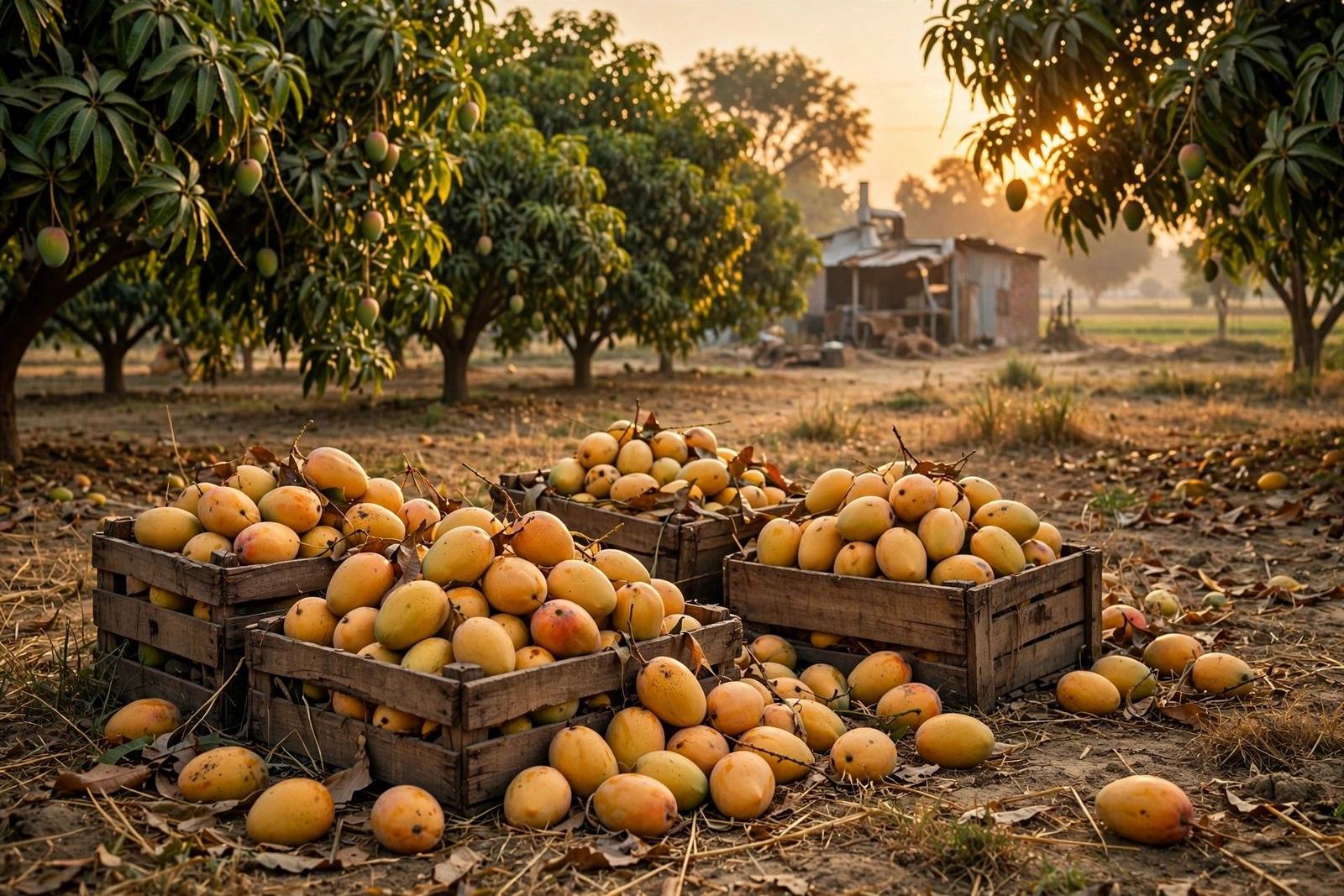
KARACHI: Ask a Pakistani of a certain age to name a mango drink and the answer often comes back in one word: Shezan. Shezan International Limited — SHEZ on the Pakistan Stock Exchange — is the Lahore company behind that bright orange drink, and behind a much wider shelf of juices, squashes, jams, jellies, pickles, chutneys, ketchups and sauces that has been part of Pakistani kitchens since the 1960s. It is one of the country's pioneering fruit-processing businesses: a company created to turn Pakistan's abundant fruit harvests into bottled, boxed and jarred products that could travel, keep, and be sold far from the orchard. This profile traces how a 1964 joint venture became a listed food company, what it actually makes, who owns it, how the money moves through a business like this, and what kind of investor tends to study it.
A name built on fruit
Shezan's place in everyday life is easiest to see at a breakfast table or in a school lunchbox. Its mango juice drink became so closely identified with the brand that "Shezan" and mango juice are near-synonyms for many consumers, and the company describes itself as one of Pakistan's largest fruit and vegetable processors, with a range extending well beyond drinks into the preserves and condiments that sit beside them. The range matters because it explains the company's shape. Shezan is not a soft-drink bottler in the cola mould, renting a global brand and a concentrate. It is an agro-processor: it buys fruit and vegetables — much of the raw material seasonal, perishable and priced by the harvest — and converts them into pulps, concentrates, juices and preserved foods with a shelf life.
That model also explains the company's geography. Its head office and original plant are in Lahore, in the heart of Punjab's fruit-growing belt; a separate unit in Karachi serves Sindh and export demand; and a juice factory at Hattar, in Khyber Pakhtunkhwa, extended its northern footprint. Like other long-established names in the Pakistani packaged-food industry, Shezan sells both to households at home and to the Pakistani diaspora abroad, where its juices, pickles and chutneys are stocked by South Asian grocers in Britain, Canada and elsewhere. For a beginner meeting the stock for the first time, SHEZ is best understood as a small, old, brand-led food manufacturer — closer in spirit to a preserves maker than to a beverage giant.
Origins: a joint venture from the Ayub era
Shezan was incorporated on 13 May 1964, in the middle of Pakistan's industrialisation drive of the Ayub Khan years, when the state encouraged local groups to set up modern manufacturing with foreign partners and foreign credit. The company was conceived as a joint venture between the Shahnawaz Group of Pakistan and the Alliance Industrial Development Corporation of the United States. The Pakistani sponsors brought an agricultural background and local fruit supply; the American partner brought processing technology. The United States Agency for International Development (USAID) provided a loan of $2.5 million to help buy the necessary equipment — a detail preserved in histories of the company and typical of the era's development finance, when American aid underwrote a good deal of Pakistan's new private industry.
The first product was orange juice. Test marketing began in 1965 from the new fruit-processing and bottling plant in Lahore, and the early history contains a small lesson in consumer taste: the original orange juice formulation, developed by the company's research department, did not succeed with consumers, and the range had to be reworked. Mango proved the better bet. In 1967 Shezan widened the range to mango, grape, apple and berry juices, and in 1969 it introduced Lemon Barley, a squash-style drink that became another long-lived line. The mango drink, in particular, fitted the country: Pakistan is one of the world's great mango producers, and Shezan built its identity on owning that flavour before multinational juice brands arrived in force.
The American chapter closed early. The Shahnawaz Group bought out its foreign partner's shares — company histories date the purchase of the Alliance Industrial Development Corporation stake to 1971, with government permission — and Shezan became an entirely Pakistani-owned enterprise, as it has remained. That timing mattered. The 1970s in Pakistan brought nationalisation of much of large industry under the Bhutto government, but food processing of Shezan's kind stayed in private hands, and the company kept investing through the decade: production capacity was tripled in 1978 and doubled again in 1982, according to its published history.
Growing up: Karachi, Tetra Brik and a stock-market listing
The 1980s turned Shezan from a Lahore plant into a national manufacturer. In 1980–81 a separate unit was installed in Karachi to serve the city, Sindh and export orders — a sensible move for a company whose products are bulky, heavy and expensive to truck long distances. A bottle-filling plant was commissioned at Lahore in 1983, sharply increasing bottling capacity, and in 1987 an independent Tetra Brik plant followed, putting Shezan into the aseptic carton format that would come to dominate packaged juice in Pakistan. The sequence is a compact history of Pakistani food packaging itself: returnable glass and bottles first, then the carton revolution that let juice travel without refrigeration and sit on shelves for months.
In 1989 Shezan came to the stock market, listing on the Karachi Stock Exchange through an initial public offering. The listing made SHEZ one of the older food-sector names on what is now the Pakistan Stock Exchange, and it came just before another expansion: in 1990 the company set up a juice factory at Hattar, in what was then the North-West Frontier Province, through a wholly owned subsidiary formed to take advantage of government incentives for industry in less-developed areas. Plants in Lahore, Karachi and Hattar gave the company coverage of Pakistan's three main consumption regions and its main port for exports.
Later decades were less about new plants and more about range and reach. Shezan extended into ketchups, sauces, jams, marmalades, pickles, chutneys, syrups and squashes, launched an energy drink around the end of 2008 as it pushed harder in Karachi, and kept its export trade to diaspora markets. It also leaned on a distinctive asset that few juice rivals could match: orchards. The company has long described itself as Pakistan's single largest grower of mangoes, a claim repeated in press coverage over many years, which gives it a degree of vertical integration — part of its key raw material grows on trees it controls rather than being bought entirely in the open market at harvest prices.
What Shezan actually makes
Strip away the nostalgia and Shezan's business is a processing operation with three broad shelves. The first and largest is drinks: fruit juices and nectars, the famous mango drink, squashes and cordials such as Lemon Barley, and allied lines in Tetra Brik cartons, bottles and other packs. In its financial reporting the company has organised itself around a juices segment and an "others" segment, which tells its own story about where the centre of gravity sits. The second shelf is preserves and kitchen staples — jams, jellies and marmalades made from the same fruit streams as the juices. The third is savoury: tomato ketchup, sauces, pickles and chutneys, where Shezan competes with both multinational brands and strong local specialists such as the confectioners and food companies profiled elsewhere in this series, including the Karachi sweets and snacks maker behind Candyland and its sister brands.
Underneath the brands sits the processing chain. Fruit arrives in season; it is pulped, concentrated or juiced; sugar, water and preservatives are added to standard recipes; and the output is packed for retail, institutional and export customers. The economics of that chain are unforgiving in a specific way: the crop is bought in a few months of the year, at prices set by weather and harvest, while the finished product is sold all year against competitors — including, in recent decades, the juice and nectar ranges of much larger dairy and food groups. Shezan's defence has never been scale. It is the brand, the orchards, and recipes that older consumers trust.
Ownership: the Shahnawaz Group
Shezan belongs to the Shahnawaz Group, the Lahore business house that founded it with its American partner in 1964 and has controlled it since buying the partner out in the early 1970s. The group's interests have historically extended beyond food, but Shezan is its best-known consumer name and its listed flagship. Sponsor control of this kind is the standard pattern among older Pakistani food companies: a founding family holds the decisive stake, professional managers run the plants, and public shareholders own a minority slice of a business whose strategy is set with a long, family horizon. For minority investors the implications cut both ways, a theme this site returns to in its guide to family businesses on the PSX: continuity and patience on one side, and on the other a free float that can be modest, with trading in the shares sometimes thin.
How Shezan makes money
The revenue logic is simple to state and hard to execute. Shezan sells packaged fruit products at prices the mass market can bear, and its margin is what survives after four hungry costs: fruit and sugar, packaging, energy and distribution. Fruit and sugar are agricultural commodities whose prices swing with harvests, support prices and world markets; a poor mango crop or an expensive sugar season squeezes the processor from the input side, while competition limits how much can be passed on at the shelf. Packaging — Tetra Brik material, glass, caps, labels — is the second lever, much of it linked to imported inputs and therefore to the exchange rate. Energy and freight matter because juice is mostly water: moving it around Pakistan costs real money, which is precisely why the company built plants in three regions rather than one.
Working capital follows the harvest. A fruit processor stocks up when fruit is cheap and ripe, then sells down inventory through the year, so cash is absorbed and released with the seasons. Exports to diaspora markets earn foreign currency and diversify demand, but they are a smaller, competitive trade. The result, in most years, is a business with steady but unspectacular economics — profitable when harvests and prices cooperate, pressured when they do not, and dependent on holding shelf space against rivals with far bigger advertising budgets. Investors reading its results therefore watch gross margin and the juices segment first: they show whether the brand still commands its price against the cost of fruit, sugar and cartons.
Strengths, risks and hard chapters
Shezan's strengths are the ones six decades create. The brand is genuinely embedded — few Pakistani food brands of its age still anchor a category in the public mind — and the orchard base and processing know-how are real assets rather than marketing claims. Its product range hedges the juice market: if drinks slow, preserves, ketchups and pickles still sell. The balance the company strikes is that of a heritage brand in a market that has moved on: the packaged-juice segment it pioneered is now contested by the juice and dairy arms of much larger groups, private labels and imported brands, and Shezan's smaller marketing spend makes defending share a permanent task.
An honest profile must also record the company's hardest chapter. Shezan's founding family belongs to the Ahmadiyya community, and for many years the company has been the target of sectarian boycott campaigns urging consumers not to buy its products. In 2012 the Lahore Bar Association voted to ban Shezan products from court premises, and company executives of the time described attacks on sales staff and shops during campaigns, alongside the leaflets and stickers that periodically resurface. The company has continued to operate and sell through these episodes, and its products remain widely stocked; but the campaigns are a recurring, documented feature of its operating environment that no profile should hide, and they can flare with the wider climate of agitation against the community. Alongside that sit the ordinary risks of its trade — crop failure, sugar prices, packaging costs, food-safety regulation and the slow squeeze of larger competitors.
The name on the PSX
SHEZ has been listed since 1989, first on the Karachi and Lahore exchanges and now on the unified Pakistan Stock Exchange, in the food and personal care products sector. It is a small-capitalisation share with a modest free float, so trading can be quiet for stretches and prices can move sharply on little volume — beginners comparing it with the heavyweights of the index should first understand what the KSE-100 is and how its members are chosen. The company has a record of paying cash dividends in many years, which is one reason income-minded holders have kept it on watchlists, though the amount has varied with results and no year's payout guarantees the next. Its June financial year follows the harvest-linked rhythm of the business itself.
The investor who studies SHEZ is usually one of two people: the heritage-brand hunter, who likes old consumer names with real assets and a dividend habit, or the small-cap value reader, willing to accept thin trading in exchange for a business they can understand end to end — orchard, plant, carton, shelf. Both need patience, and both should remember that this profile is educational content, not financial advice. What Shezan ultimately offers the student of the PSX is a clean case study in Pakistani consumer history: a company that industrialised the mango, listed early, and has spent sixty years defending a flavour.
Key takeaway: Shezan International (SHEZ), founded in Lahore in 1964 and listed in 1989, is the Shahnawaz Group's fruit-processing company — maker of the famous mango drink, juices, preserves and ketchups — whose fortunes turn on harvests, sugar and packaging costs, brand loyalty, and a small, quietly traded share.