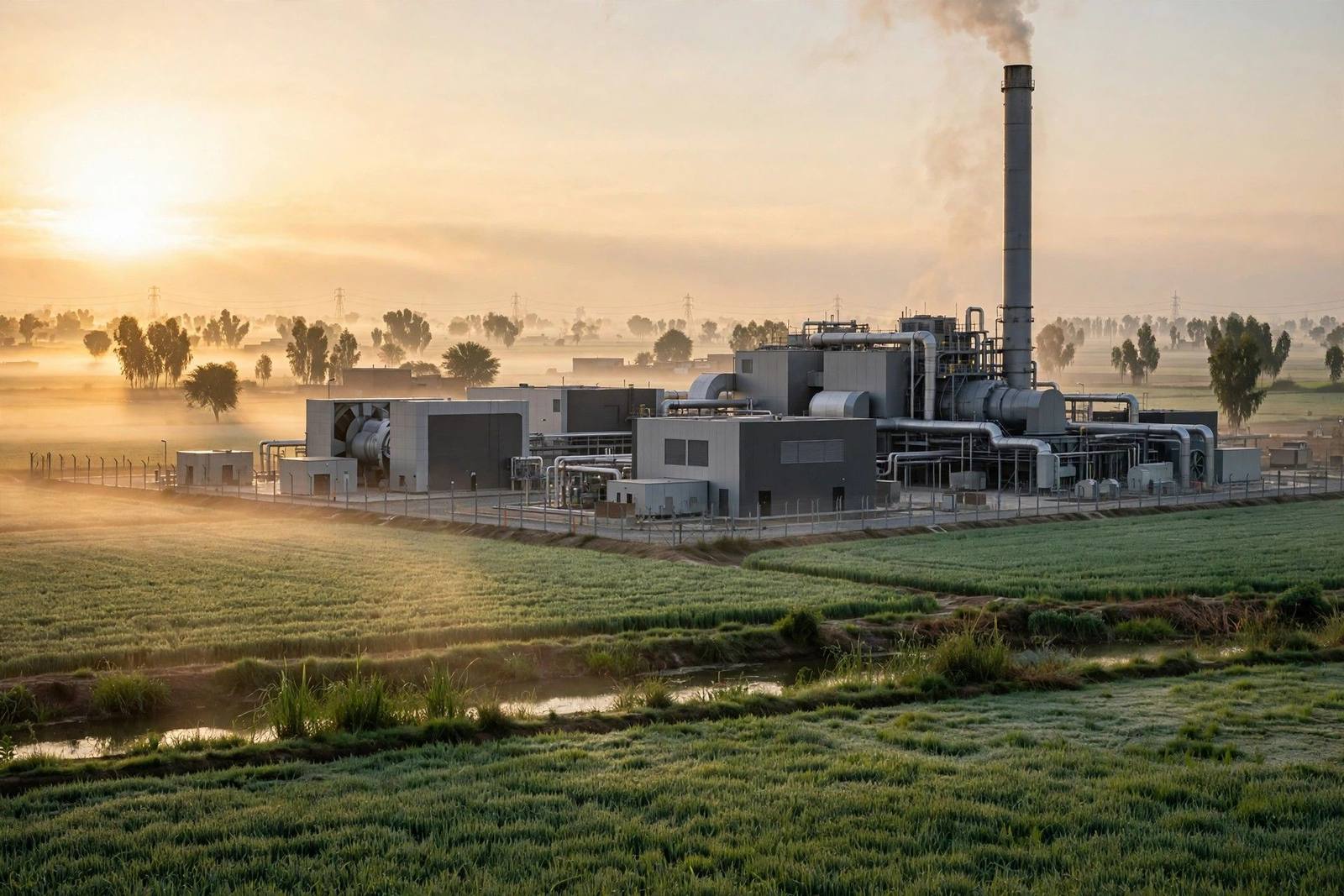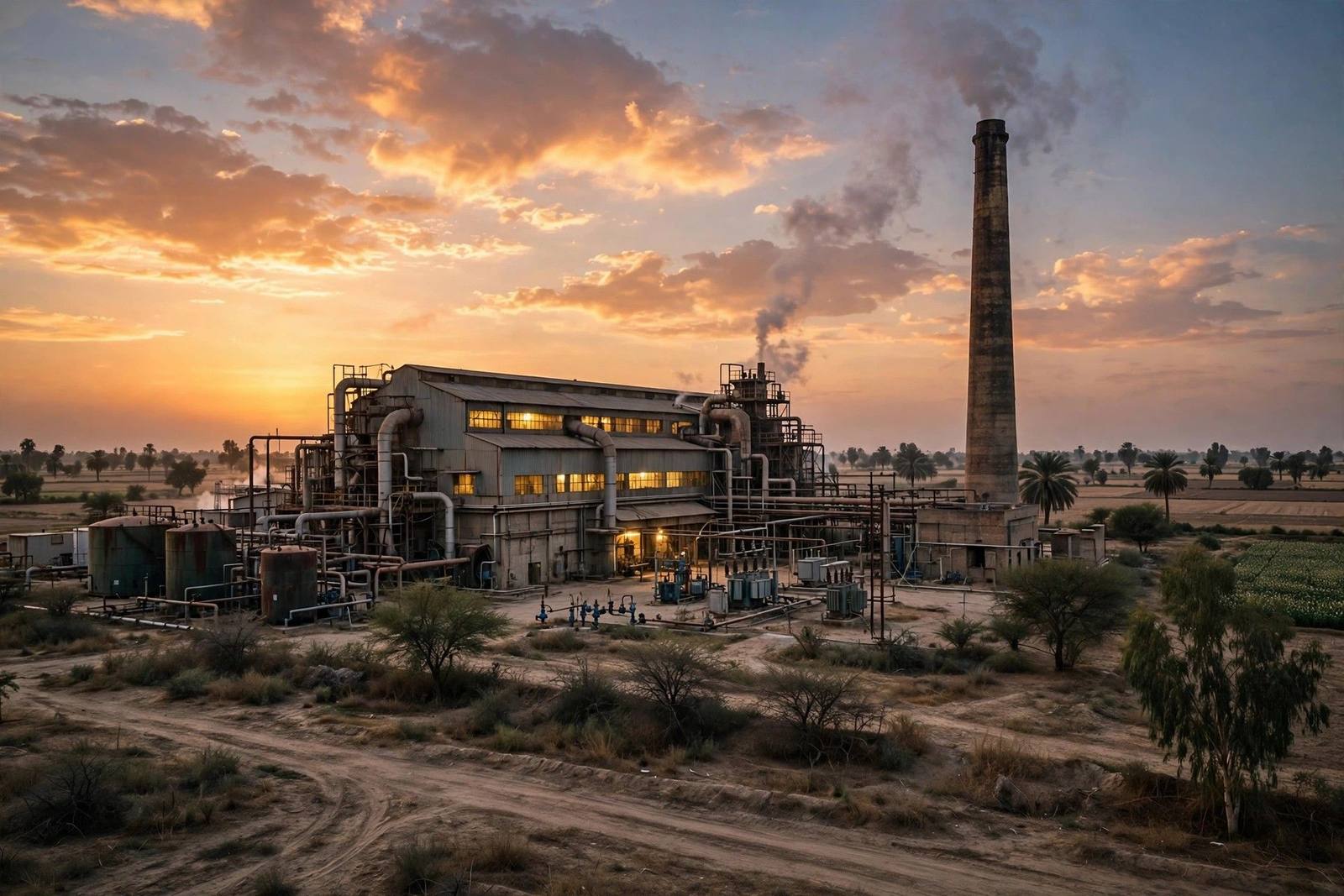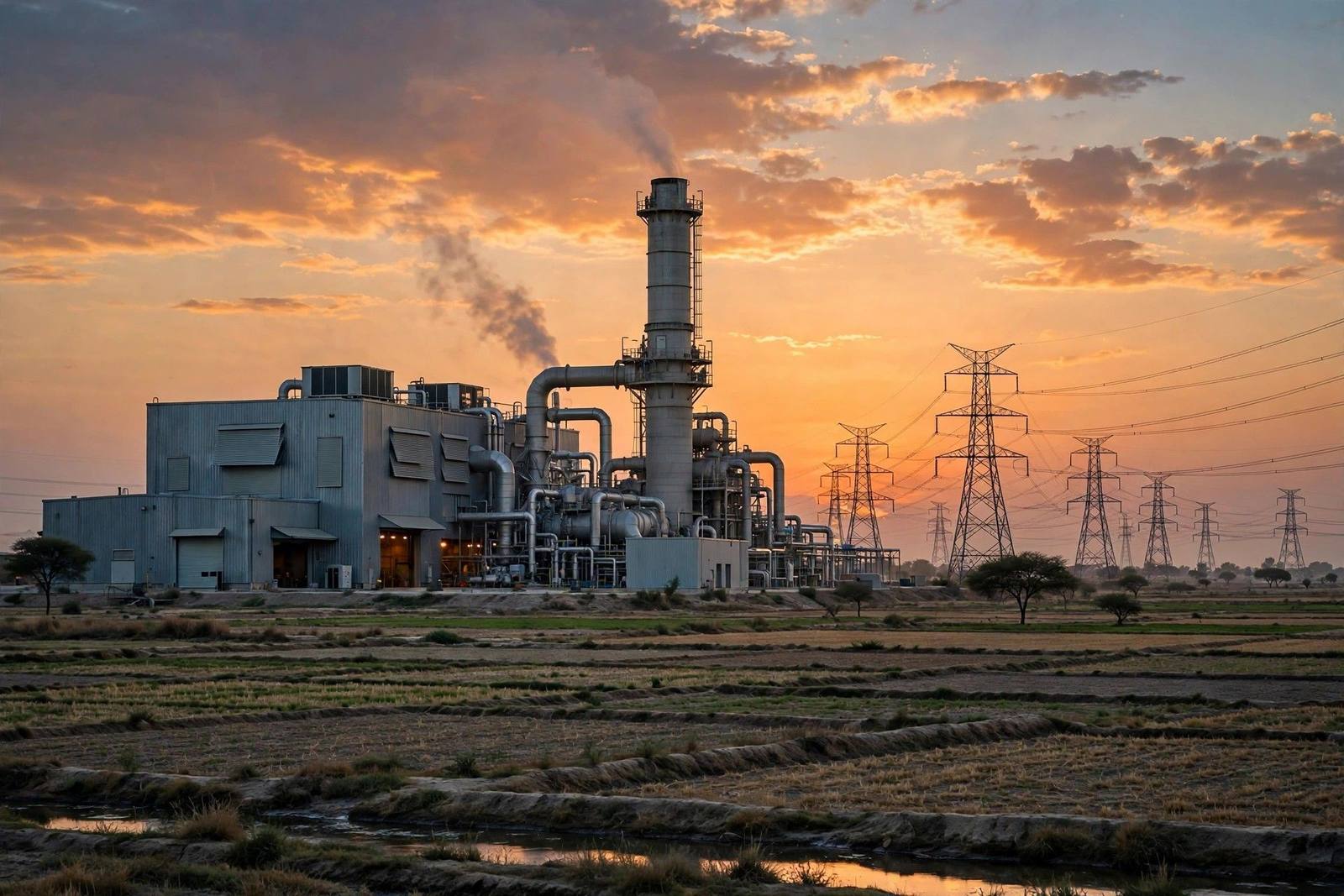
KARACHI: Every power plant has a fuel story, but few have one as tidy as Qadirpur's. For years, the Qadirpur gas field in Sindh's Ghotki district produced a stream of low-energy, high-sulphur "permeate gas" that nobody could use — so it was burned off in a flare, wasted, flame by flame. Engro Powergen Qadirpur Limited — EPQL on the Pakistan Stock Exchange — was created to catch that flame: a 217-megawatt combined-cycle plant designed from the start to run on the gas the field threw away. It has been selling electricity to Pakistan's grid since March 2010. This profile explains how the plant came to exist, how an independent power producer (IPP) actually earns, who owns EPQL, and what investors who study Pakistan's listed power sector watch in it.
An idea at the flare stack
The Qadirpur field, operated by the state-owned Oil and Gas Development Company, began production in the mid-1990s as one of Pakistan's significant gas discoveries. Processing the field's main gas stream left behind permeate gas — a by-product stream with low British thermal unit (BTU) content and high sulphur, unsuitable for the standard pipeline network and awkward to burn in ordinary equipment. From the field's start in 1995, that stream was largely flared. In energy terms it was a continuous bonfire of a domestic resource in a country chronically short of power.
Engro — then building out from fertiliser and chemicals into energy through what became Engro Energy Limited — saw the bonfire as a fuel supply. The concept was to build a power plant beside the field that treated permeate gas not as waste but as its primary feedstock, with high-speed diesel held as backup. Because the gas had almost no alternative use, its opportunity cost was close to zero, which is why the company has long described Qadirpur as one of the lowest opportunity-cost thermal plants in the country — and, in its own phrase, one of Pakistan's first "green" power facilities, since every unit of electricity from permeate gas displaced both a flare and generation that would otherwise have burned costlier fuel.
Built under the 2002 power policy
EPQL was incorporated in 2006 to execute the project. Its power purchase agreement (PPA) with the National Transmission and Despatch Company (NTDC), the state grid operator that buys power from IPPs, is dated 26 October 2007 and runs for 25 years from the start of commercial operations. Construction began in 2008, and the plant declared commercial operations on 27 March 2010 — three months ahead of the schedule agreed in its project documents, a point the company still records with pride. It was the first power plant commissioned under Pakistan's 2002 power policy, the framework that governed that generation of private power projects.
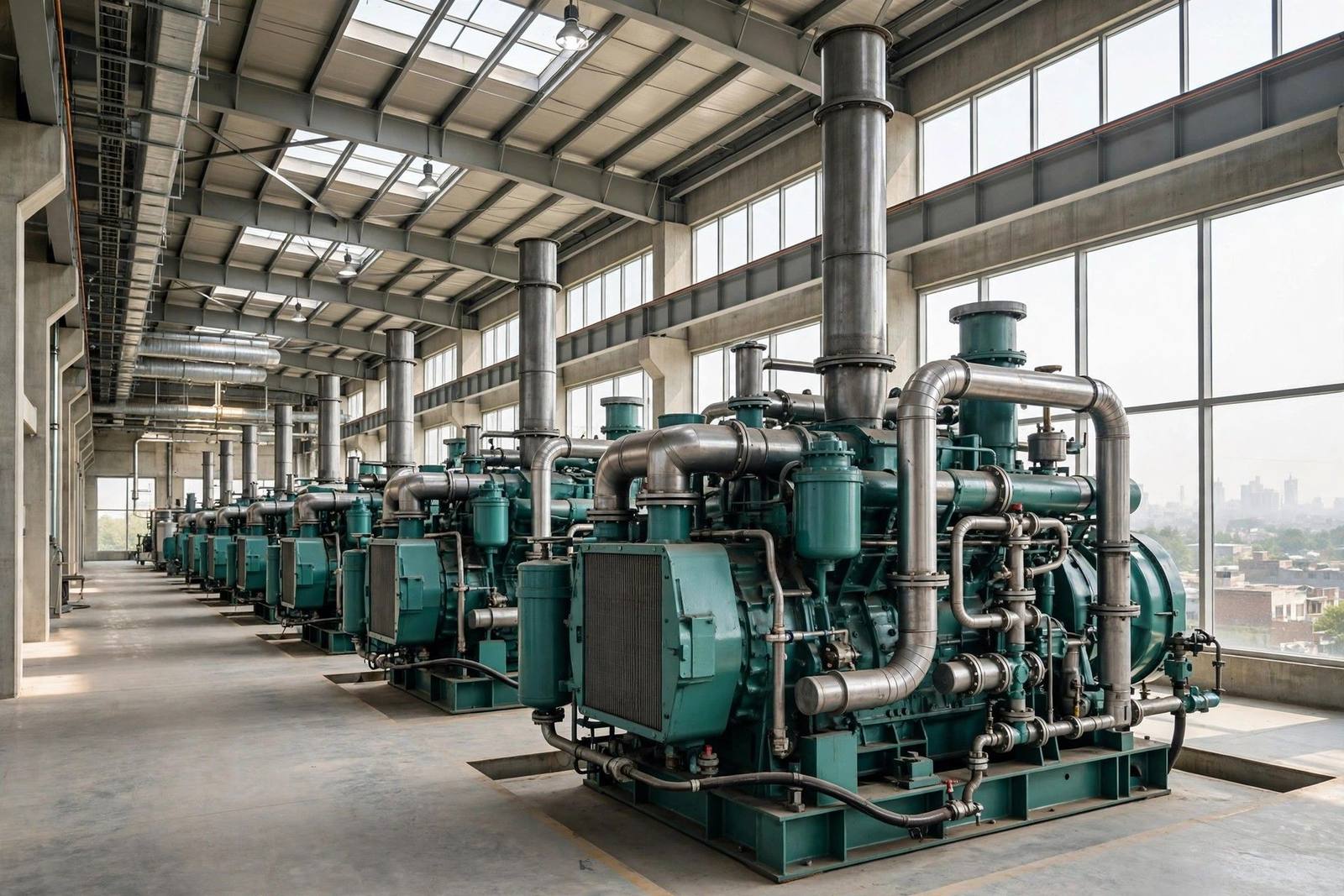
The plant itself is a combined-cycle facility in a "1+1+1" configuration: one gas turbine of about 127 MW, one heat-recovery steam generator producing some 400 tonnes of steam an hour, and one steam turbine of about 110 MW, for a total capacity of 217.3 MW. The combined-cycle design is the efficiency trick — the gas turbine's hot exhaust, instead of being vented, raises steam that drives a second turbine, extracting more electricity from the same gas. That efficiency matters doubly at Qadirpur, because the fuel is low-energy gas: the plant was engineered around its awkward feedstock, sulphur and all, rather than despite it. Electricity flows from Ghotki into the national grid under the PPA, and the district around the plant — an area that historically suffered severe load-shedding — is among the beneficiaries the company points to, alongside local employment at the site.
Listing and life inside Engro
EPQL listed its shares on the Karachi Stock Exchange in October 2014 — the exchange has since become part of the unified Pakistan Stock Exchange — giving public investors a direct line into a single, easily understood asset: one plant, one fuel, one buyer, one long contract. The controlling shareholder is Engro Energy Limited, the energy arm of what is now Engro Holdings, and EPQL is Engro Energy's listed generation vehicle alongside its larger Thar coal and mining ventures held elsewhere in the group. Engro Energy's stake stood at just under 69 per cent for many years; in February 2026 the parent sold a block of shares that took its holding to just over half, while retaining majority ownership and management control — a portfolio adjustment at group level rather than a change of control, and a useful reminder that even stable IPP shareholdings move when a large group rebalances.
Within the plant's own fences, the operating record the company advertises is one of reliability and safety: it reports having achieved a billable availability factor of 100 per cent in 2025 despite a major scheduled outage, and sixteen consecutive years without a lost-work injury by the end of that year, with ISO certifications spanning environment, occupational health and safety, and — a group first — asset management to ISO 55001. For a single-asset company, that operational reputation is not decoration; availability is literally what it is paid for.
How an IPP like EPQL makes money
Beginners often assume a power company sells electricity the way a shop sells goods. An IPP under a Pakistani PPA earns differently, through a tariff with two broad streams. The first is the capacity payment: a payment for being available — for keeping the plant ready, maintained and able to generate when the grid calls — which covers the project's fixed costs, its debt service and the investors' return on equity. The second is the energy payment, made when the plant actually generates, which passes through the cost of fuel and variable running costs. This "take-or-pay" style structure is why IPPs can report steady capacity income even in periods when the grid dispatches them less, and why plant availability — being demonstrably ready — is the operational number that matters most.
Two features of Qadirpur's version deserve attention. Its fuel is close to free in opportunity terms, which historically put it early in the merit order — the running order in which the system operator calls on the cheapest plants first — and supported strong dispatch when the field's gas flowed fully. And the 25-year PPA clock started in 2010, so the contract is a wasting asset: each year of tariff-backed operation is banked, and the long-horizon question for any IPP of its vintage is what the plant earns as the agreement matures and the sector's terms evolve. Pakistan's power sector has been renegotiating IPP terms in recent years, including moves toward hybrid "take-and-pay" arrangements under which capacity income depends more on actual dispatch — EPQL's own reporting describes a shift of that kind affecting its 2025 results — and readers should treat the sector's contract terms as a live policy variable rather than a fixed law of nature. Our explainer on circular debt covers the related question of how payment delays move through the power chain when the state buyer is short of cash.
The merit-order point deserves a fuller explanation, because it decides how hard the plant works in any year. Pakistan's system operator dispatches power stations in ascending order of variable cost, so a plant burning gas with almost no alternative value historically sat near the front of the queue — called upon early and often — while oil-fired plants ran only when demand outstripped cheaper supply. That position was a quiet subsidy from physics: high dispatch meant high energy payments and a well-exercised plant. As the national mix changes — Thar coal, hydel in the wet season, solar in the day — the queue reshuffles, and as Qadirpur's own gas declines, EPQL's place in it becomes a live variable rather than a founding endowment. The company's reported load factors, read against its perfect availability scores, are precisely the fingerprint of that reshuffle: the plant stands ready at all times; how often the system asks it to run is another matter.
The fuel question: permeate gas and its decline
Every single-asset company has a single point of failure, and EPQL's is written into its name: the Qadirpur field. Gas fields deplete. As reservoir pressure and output decline over a field's life, the volume of permeate gas available to the plant falls with them, and the plant's generation follows the fuel it can get — EPQL's recent reporting shows lower load factors in periods of planned maintenance and constrained supply, even while availability stays at 100 per cent. High-speed diesel backup exists precisely for shortfalls, but diesel generation is expensive and is a bridge, not a business model. Studies of the field and of alternative arrangements have therefore been a recurring theme in the company's disclosures, and the long-run value of the asset is inseparable from how much gas Ghotki still has to give and on what terms the plant can keep taking it.
This is also where EPQL differs from the big thermal names it is often shelved beside, such as Hub Power or Kot Addu Power: those are multi-fuel or portfolio stories of greater scale, while EPQL is a study in one clever resource conversion — waste gas to electricity — executed well for a decade and a half. Its sister IPPs in this series, such as the Sahiwal plant Saif Power and the older Muzaffargarh plant Lalpir Power, show the other standard shapes of the sector for comparison.
Strengths, risks and what the dividend tells you
The strengths are structural: a contract-backed revenue framework, a near-zero-opportunity-cost fuel, an efficient combined-cycle configuration, a strong availability and safety record, and a sponsor — Engro — with deep operating credibility in Pakistani energy. EPQL has also been a genuine dividend payer across much of its listed life, distributing a substantial share of its earnings in many years, which is typical of mature IPPs whose investment phase is behind them: the plant is built, the debt amortises, and cash flows upward. Payouts vary with dispatch, outages and sector settlements, and a heavy maintenance year can dent them, as its recent results showed.
The risks mirror the strengths. Single-asset, single-fuel, single-buyer concentration is total: field decline, a plant outage, a dispute with the offtaker or a change in sector policy each land on the same 217 MW. Receivables from the state buyer tie the company to the power sector's circular-debt cycle. The PPA's remaining life shortens every year, and the hybrid take-and-pay direction of national policy transfers more volume risk to generators than the original framework did. None of this makes EPQL unusual — it makes it a clean specimen of the Pakistani IPP bargain, in which contractual protection and resource risk are two sides of one coin.
The name on the PSX and who studies it
EPQL trades with a December financial year and a free float enlarged by the parent's 2026 sell-down, and it sits in the power generation sector as one of the exchange's more comprehensible dividend stories: one plant, whose inputs and outputs a beginner can genuinely follow. The investors who study it are typically income-oriented — they track plant availability and dispatch, gas supply news from Qadirpur, receivable positions, maintenance schedules and the per-share payout — together with Engro-watchers who treat it as the listed window into the group's energy portfolio.
For a newcomer, EPQL is an unusually good first IPP to read end to end: the annual report of a one-plant company teaches the whole grammar of the sector — capacity payments, energy payments, merit order, availability factor — without the fog of a conglomerate. This profile is educational content, not financial advice. The plant at Qadirpur began as an answer to a burning flare; the shares are simply a claim on how long and how profitably that answer keeps running.
Key takeaway: Engro Powergen Qadirpur (EPQL), incorporated in 2006 and listed in 2014, runs a 217 MW combined-cycle plant on once-flared permeate gas under a 25-year PPA from 2010 — a dividend-paying, single-asset IPP whose story turns on Engro's sponsorship, plant availability and the decline curve of the Qadirpur field.