KARACHI: Read Fazal Cloth Mills' yarn catalogue and you read a map of where world textiles have travelled in thirty years. Alongside ordinary cotton yarn, the Multan company lists compact yarn, core-spun yarn with Lycra, organic and Fair Trade cotton yarn, Supima and Egyptian Giza yarn, bamboo, modal and even soya-bean blends, slub and zero-twist yarns — an encyclopaedia of speciality spinning from a group whose business the company traces to 1936 and which was incorporated in its present form in 1966. Fazal Cloth Mills Limited, traded on the Pakistan Stock Exchange as FZCM, spins and weaves from Multan, generates part of its own power from gas-fired plants, and sells yarn and greige fabric into domestic and export markets. It is a portrait of the Pakistani spinner's survival strategy in its most developed form: when commodity yarn no longer pays, learn to spin everything else.
From a 1936 business to a 1966 company
The Fazal Group, by the company's own profile, has been in the textile business since 1936 — a pre-Partition origin that places the founding family among the subcontinent's early Muslim industrialists, building in the cotton country of what would become Pakistan. The listed company itself, Fazal Cloth Mills Limited, was incorporated in 1966 and is headquartered in Multan, on the Old Bahawalpur Road, in the same southern Punjab cotton belt that anchors several companies in this batch. Its shares reached the market in the late 1980s — market records date its listing to October 1988 — and it has traded since as a textile composite, reporting through spinning and weaving segments.
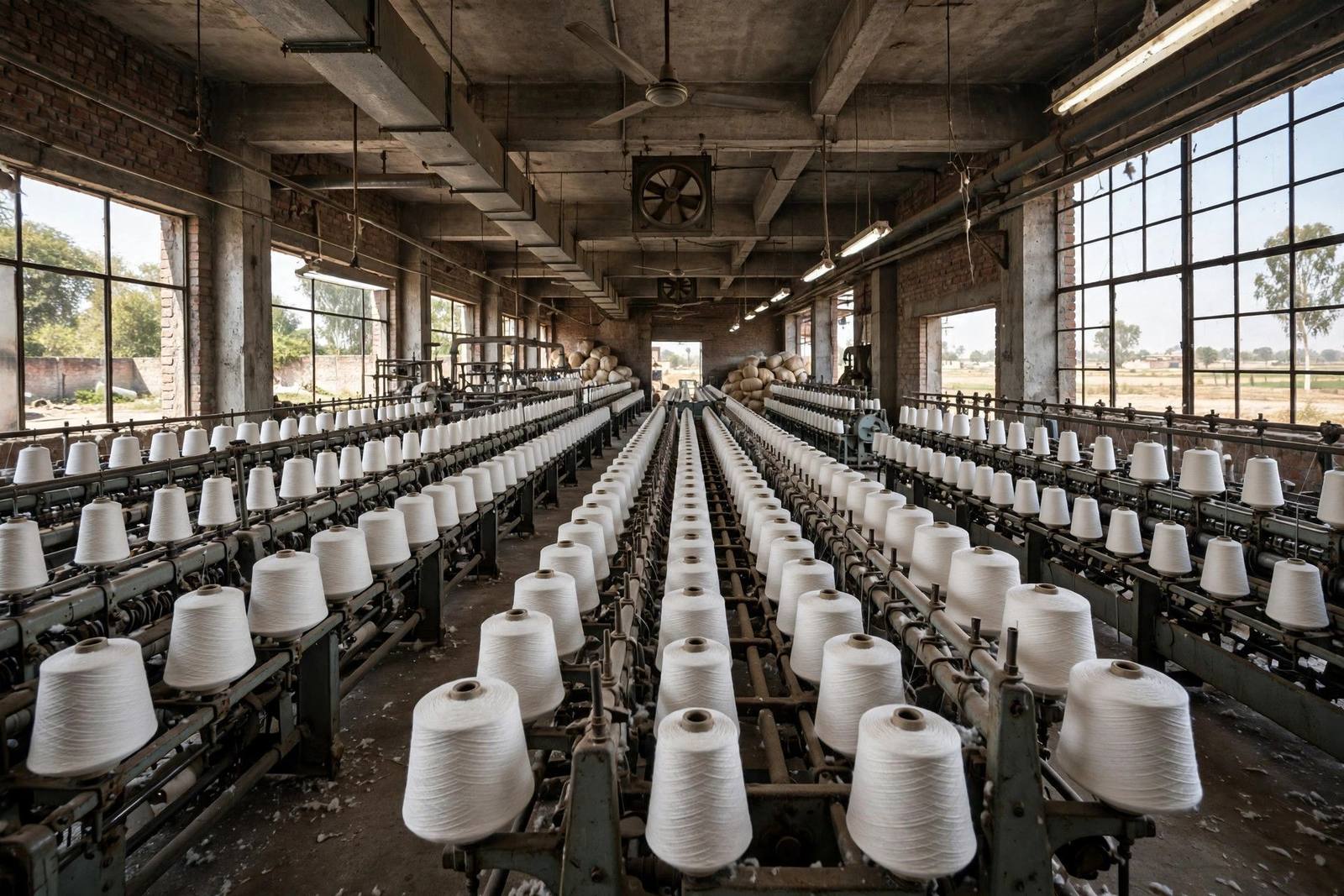
Multan is not incidental to the story. The city's hinterland grows the cotton; its industrial estates house the ginners, spinners and weavers who process it; and its older families — Colony, Fatima's founders, Fazal — built the mills that turned a trading town into a manufacturing one. Fazal's growth followed the belt's own logic: spindle capacity added plant by plant until, on the group's profile, the company operated four spinning plants comprising some 146,760 spindles, a scale that places it among the substantial spinning houses of the country. Figures of that kind are a snapshot of a moving fleet — spindles are added, retired and replaced in every modernisation round — but the order of magnitude is the fact to hold: this is not a boutique mill, it is a volume producer that chose speciality as its direction.
Spinning everything: the speciality strategy
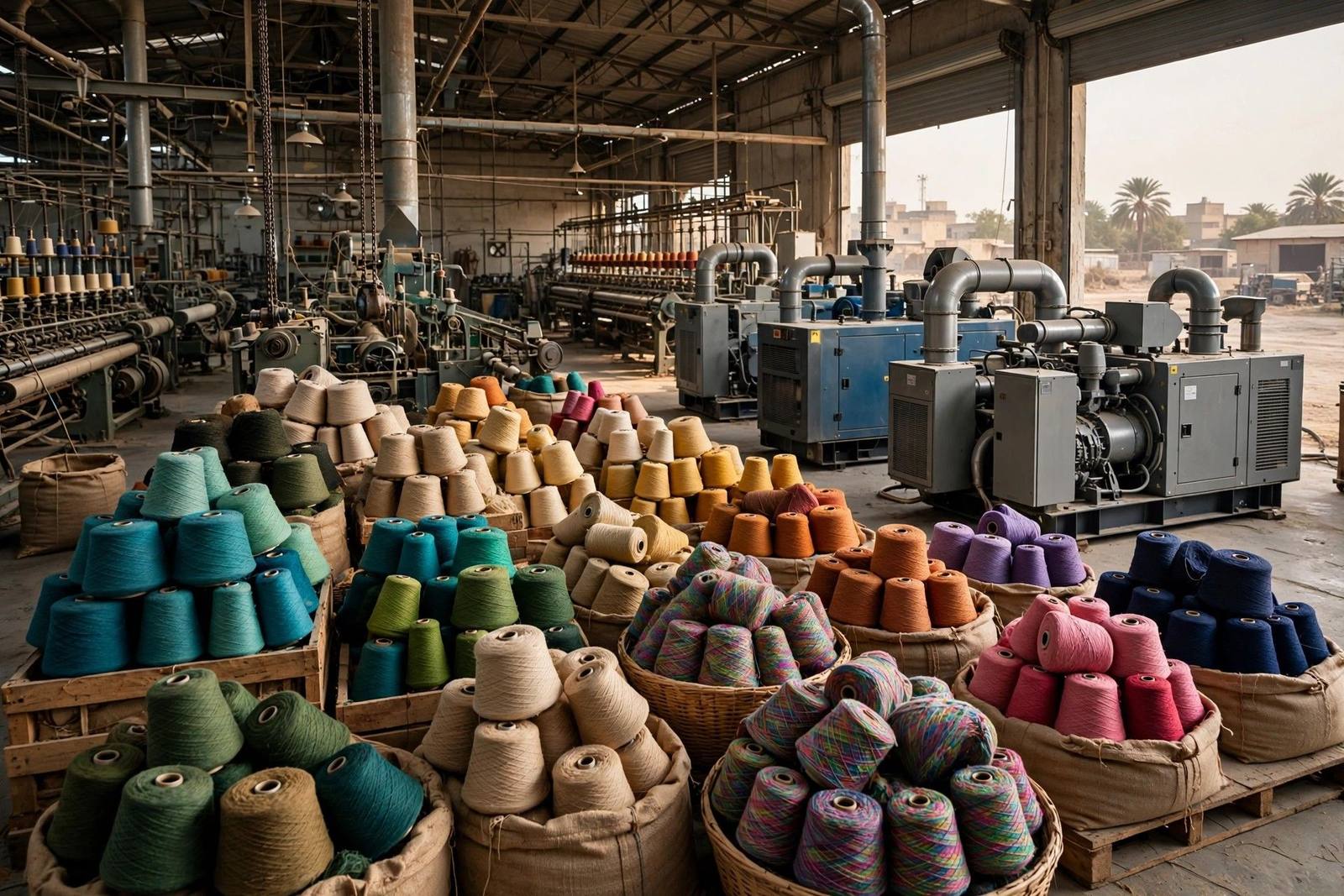
Fazal's spinning range, as the company presents it, runs from coarse Ne 4/1 to medium-fine Ne 60/1 counts across an unusually wide fibre palette. There are carded and combed cotton yarns from Pakistani, American, organic, Supima, Egyptian Giza and Fair Trade cottons; compact yarns for smoother, stronger fabrics; core-spun yarns wrapping cotton around a Lycra core for stretch denim and apparel; plied and TFO-twisted yarns; polyester and poly-cotton blends, including with Coolmax performance polyester; rayon, modal, bamboo and soya-blend yarns for softness-led fabrics; and effect yarns — slub, multi-count, multi-twist, mélange and zero-twist — that put texture into cloth before any printer or finisher touches it.
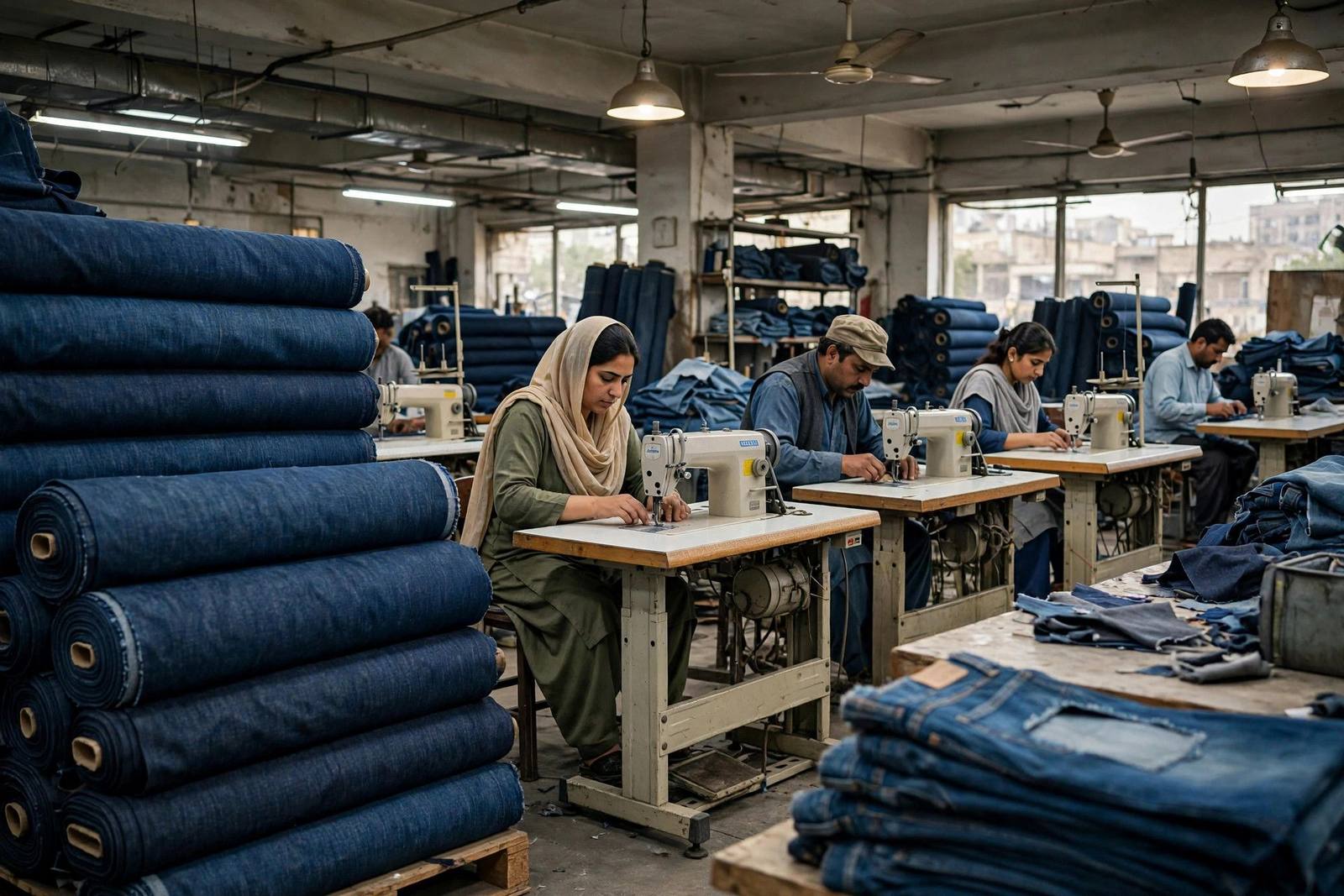
That list is a business strategy disguised as a catalogue. Commodity yarn is priced by the market and bought by the tonne; speciality yarn is specified by a buyer's technologist and bought by the programme. Each certified fibre — organic, Fair Trade, Better Cotton and the rest — carries an audited chain of custody that smaller mills cannot easily replicate, and each effect yarn demands machinery settings and quality control that defend its price. Fazal's weaving segment completes the offer, producing greige fabrics including twills, satins and sateens, percales, sheeting, bull denim, workwear fabrics, poplins, canvas and stretch constructions — the cloth, sold unfinished to processors and exporters, that the yarn range was designed to feed.
Power: the second business inside the first
The hook of this profile — power ambitions — is literal. Fazal's group profile describes two gas-fired power generation plants producing some 15.15 MW for supply to its spinning plants, alongside the mills themselves. In Pakistan that is not an eccentricity; it is the industry's defining adaptation. Spinning cannot stop for load-shedding without breaking yarn, wasting fibre and idling the labour standing at the frames, and grid supply through the worst years of the energy crisis was neither reliable nor cheap. A mill with its own gas generation controlled its uptime and part of its energy price, and the largest groups went further, into the power business proper — the pattern visible in sister profiles from Sapphire's wind interests to Indus's own energy venture.
The power question has since inverted, and an honest profile should note it. Gas that was once the cheap answer has become scarcer and dearer, tariffs and fuel-mix decisions by the state now set the cost of captive generation as surely as the grid price, and mills across Multan have layered solar and efficiency measures onto their gas plants. For Fazal, energy remains both a capability and an exposure: self-generation is a strength when the grid fails and a cost risk when gas pricing turns. Watch the energy line in its accounts and you are watching the company.
How Fazal makes money
The revenue model is the spinner-weaver's model of PSX textile stocks, tuned toward mix. On the spinning side, profit is the yarn price minus fibre and conversion cost, but Fazal's mix shifts the terms: speciality and certified yarns carry better realisations and stickier customers than commodity counts, at the cost of smaller lots, more changeovers and more demanding quality systems. On the weaving side, greige fabric adds a conversion margin over yarn — the segment reporting in the accounts separates the two, letting readers see which business carried a given year. Underneath both sits Pakistan's cotton economy: the domestic crop supplies the base fibre, while Supima, Giza and organic lines depend on imported and certified supply chains priced in dollars, so the exchange rate enters Fazal's costs even before its export invoices are converted.
Exports run through the model in both directions — yarn and fabric sold abroad directly, and yarn embodied in other exporters' cloth — giving the rupee-weakness benefit familiar across this batch, tempered by imported speciality fibres. Finance cost on seasonal cotton buying, and energy cost now partly self-supplied, complete the margin picture. The company's chief executive in recent listings is Rehman Naseem, leading a sponsor-family board in the pattern common to Multan's groups.
Strengths, risks and honest caveats
Fazal's strengths are breadth and adaptation. A mill that can spin organic, Fair Trade, Supima, Giza, bamboo, modal and core-spun Lycra yarns can follow its buyers wherever fashion and sustainability standards move, and a weaving segment plus captive power give it two further buffers against the commodity cycle. Its longevity — a business traced to 1936, a company of 1966 — is its own evidence of having survived the industry's repeated winnowings.
The risks are the mirror image of the strategy. Speciality breadth is expensive to hold: certifications must be audited, small lots interrupt the economies of long runs, and fashion-led fibres can fall from favour as quickly as they rose. The underlying exposures — cotton, gas and energy pricing, interest rates on working capital, foreign apparel demand — are the sector's, unremoved. Dividend history is the other fact a new reader should absorb plainly: Fazal has not been a regular payer, with market data services recording long stretches without dividends as cash was retained in the business — a pattern to verify year by year through how PSX dividends work rather than to assume in either direction. Governance follows the family pattern of family businesses on the PSX: concentrated, continuous and best judged from the related-party and shareholding disclosures.
Certifications: the passport system of modern yarn
A word of explanation is owed for the alphabet that runs through Fazal's catalogue, because it is now the operating system of quality textiles. Standards such as GOTS for organic textiles, the Global Recycled Standard, OEKO-TEX for chemical safety, Fair Trade and Better Cotton for farm practice, and buyer-specific audits for labour and environment each certify one claim along the chain — that the fibre was grown as promised, that recycled content is real, that no banned chemistry touched the cloth, that the mill's workers and effluent are treated to a stated standard. Certification is audited, renewed and paid for, and losing it can cost a mill its best programmes overnight.
For a spinner like Fazal, holding several of these passports at once is a deliberate moat. A European buyer's organic programme cannot be supplied by an uncertified mill at any price; a stretch-denim programme needs core-spun yarns of certified consistency; a Fair Trade order needs the chain of custody intact from farm to bale to yarn cone. Each passport narrows the field of eligible competitors to the mills that invested as Fazal did. The same system explains why the group's yarn list leads with provenance — Supima, Giza, organic, Fair Trade — rather than with price: in the speciality market the first question a buyer asks is not what the yarn costs, but whether it is allowed into the programme at all, and cost is negotiated only after eligibility is settled.
The discipline runs both ways. Certified programmes demand record-keeping that exposes a mill's processes to outside auditors year after year — an uncomfortable transparency for family businesses raised in a less documented era, and one of the quiet ways global buyers have professionalised Pakistan's better mills from the outside in.
Fazal's weaving range carries the same signature as its yarn list. Bull denim and stretch twills serve the jeans trade; satins, sateens and percales serve bedding; poplins and canvas serve shirting and workwear; structural and industrial fabrics serve customers most textile profiles never mention. A mill selling into that many end-uses is hedged by its own catalogue — when apparel fashion cools, workwear and home textiles rarely cool in the same month — but it also carries the complexity cost of many constructions, many quality standards and many small relationships to maintain. The skill being bought, when a shareholder owns FZCM, is ultimately managerial: the ability to keep a very wide machine shop profitably loaded, season after season, in a country whose cotton, gas and interest rates refuse to sit still.
Multan's other great asset is skill. Generations of spinners, weavers, fitters and dyers live within a rickshaw ride of the Old Bahawalpur Road, and a mill like Fazal recruits its craft knowledge from that pool as surely as it buys its cotton from the surrounding mandis — one more reason these clusters persist long after the original logic that planted them has faded.
The catalogue, in other words, is not vanity. It is the accumulated answer of a Multan family firm to sixty years of buyers asking for something slightly different, slightly cleaner, slightly more certified than last season — and of the mill answering yes often enough to still be here.
The name on the PSX and who studies it
FZCM trades as a mid-sized textile composite, sponsor-held, with liquidity that reflects a loyal, slow-moving register — the free float story of this entire batch. It is followed by textile specialists and Multan watchers rather than by the market at large.
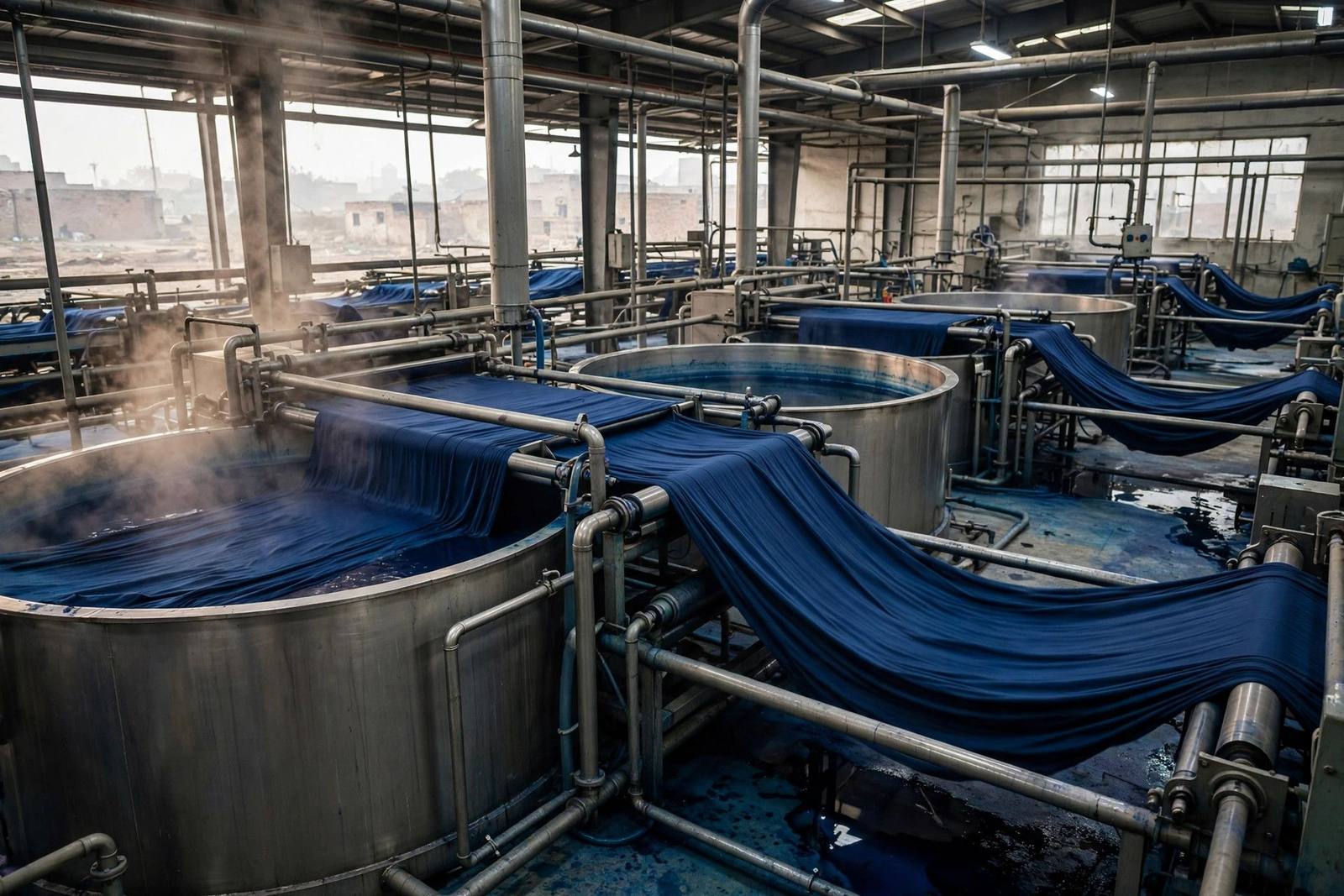
What they watch: the speciality share of the yarn mix and any new certified programmes; spindle and loom utilisation across the four plants; gas availability and the cost of captive power against grid and solar alternatives; cotton and imported-fibre prices; weaving demand for greige fabric; and any step downstream into dyeing and finishing, the stage Fazal notably does not yet own and the one that would most change its margins. This profile is educational content, not financial advice, and nothing in it recommends buying or selling FZCM shares.
Key takeaway: Fazal Cloth Mills is Multan's speciality spinner — a 1966 company on 1936 roots, spinning everything from commodity cotton to Supima, organic and Lycra-core yarns, weaving greige fabric and generating part of its own power to keep the spindles turning.